The 'Director's Cut' Delusion: Why Manhunter's New Edit Misses What Michael Mann Already Got Right
A new restoration of Michael Mann's 1986 serial-killer thriller lands on Criterion this week, but the version everyone remembers is the one the director himself tried to fix. The case for leaving the original cut alone is stronger than the case for the new one.
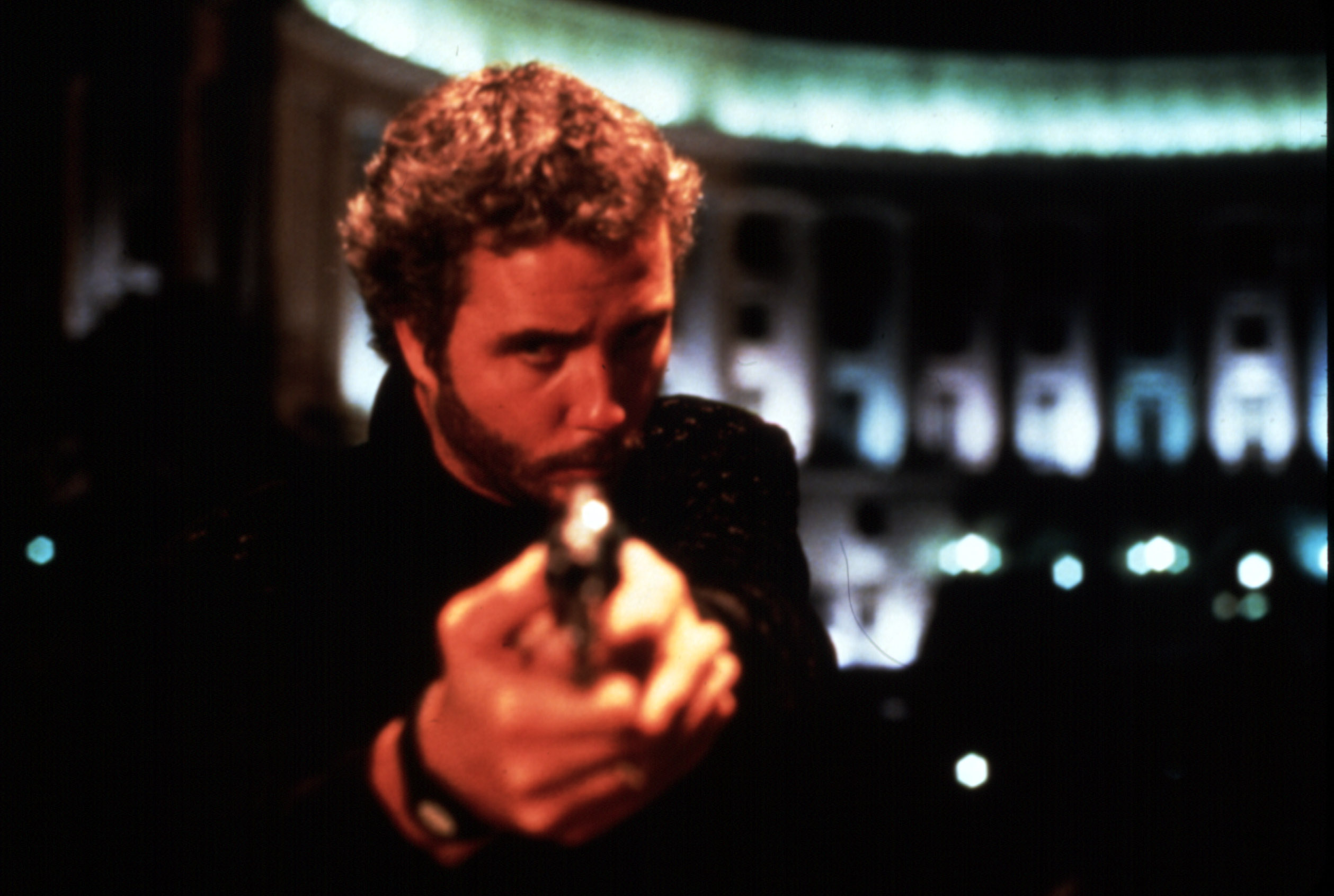
On 18 July 2026, a new 4K restoration of Michael Mann's 1986 serial-killer thriller Manhunter arrives on the Criterion Collection, packaged with what the distributor is calling the definitive director's cut. The film that introduced Hannibal Lecktor to American audiences, two years before Anthony Hopkins would inherit the role from Brian Cox, has been re-cut, re-coloured, and re-scored by the director himself. The result, according to Variety's chief film critic Owen Gleiberman, is a paradoxical artefact: technically more polished, narratively thinner, and a useful case study in why the cult of the director's cut so often mistakes revision for improvement.
The 1986 theatrical cut of Manhunter was not a hit. It grossed roughly $8.9 million against a reported budget in the high-teens of millions, was critically mixed on release, and spent most of the next decade as a video-store curiosity, overshadowed by Jonathan Demme's 1991 Silence of the Lambs and the Hopkins iteration of the character Mann had introduced. What saved the film, and what its defenders have argued about it for forty years, is the texture of the cut Mann originally delivered: the punk-scored Miami exteriors, the Wolfgang Petersen-grade clinical interiors, the uneasy intimacy between FBI profiler Will Graham (William Petersen) and the incarcerated Lecter (Cox). The film looked like nothing else in 1986. It still does.
What the director's cut actually changes
Gleiberman's Variety review, published 18 July 2026, walks through the revisions in granular detail. The new cut trims several of the film's more stylised sequences: a Drowning Pool-scored sex scene set inside a Florida motel, a tableau of Graham standing shirtless in his attic as lightning strobes through a window, a tracking shot across the metallic bodywork of a red Ferrari that the original cut used as a near-abstract punctuation mark. Each of those moments is, on its own, dated. The Drowning Pool cue in particular, "One Last Thing," is the kind of mid-1980s needle-drop that younger viewers will read as camp. Mann's cut excises or resculpts them.
The trade is the texture. The original Manhunter is a film about surfaces: the glass-and-steel atrium of the Atlanta FBI field office, the reflective lenses of Graham's sunglasses, the polished steel of a crime-scene gurney. Take out the lyrical interludes and what remains is leaner, but also blander. The new edit resolves the chief complaint that critics have lodged at the film for four decades, that it is over-designed, and in doing so removes the very quality that made it durable.
There is also a sound-design recalibration. Mann has long been a director who mixes at the edge of intelligibility, and the 1986 cut's dialogue was frequently buried under the film's synthesiser and drum-machine score, courtesy of German electronic group The Rascals. The new cut lifts the dialogue several decibels. Viewers who have spent decades straining to hear Petersen whisper his way through a crime scene will find the experience of watching the film transformed; viewers who treated that strain as part of the film's atmosphere will find that something has been lost.
The director's cut as marketing
The deeper question raised by this release, and by Criterion's decision to platform it, is structural. The director's cut has become one of the standard tools of catalog management in the streaming era. When a studio's library titles need to be re-monetised, the cheapest available lever is a re-release: a new master, a new cut, a tie-in essay, a Blu-ray steelbook. The 4K restoration market, which barely existed a decade ago, is now a category of its own, and director-approved re-edits are its most reliable hook.
Manhunter sits inside that pattern but also pushes against it. The original cut is not a compromised version of a director's vision; it is the director's vision, delivered under the pressures of a 1986 release calendar and a studio that did not yet know what it had. Mann's revisions are not the recovery of suppressed footage in the manner of, say, the various Blade Runner cuts. They are substitutions. Every minute added to the director's cut is a minute removed from somewhere else in the film, and the choices about where to cut have been made by a director who is now nearly a half-century removed from the production.
This is not an argument against the existence of director's cuts. It is an argument for treating them as parallel texts rather than as upgrades. The 1986 Manhunter and the 2026 Manhunter are two films that share a title, a cast, and a screenwriter (Michael Mann, adapting Thomas Harris's first Lecktor novel, Red Dragon). They are not the same film, and the discourse around reissues would be healthier if that distinction were stated outright, in the marketing copy, rather than buried in the supplements menu.
The case for the older version
Gleiberman's review lands in an unusual place for a contemporary critic: a clear-eyed endorsement of the older cut, paired with an acknowledgment that the director's cut is still worth seeing. The argument is not that Mann has ruined his own film. It is that the qualities that have kept Manhunter in circulation, in videotheques, in late-night cable rotations, in academic syllabi on the serial-killer genre, are precisely the qualities the new edit smooths away. The film's reputation has been built, slowly, on its strangeness: the way the camera lingers on surfaces that have nothing to do with plot, the way the score refuses to resolve into conventional suspense cues, the way the central confrontation between Graham and Lecter is scored as a seduction rather than a duel.
Take those qualities out, and you have a competent, handsome, mid-budget thriller from 1986. Leave them in, and you have something rarer: a film that taught an entire subsequent genre how to look, and that is now being taught, by the director himself, to look more like everything else.
What the dispute really shows
The Manhunter reissue is, in the end, less interesting as a film story than as an industry one. It is a small case study in the way that catalog cinema is now managed: by connoisseurs, for connoisseurs, with the original theatrical audience effectively out of the loop. The Criterion subscriber who streams the new cut in July 2026 is, in most cases, watching the film for the first time. They will form their preferences against the version Mann prefers now, and that preference will harden into the received view.
That is a loss. The 1986 Manhunter is, as Gleiberman puts it, the greatest thriller of its kind, and it deserves to remain visible in the form in which it was originally encountered. The director's cut is a fascinating companion piece. It is not a replacement, and the marketing language around the release should say so.
The Monexus desk note: Variety's review treats the new cut as a story about Mann's choices; this piece treats it as a story about how catalog cinema gets reissued, and about what gets lost when the older version stops being the default.