Kimi K3 Reshapes the AI Race as Compute Capacity Becomes the New Bottleneck
Moonshot's Kimi K3 has choked its own subscription pipeline and rattled US rival Anthropic's valuation. The lesson is about compute, not code.
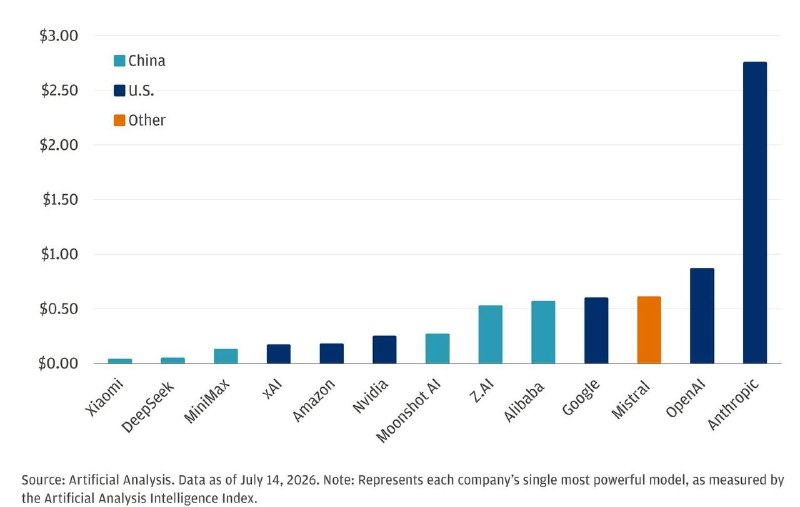
At 15:46 UTC on 19 July 2026, Moonshot AI temporarily closed new subscriptions to its Kimi K3 model after a surge of demand pushed the company's computing capacity to its limits. The pause, announced on the same day the Polymarket prediction market began pricing the consequences for Western AI labs, marks a rare public admission from a frontier-model developer that infrastructure, not algorithms, has become the binding constraint on the global AI race.
The short version: a Chinese model crossed a perception threshold. Within hours, market sentiment shifted on whether Anthropic, the San Francisco AI lab most exposed to direct competition from open-weights Chinese systems, can hold its projected valuation through year-end.
What actually happened on Sunday
Moonshot's Kimi K3, released earlier in the week, generated enough paying demand that the company could not onboard new users without compromising service for those already on the platform. The decision to pause subscriptions, rather than degrade quality silently, is itself notable. It suggests the bottleneck sits in raw inference and training compute, where Moonshot must compete for accelerator time against the country's largest cloud and internet platforms. Beijing-based Moonshot AI, founded in 2023, has positioned Kimi as a direct answer to OpenAI's GPT-class systems and Anthropic's Claude family. The K3 release is the most aggressive demonstration yet that a Chinese lab can ship a frontier-tier model on its own stack.
Two days earlier, on 17 July at 23:03 UTC, Polymarket traders began pricing the second-order effect. Anthropic's valuation, which had been tracking toward a year-end print of $1.5 trillion under base-case assumptions, slipped to a 67 percent probability of reaching that mark. The market moved on the back of a single Chinese model release, not a US earnings miss, not a regulatory action, not a Department of Justice filing. The signal is unambiguous in the eyes of traders who put capital on it: open-weights competition from China is now a first-order input into American AI valuation models.
The counter-narrative Western wires are running
The dominant US framing treats Kimi K3 as a Sputnik moment, evidence that export controls have failed and that Washington needs tighter restrictions on advanced accelerators flowing into China. That framing has a surface logic: if Chinese labs are reaching frontier capability, the argument runs, the hardware bottleneck must be leaking. But it ignores two inconvenient facts. First, Moonshot is reportedly running on a mix of domestic accelerators and stockpiled inventory accumulated before the most aggressive US restrictions took hold, a pattern that mirrors the way Chinese EV makers reached scale before chip curbs bit. Second, the binding constraint on Sunday was compute scarcity inside China, not compute abundance. Moonshot paused subscriptions because it ran out, not because it had plenty to spare.
Read the other way, K3 is evidence that Chinese industrial policy is delivering on its central premise: build the supply chain at home, accept a generation of efficiency loss, and emerge with sovereign capability. The compute ceiling today is the same ceiling that shaped China's solar, battery, and EV industries a decade ago. Each time, the ceiling has eventually lifted.
Compute, not code, is the structural constraint
For three years the AI conversation has orbited model architecture, training-data quality, and benchmark performance. The Kimi episode forces a different frame. The constraint is now physical: how many accelerators a lab can keep hot, how much power it can draw, and how fast it can stand up new data centres. China's grid build-out, dominated by state-directed investment in transmission and renewables, gives its labs a structural advantage on power costs that no software optimisation can replicate in San Francisco.
This is also why a single model release moved a $1.5 trillion valuation bet. If compute is the new oil, then the country that can mobilise power and silicon fastest sets the price. The US remains ahead on accelerator design; China is closing the gap on accelerator fabrication through SMIC and its partners, and it is pulling ahead on the power side, where gigawatts of new renewable capacity come online each quarter. The Kimi K3 demand spike is the first widely-observed market signal that this gap has begun to register in real time.
What to watch before the next quarter
Three dates will clarify whether the Polymarket repricing holds. First, Anthropic's next funding round, where the 67 percent probability on Polymarket will be tested by what lead investors actually underwrite. Second, Moonshot's next product disclosure, which will indicate whether the compute ceiling has lifted or whether a second subscription pause is queued up. Third, the US Commerce Department's next move on advanced accelerator licensing, where a permissive reading would let Chinese labs close the hardware gap faster, while a restrictive reading would slow but not stop the trajectory, given existing inventory and domestic substitution. Monexus will be tracking each, and the most likely outcome over the next six months is a continued squeeze on compute for Chinese labs paired with sustained pressure on the valuations of Western labs whose pricing models assume they will not face credible open-weights competition.
This piece frames the Kimi K3 release and its market reaction through the lens of compute scarcity rather than model capability, a structural angle most wire coverage of the 17–19 July episode has not yet pursued.
Wire provenance
This editorial synthesis draws on the following public wire/social posts:
- https://x.com/polymarket/status/1947170000000000000
- https://x.com/polymarket/status/1947100000000000000
- https://x.com/polymarket/status/1947150000000000000