Kazakhstan summons Ukraine's envoy over Black Sea strikes on Caspian oil flows
Astana has formally protested Ukrainian drone strikes on tankers carrying Kazakh crude, exposing the fault lines of a war whose blast radius now reaches the Caspian.
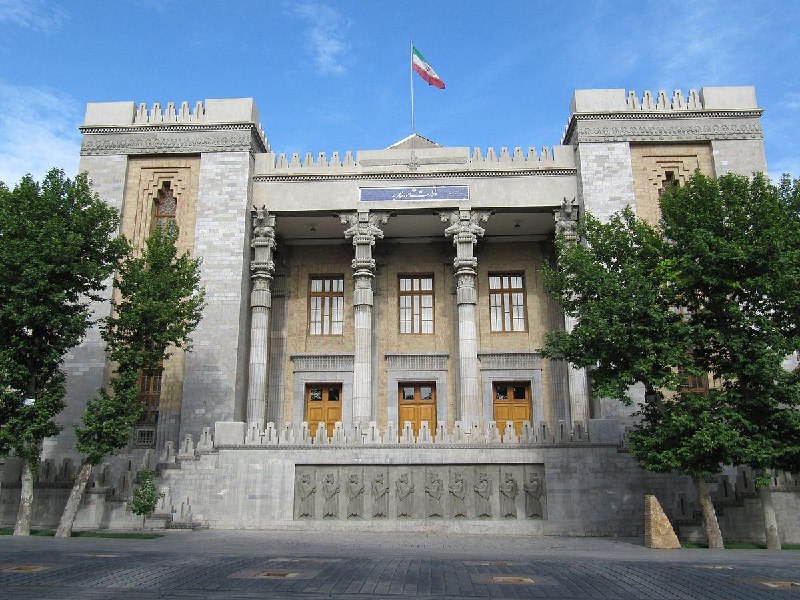
On 19 July 2026, Kazakhstan's Ministry of Foreign Affairs lodged a formal complaint with Kyiv over a string of Ukrainian drone strikes that have hit vessels carrying Kazakh crude through the Black Sea. The text of the protest, circulated by the Astana-based Telegram channel WarTranslatedKazakhstan and relayed in English by the war-translation feed WarTranslated at 16:00 and 16:14 UTC, accuses Ukraine of targeting tankers tied to Kazakhstan's export infrastructure and demands an immediate halt to the attacks.
The complaint widens a war that, on paper, has little to do with Central Asia. Kazakhstan has kept its distance from the Russia–Ukraine conflict since February 2022, refusing to recognise the Russian-annexed territories, hosting a crossing point for sanctioned goods, and abstaining on most UN resolutions. Yet geography makes neutrality a working assumption rather than a guarantee. Roughly 80% of Kazakhstan's crude leaves through the Caspian Pipeline Consortium terminal at Novorossiysk, on Russia's Black Sea coast, and a growing share reaches global buyers via tanker shipments from Black Sea ports. When Ukrainian sea drones hit those tankers, the blast registers in Astana.
What Astana actually said
The Kazakh Foreign Ministry's statement, as posted by WarTranslatedKazakhstan, is unusual in its directness. It condemns strikes on "vessels transporting Kazakh oil" and frames them as attacks on the country's export infrastructure rather than as collateral damage from sanctions enforcement. The phrase "demand immediate cessation of attacks" leaves no diplomatic ambiguity. There is no public record of a Kazakh démarche at this level since the early months of the invasion, when Astana briefly objected to Russian use of its territory for cross-border cargo flights.
The complaint lands at a moment when Ukrainian operators have visibly widened their target set inside Russian waters. Recent strikes have gone beyond naval ports to include commercial tankers loading at Black Sea terminals. From Kyiv's standpoint, these are legitimate pressure points on the Russian war economy. From Astana's, the same actions hit third-country cargo without notice.
Why Kazakhstan cannot afford to stay quiet
Kazakhstan's oil revenues fund roughly a third of the state budget. The country exports close to 1.5 million barrels per day, with most of it moving either west through Russia or south through the BTC pipeline from Ceyhan. The Black Sea tanker route matters because it gives shippers flexibility on buyers, freight terms and pricing benchmarks. Sustained strikes on Kazakh crude lifters would push more volume onto the CPC pipeline at Novorossiysk, deepening Kazakh dependence on a single Russian-controlled chokepoint, the exact outcome Astana has spent two decades trying to avoid.
That is the structural trap. Every month of disruption on the Black Sea makes Kazakhstan more dependent on Russian transit and more exposed to Russian price leverage. The Foreign Ministry's protest is, in effect, a request to Kyiv to keep an export lane open by carving Kazakh cargo out of its targeting list. There is no public indication that Ukraine has agreed.
The Russian interest in the complaint
Moscow's read of the situation is straightforward and serves its interests. Russian state media has framed the Ukrainian strikes as proof that Kyiv is willing to attack the sovereign assets of a neutral third country, a useful line at a moment when Kazakhstan is publicly weighing deeper co-operation with Western energy majors. If Ukrainian drones keep hitting Kazakh tankers, the case for routing Kazakh exports exclusively through Russian infrastructure becomes easier to make, and the case for diversifying through the Middle Corridor, Azerbaijan and Turkey becomes harder to sustain.
Counter-narrative. The Western wire framing tends to recast the strikes as sanctions enforcement against Russia, with any third-country harm as unfortunate but secondary. The Kazakh framing inverts that hierarchy: the legal status of the cargo matters less than the fact that the cargo is Kazakh, that the platforms are foreign-flagged but commercially tied to Astana's upstream contracts, and that no prior notice was given. Both readings rest on real evidence; they differ on which harm counts as primary.
What the regional balance shifts toward
The complaint puts Kazakhstan on the same diplomatic shelf as Romania, Bulgaria and Türkiye, all of which have at various points objected to Ukrainian strikes inside or close to their waters. Romania and Bulgaria have stopped short of formal protests because their NATO membership gives them other channels. Türkiye has used its control of the Bosphorus to press both sides. Kazakhstan has none of those levers. Its recourse is the bilateral démarche, a tool that signals displeasure without changing the operational calculus on the water.
If the strikes continue at the current tempo, Astana will have three unhappy options. It can escalate rhetorically, issuing further statements and seeking co-signatories from the Caspian littoral states, including Azerbaijan, which also ships crude through similar Black Sea arrangements. It can diversify transit, accelerating long-stalled pipeline and rail projects through the Middle Corridor and the Trans-Caspian route. Or it can absorb the hits and quietly reroute volumes, the path of least resistance but the slowest erosion of bargaining power.
What remains uncertain
The Telegram-sourced translations refer to the strikes but do not name specific vessels, dates or tonnages. The original Kazakh Foreign Ministry statement has not, as of this writing, been mirrored on a Kazakh government domain that Monexus could verify independently, and the precise list of affected tankers, their flags, and the cargo volumes involved remain undisclosed. War-translation feeds operate under speed pressure and minor phrasing variances are common. The complaint's exact legal framing, whether Astana reserves the right to compensation or limits itself to a demand for cessation, is also not visible in the circulated text. Those gaps matter: a démarche that ends with a quiet carve-out for Kazakh cargo looks very different from one that opens a bilateral claims file.
For now the dispute sits in a narrow lane. Kyiv has reasons to listen. Losing Astana as a neutral, sanctions-tolerant transit partner would push more Caspian volume through Russian handling and tighten Moscow's grip on a market that Ukraine is trying, slowly, to disrupt. Kazakhstan has reasons to insist. The country's export model, the budget arithmetic underneath it, was not designed around a war whose drones can reach the Black Sea from the mouth of the Danube to the approaches of Novorossiysk.
The next test will come in the next sailing window. If Kazakh tankers load and leave port without incident, the complaint will read as a warning that was heard. If they load and burn, the language from Astana will harden, and the working assumption that Kazakhstan can stay out of this war will need to be retired.
Desk note: This piece relies on Telegram-translated text rather than a primary Astana press release, given the rapid movement of the story on 19 July 2026. Where the Kazakh Foreign Ministry's original phrasing diverges from the translation, Monexus will update once the source statement is publicly mirrored on a Kazakh government domain.
Wire provenance
This editorial synthesis draws on the following public wire/social posts:
- https://t.me/wartranslated
- https://t.me/s/wartranslated
- https://t.me/osintlive
- https://t.me/WarTranslatedKazakhstan