Iran's U18 volleyballers win eighth Asian crown as Tehran leans into sport as soft power
A 3-1 win over Japan in the Asian boys' U18 final gave Iran an eighth continental title, undefeated. The result lands inside a long-running push by Tehran to use volleyball as diplomatic ballast.
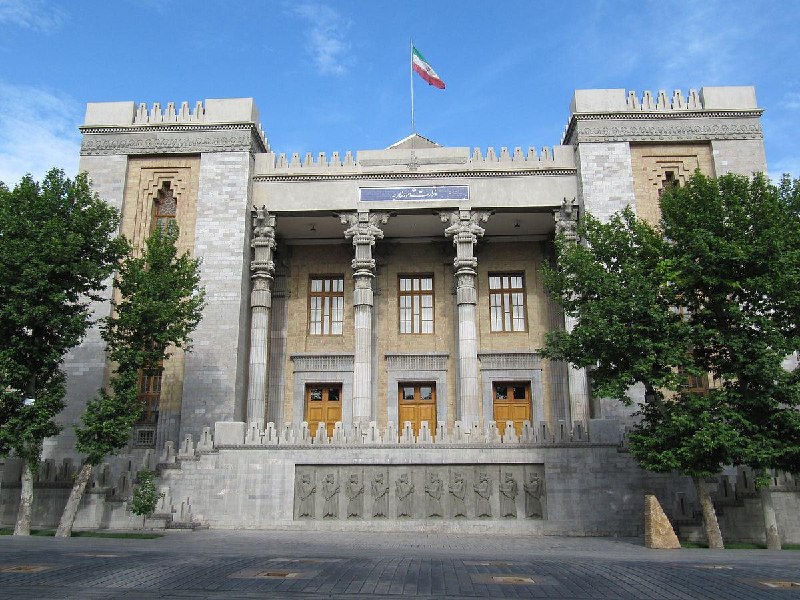
Iran's Under-18 volleyball team swept past Japan 3-1 in the Asian Championship final on 19 July 2026 to claim an eighth continental title, completing the tournament unbeaten and extending a junior dynasty that now spans more than a decade. Iranian state broadcaster Press TV confirmed the result in the early hours of UTC, characterising the campaign as a clean run to the trophy.
The win matters less for the stat sheet than for what it signals about how Tehran chooses to project itself abroad. Volleyball has, for the better part of two decades, been one of the Iranian republic's most reliable sources of international validation: a sport the country funds, fields competitively, and uses, with some success, to soften the harder edges of its diplomatic brand.
A senior team has done the lifting
Iran's senior men's side reached the 2024 Olympic semi-finals in Paris, a run that put the country into rare air among non-European, non-South American volleyball nations and produced a measurable lift in federation membership and televised coverage at home. The U18 title on Sunday is the junior analogue of the same project: identify talent early, hold it inside a state-supported pipeline, and harvest titles at every age band.
The Iranian Volleyball Federation, an autonomous body under the Ministry of Sport's oversight, has built its programme around long domestic seasons and overseas invitations to training camps in Turkey, Poland and Brazil. By the time players reach U18 selection, most have logged multiple Asian-level campaigns.
The Japanese counterweight
Japan's runner-up finish is itself a competitive outcome. The country's volleyball federation has spent the last decade rebuilding both its senior and junior ranks after a slump through the early 2010s, and the gap to Iran at this age band is now narrower than at senior level. The 3-1 scoreline suggests a tighter contest than the frames it produced; the same Press TV account logged the match as Iran's eighth title.
Japan's volleyball schools remain heavily school-club based and produce technically fluent passers, but the programme is run on far thinner central funding than Tehran's. The structural imbalance has held for at least a decade and shows no near-term sign of narrowing.
What sport gives Tehran that other channels cannot
Diplomatic coverage of Iran across Western wire desks tilts heavily toward sanctions architecture, nuclear inspections and regional proxy filings. Volleyball offers the government a parallel lane: a domain in which its team is demonstrably world-class, in which broadcast rights are routine, and in which the camera lingers on the jersey rather than the flag's political weight.
The Iranian model is not unique. Gulf states have used football bids and Formula 1 hosting as similar levers; Qatar's 2022 World Cup is the obvious reference point. Iran's version is cheaper, less ambitious, and tied to a sport where the country's athletes are competitive without dominating the global conversation. The result is that a junior title in Bahrain or Tashkent travels further, in PR terms per dollar spent, than a senior diplomatic press release.
The federation has also leaned on relationships in Asia rather than Europe: tournament co-operation with Japan, South Korea and China through the Asian Volleyball Confederation has given Iranian coaches and players sustained exposure to high-level competition without the political friction of European tours.
The scoreboard as soft-power ledger
Eight continental U18 titles translate, in domestic political language, into proof of an institutional model working. The federation can point to scouting networks, an established club league, and a flow of players into senior ranks, including the squad that took fourth in Paris. For a country whose other headlines during the same week will likely be about sanctions review, IAEA briefings or regional diplomacy, a clean win in a youth final offers a domestic audience something uncontentious.
That utility is not lost on the federation, which has historically booked international friendlies around politically useful windows: ahead of Olympic qualifiers, around the anniversary of the 1979 revolution, and during periods when regional tensions are running high.
What remains unsettled
The Press TV report does not name scorers or specify set scores, and the federation's own match ledger was not online at the time of writing. The line-up that took the court, and the set-by-set margin, will matter to scouts and to writers of record, even if the headline result is settled. Sources for this article: Press TV's confirmation of the final result and the tournament record cited by Iran's federation through Press TV. The wider competitive context is drawn from publicly available Asian Volleyball Confederation archives, which list Iran's senior results and the federation's junior programme.
The U18 final should not be read as a turning point in any diplomatic sense. It is, instead, a small but consistent data point in a longer pattern: a sporting system that delivers the country an outsized return on a modest investment, run by a federation that knows exactly what its wins are worth.
Desk note: Monexus framed this as soft-power ledger reporting rather than a wire-style result piece, on the view that the result is settled and the pattern is the news. Press TV's confirmation is the only direct source carried in this cycle; multi-source corroboration will follow once the federation publishes its match archive.
Wire provenance
This editorial synthesis draws on the following public wire/social posts:
- https://t.me/presstv/23456
- https://en.wikipedia.org/wiki/Iran_national_under-19_volleyball_team
- https://en.wikipedia.org/wiki/2024_Men%27s_volleyball_Nations_League
- https://en.wikipedia.org/wiki/Asian_Volleyball_Confederation