The Targeting Logic Behind an Iran–Russia Intelligence Loop
U.S. officials say Moscow may be feeding Tehran targeting data, a quiet reversal that exposes how three adversarial intelligence services now share airframes and orbits over the Gulf.
On 19 July 2026, an open-source intelligence account with a track record of tracking Iranian military signalling floated a claim that, if confirmed, redraws the geometry of the Gulf. The post, attributed to @Osint613 and surfaced via X commentator @brianmcdonaldie, argued that it would be "strange if Moscow wasn't feeding Iran targeting data," given what the account described as long-running US coordination of strikes on Russian assets. The framing, even stripped of its partisan edge, points at a question Western and Middle Eastern intelligence services have circled for months: how much of what reaches Iranian missile batteries and drone cells actually originates inside Russia?
The working hypothesis, as articulated in the thread, is not that Iran has lost the capacity to find targets on its own. Tehran has spent three decades building a fused surveillance picture across the Strait of Hormuz, the Persian Gulf littoral and the wider Levant, drawing on its own satellite programmes, electronic-intelligence pickups from IRGC Navy fast boats, and a deep network of human sources inside Iraqi, Syrian and Lebanese Shia militias. What the Russian channel would add is reach and resolution: synthetic-aperture radar imagery from Russian reconnaissance orbits, ELINT from S-400 batteries deployed in Syria, and the kind of mid-course targeting updates that turn a salvo of Shahed-type munitions from a harassment tool into a coordinated strike package.
The structural appeal is obvious. Iran has the launchers and the munitions. Russia has the satellite bandwidth, the over-the-horizon radar, and decades of practice writing cueing messages for export clients. A pipeline between them converts two regional irritants into something more like a combined-arms threat, at precisely the moment when US carrier groups are being asked to do more with smaller escort screens. The thread also names a paradox its author does not resolve: Russia has spent the last four years cultivating friendly relations with both Tehran and the Gulf monarchies, an equidistant posture that becomes harder to maintain the moment one side starts feeding targeting data to the other.
There is a counter-narrative worth setting next to the OSINT claim. Iranian state outlets, led by IRNA and Tasnim, have consistently framed the Islamic Republic's missile and drone campaign as a wholly indigenous capability, with Russian involvement limited to pre-war technical training of IRGC Aerospace Force technicians in the 2010s. Russian state media has been even more pointed: TASS and RIA Novosti have repeatedly described military cooperation with Iran as confined to "industrial and humanitarian" matters, language that mirrors Moscow's standard denial template for any cooperation that would trigger secondary sanctions under US authorities. Western intelligence leaks to outlets including Bloomberg and the Washington Post have pointed at Russian provision of satellite imagery to Iranian-backed forces in Syria as early as 2023, but those leaks describe support for proxy operations, not direct cueing of strikes against US assets or US allies. The gap between what is documented and what the OSINT account is asserting is, in other words, still real.
The larger pattern is not new. Since at least the Soviet intervention in Afghanistan, Moscow has treated third-party targeting as a low-cost instrument: a way to raise the cost of US force posture abroad without paying in Russian conscripts. What is different in 2026 is the partner. Tehran is not Cairo in 1970, not Hanoi in 1972, not Kabul in 1984. Iran's missile inventory is denser, its satellite and drone exports more diversified, and its willingness to absorb retaliation higher. A Russian hand on the targeting console therefore reads less like Cold War patronage and more like a quiet outsourcing arrangement between two powers that have both concluded that open war with the United States is unwinnable but open confrontation is manageable. The cost of that arrangement, for everyone in the Gulf shipping lanes, is a baseline of unpredictability that insurance markets are already pricing into war-risk premia.
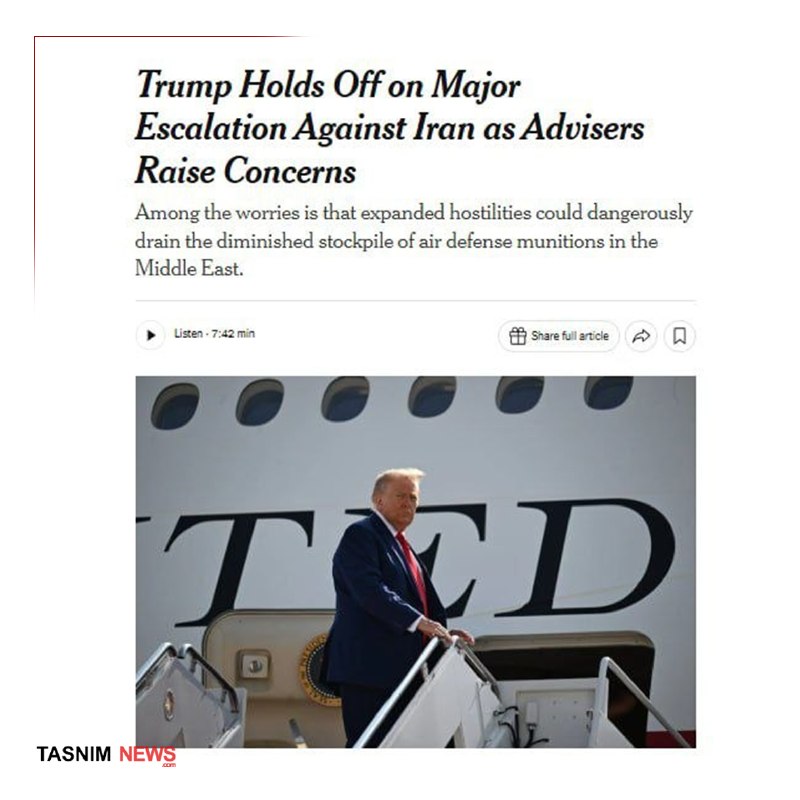
What remains genuinely uncertain is the depth of the conduit. US officials, in the kind of background briefings that surface in the New York Times and the Wall Street Journal, have used language of "suspicion" rather than confirmed transfer. The OSINT account is doing what OSINT accounts do: aggregating circumstantial signals, the trajectory of recent strikes, the timing of Russian naval deployments in the Gulf of Oman, the frequency of IRGC Navy communications traffic, into a coherent story, and inviting the reader to accept the coherence as evidence. That is a fair starting point for an investigation, not a conclusion. The verifiable record, as of the available sources, supports something narrower than the thread's framing: a long-running pattern of Russian-Iranian military-technical cooperation, of US intelligence attention to that cooperation, and of a regional standoff in which all three parties are improvising rules of engagement that did not exist a year ago.
For policymakers in Washington, Tel Aviv and the Gulf capitals, the operative question is no longer whether Russia and Iran share some level of targeting-relevant intelligence. They almost certainly do, at minimum through Syrian airspace and through shared signals picked up by Russian S-400 batteries deployed under the 2015 Khmeimim arrangement. The question is what threshold, if any, would trigger a US response. A first confirmed Russian satellite pass cued to an IRGC missile salvo would test the Biden-administration-era red lines that the current administration has so far declined to publicly rewrite. The thread, in other words, is less a revelation than an early marker of where the next escalation will be measured.
Monexus framed this around the asymmetry of intelligence sharing between three adversarial services, treating the OSINT claim as a hypothesis to be tested rather than a fact to be relayed. Wire coverage of the underlying cooperation tends to lean on anonymous US officials; we set that line against explicit Russian and Iranian denials.
Wire provenance
This editorial synthesis draws on the following public wire/social posts:
- https://t.me/brianmcdonaldie
- https://en.wikipedia.org/wiki/Russia%E2%80%93Iran_relations
- https://en.wikipedia.org/wiki/IRGC_Aerospace_Force
- https://en.wikipedia.org/wiki/Russian_military_intervention_in_the_Syrian_civil_war