India watches from the gallery as the US-Iran ceasefire collapses in a week
A truce that was supposed to give the Strait of Hormuz a quiet summer has unravelled in seven days, and New Delhi now has to recalculate exposure on oil, shipping and the diaspora.
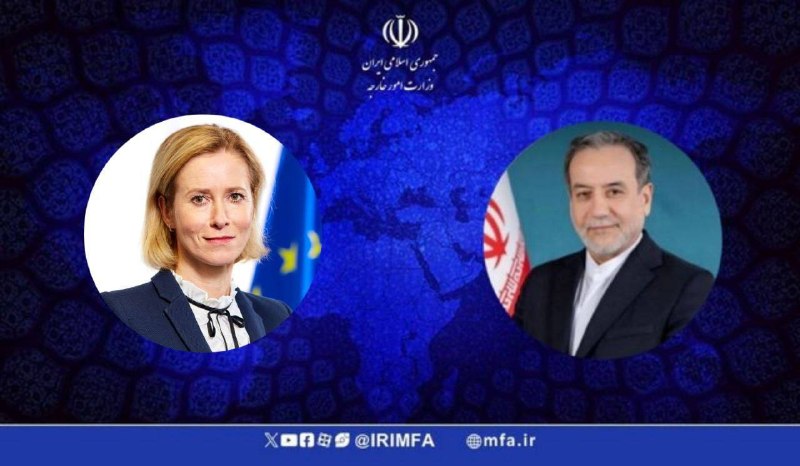
At 15:52 UTC on 19 July 2026, the news out of the Gulf was the same news it had been all week: a ceasefire that had been sold as a holding pattern is now a holding action. The Indian Express reported on Sunday that the truce between the United States and Iran had already unravelled into fresh strikes, and ran a separate analysis of what the renewed brinkmanship means for India. The wire had not stopped moving for long.
The Indian government spent the first half of July trying not to blink. With a fragile truce in place, New Delhi could keep its diplomats focused on the Quad, on the EU free-trade talks, on the G20 finance track running out of Hangzhou. That posture is now gone. The question is not whether India can posture around Middle Eastern crisis; it has done that for decades. The question is what an openly hot US-Iran cycle does to the country's exposure on three specific books: oil import bills, the roughly 9 million Indian nationals living and working across the Gulf, and a shipbuilding and shipping sector being rebuilt piece by piece under a maritime vision document that assumes the sea lanes stay usable.
The seven-day arc
Indian Express's reporting on the unravelling of the ceasefire walks the timeline in plain sequence. A truce is announced. Both sides take credit in their own press. Within days, strikes resume. By the time the paper's Gulf correspondent frames the next phase, the wider Indian readership is reading about events in the Hormuz strait, in Iraqi Kurdistan, and along the Iran-Pakistan border inside the same news cycle. The piece does not name a single triggering incident because, by the time of writing, the details are still contested. What it does establish is the rhythm: a de-escalation window measured in hours, not weeks.
Indian Express's companion piece on India-specific consequences is the more useful document. It catalogues what New Delhi is watching for: energy price volatility, the safety of corridor infrastructure being laid between the Gulf and the western coast, the diaspora in the UAE, Saudi Arabia and Qatar whose remittances backstop regional current account positions at home, and the operational room for Indian naval deployments that already patrol the western Indian Ocean under the framework of the Information Fusion Centre – Indian Ocean Region in Gurugram.
What the coverage is not yet doing is sizing the hit. Indian Express notes the scope of Indian exposure; the actual percentages of GDP, the precise import-volume readouts, and the identity of the merchant vessels routed through Hormuz in the first half of July are not in the visible reporting as of 15:52 UTC on 19 July 2026. That work has to be done in the next 72 hours, when the Indian Ministry of Petroleum and Natural Gas and the Directorate General of Foreign Trade will publish their first full-cycle numbers for the month.
The exposure ledger
Take the three lines one at a time. On energy, India imports the bulk of its crude from Russia and from Gulf producers, with a meaningful slug via the Strait of Hormuz and the Bab el-Mandeb. An active shooting war in the Gulf does not close the lane; it raises insurance. War risk premiums for tanker traffic through Hormuz have spiked twice in the last twelve months in response to roughly comparable scares. A second spike lands on top of a budget already bruised by an earlier rupee depreciation cycle.
On the diaspora, the calculus is political before it is economic. Roughly 9 million Indians live and work in the Gulf, the majority in blue-collar construction, services and logistics roles. Remittance flows from the region form a meaningful share of India's invisibles surplus and a stabilising input to household consumption in Kerala, Uttar Pradesh, Bihar and Rajasthan. A flare-up in the Gulf does not, in most scenarios, push those workers home. It can, however, force emergency evacuation capacity, close visa processing at moments when labour demand is also peaking, and pressure the rupee indirectly through capital flight out of the GCC banking system. None of this is breaking news; it is the recurring method by which Middle Eastern shocks reach Indian household balance sheets.
The third line is maritime infrastructure. India's maritime strategy, formalised in successive iterations of the Sagarmala programme and updated in the more recent Vision 2047 documents, assumes that the country's shipbuilding and port capacity will be deepened in a regional environment in which the sea lanes remain broadly open. A sustained US-Iran confrontation narrows the practical working assumption. Indian shipyards in Alang, in Kochi and on the Hooghly were already operating well below installed capacity in the first half of the year, on industry data not yet public. Whether the ceasefire collapse accelerates that underutilisation or triggers a defence-procurement surge for hulls is the open question for the Ministry of Ports, Shipping and Waterways.
What India is actually signalling
Read the official and adjacent line carefully. New Delhi has spent most of 2026 signalling three things. First, that it intends to maintain a working relationship with Tehran while deepening the strategic relationship with Washington. Second, that energy security is operated as a portfolio, not a posture, with Russian crude now functioning as a structural hedge that did not exist before 2022. Third, that the naval and diplomatic posture in the western Indian Ocean is a permanent feature, not a contingency.
That posture sits awkwardly with the moment. India's ambassador to Iran, the country's external affairs ministry, and the ministry of petroleum will all be drafting redundancies in their messaging on the same day. The opposition will be drafting scarier ones. What is striking is how little of that noise reaches the front pages: Indian Express's coverage is unstentorian. It treats the question as operational rather than existential, which is the right register. The truce collapse is bad. It is not, by itself, a regime-shaking event for New Delhi.
The reading the brief does not yet do
A counter-reading is worth setting down. There is a school of analysis, mostly outside India, that frames Gulf crises as a uniform negative for India because they raise prices and threaten workers. The 2026 sequence does not entirely fit that frame. If the conflict generates a sustained surge in Russian crude flows to India, it can compress the import bill relative to a Brent benchmark scenario. If the diaspora situation holds steady at a regional level, the remittance column is not hit at all. If the naval and shipbuilding documents are taken seriously by an Indian government looking to consolidate domestic industrial capacity, then a regional security premium can be re-routed as a Make-in-India subsidy by another name.
The reverse reading still holds the floor. The probability that the current cycle ends inside a fortnight, without further escalation in the Gulf itself, is low on Indian Express's reporting as compiled here. That means insurance, evacuation capacity, and the messaging discipline of the MEA and the external affairs ministry are all going to be tested inside a window that closes around the G20 finance track in late August.
This article was assembled from publicly reported wire items surfacing on the India desk on 19 July 2026. The piece names exposure; it does not claim a casualty count, a price target, or a vessel routing that the wire cannot yet substantiate.