New Delhi bars 'Cockroach' march on parliament as opposition tests Modi's street
Police in New Delhi have banned a Monday march on the Indian parliament by the opposition 'Cockroach Janata Party,' turning a viral protest movement into a constitutional standoff on the eve of the monsoon session.
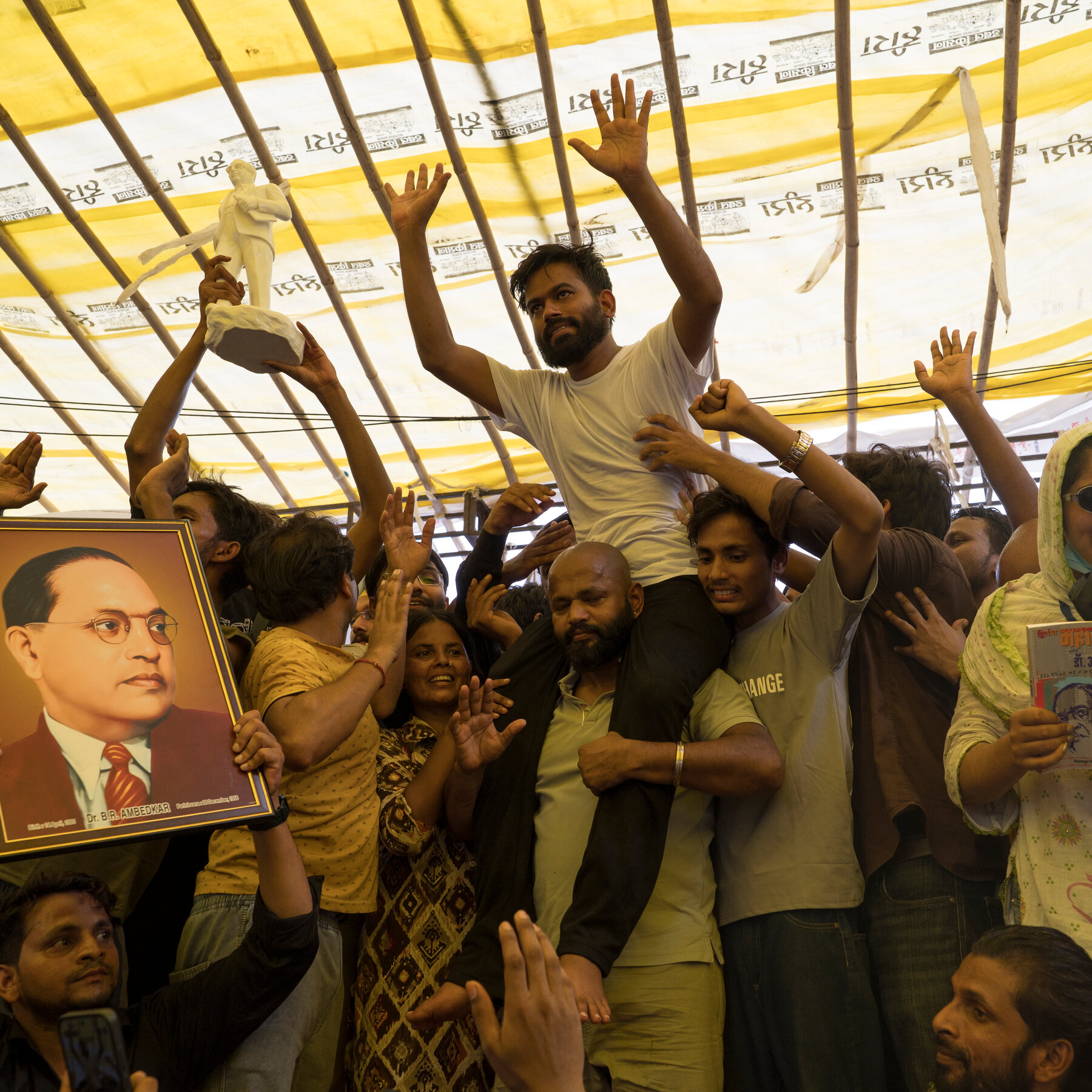
New Delhi police on Sunday 19 July 2026 refused permission for a march on the Indian parliament planned by supporters of the opposition Cockroach Janata Party, setting up a confrontation on the first day of the monsoon session and testing how far a viral street movement can push the world's largest electoral democracy.
The denial, reported at 20:40 UTC by FRANCE 24 and confirmed in a parallel wire at 21:16 UTC from the same outlet's English channel, frames the dispute as a contest over the boundary between public order and political assembly. The Cockroach Janata Party, whose name mocks a slur the governing Bharatiya Janata Party has used against opposition legislators, had called supporters onto the streets of the capital for Monday, the opening of the parliamentary session, to press grievances the party's leaders have spent weeks airing online.
A movement built on insult turned into a banner
What began as a derogatory label aimed at opposition members has, in the run-up to the session, been repurposed as a defiant brand. FRANCE 24's reporting describes a crowd that has self-identified with the epithet and turned it into a piece of street-political theatre. That inversion is not incidental: India's political lexicon has long been a place where parties and movements trade insults that become flags. The point of the cockroach mascot is to make the governing party's vocabulary uncomfortable in public.
The chosen venue sharpens the provocation. A march on parliament, on the first scheduled sitting of the monsoon session, is a deliberate signal that the opposition intends to act outside the chamber as well as inside it. New Delhi's police, who report to the home ministry of the Union government, had to weigh that symbolic load against the operational reality of closing a capital city centre already locked into a security perimeter around the legislature.
The official frame: order, not politics
Police notifications justifying the ban invoke traffic management and public order, the two standard grounds on which Indian authorities refuse assembly permissions. That language is consistent with how metropolitan forces have handled larger demonstrations in recent years, from the 2020–21 farm-sector sit-ins on the city's edges to periodic opposition rallies at Jantar Mantar, the designated protest ground that the state itself runs.
The structural pattern is familiar. Indian authorities routinely direct dissent into designated spaces and times, reserving the right to refuse permission when, in their judgement, a proposed demonstration threatens to overlap with a state-managed event. The BJP-led government at the centre has used these powers more visibly than its predecessors, but the underlying instrument, Section 30 of the Police Act and the corresponding state-level assembly statutes, is older than the current administration. Defenders of the ban can argue, with some textual fidelity, that this is administrative habit, not political retaliation.
The opposition frame: a permission regime under strain
The Cockroach Janata Party's case, as reported by FRANCE 24, is that the permission regime has become a tool for keeping dissent off the cameras. Their grievance is procedural as much as substantive: when authorities can refuse a march on the eve of parliament's opening, the right to demonstrate loses much of its political content. The party's leaders have framed the cockroach label as proof that the governing side views ordinary opposition as vermin; the demand to march on the legislature is, in that telling, a demand to be recognised as a legitimate political adversary rather than a target of insult.
This is a complaint with precedent. India's Supreme Court has, in successive rulings since the 2010s, held that the right to assemble and march is a facet of the right to free expression and that restrictions must meet the tests of necessity and proportionality. None of those rulings has invalidated the permission regime outright, but they have given opposition parties a usable legal vocabulary. The Cockroach Janata Party's next move, if the ban holds, is plausibly a petition to the High Court of Delhi or to the Supreme Court itself, asking for permission under judicial supervision rather than executive discretion.
What the streets are likely to do next
The ban raises a concrete operational question. Will supporters obey the order, attempt to march regardless, or shift venue? FRANCE 24's reporting flags a "standoff" as the working scenario; Indian wire services have, in similar episodes, often documented small symbolic breaches, a brief sit-in, a placard hoisted near a barrier, a press conference staged at the perimeter, that allow the movement to claim defiance without producing mass arrests.
A second question is what parliament itself does on Monday. The monsoon session is expected to take up economic and administrative business; whether opposition MPs use the chamber to amplify the banned march, or whether they escalate into procedural disruption, will determine whether the street confrontation feeds into the legislative record or remains a parallel event. The cockroach label, by design, thrives in both arenas.
What remains uncertain
The wire reporting available at publication time does not specify how many demonstrators the Cockroach Janata Party expected to draw, whether party leaders had obtained any preliminary clearance before the ban, or what specific route had been proposed for the march. FRANCE 24's dispatch leaves the official grounds for the denial at the level of police assertion rather than published order, and the party's legal counsel has not yet been quoted on the record. A court filing, if it comes, will be the next verifiable milestone; absent that, the dispute sits on a knife edge between administrative refusal and constitutional test case.
Desk note
Monexus framed this as a story about the boundary of assembly rights, not as a story about who is right on the underlying political dispute. The wire line emphasised the protest and the police ban; this publication adds the procedural and legal scaffolding the wires left implicit, while flagging that the underlying complaint is unresolved and the legal track has yet to be filed.
Wire provenance
This editorial synthesis draws on the following public wire/social posts:
- https://t.me/france24_en
- https://t.me/france24_en
- https://en.wikipedia.org/wiki/Cockroach_(slur)
- https://en.wikipedia.org/wiki/Monsoon_session_of_the_Indian_Parliament