Ukrainian drones hit two Wildberries hubs as Moscow-region blaze lights up the skyline
Fires at Wildberries distribution centres in Elektrostal and Kotovsk on 18 July mark the clearest signal yet that Ukrainian long-range strikes are reaching deeper into Russian commercial supply chains.
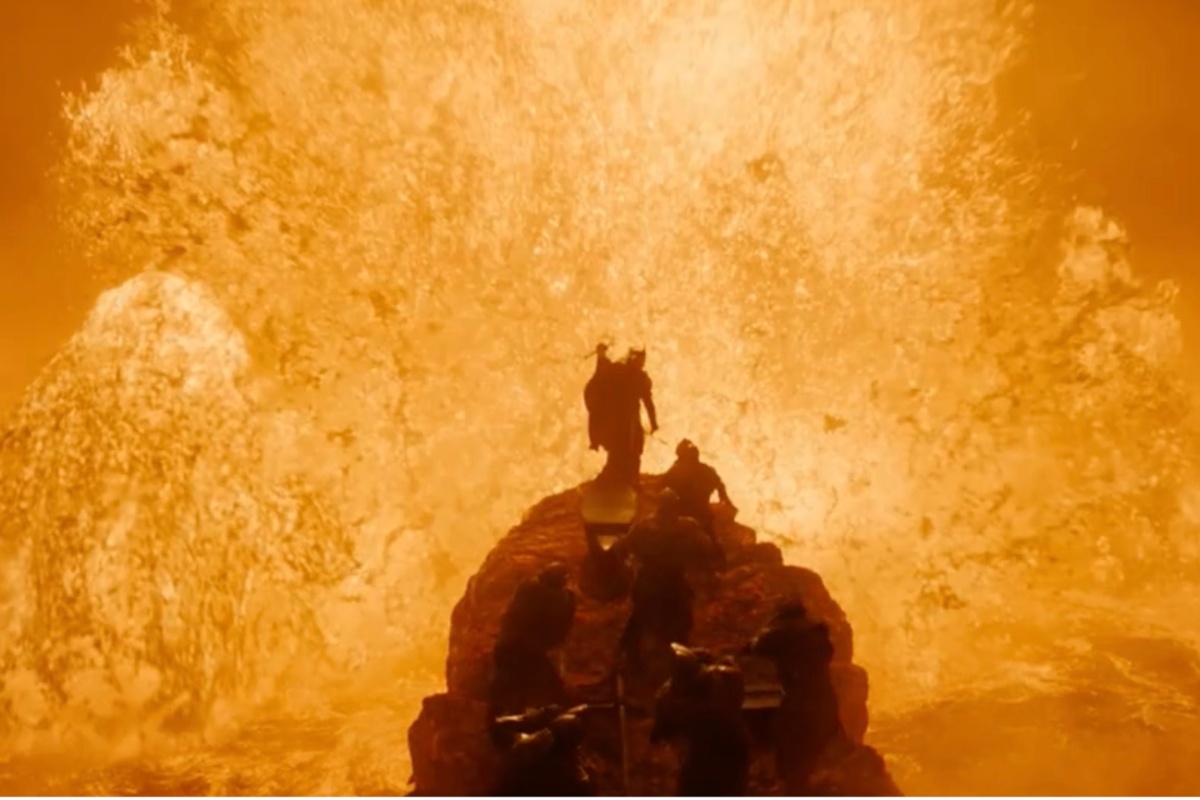
A plume over Elektrostal on the morning of 18 July 2026 was visible from more than 60 kilometres away, according to a Telegram channel that tracks strikes on Russian infrastructure, as a fire tore through what it identified as a central Wildberries distribution warehouse on the eastern edge of the Moscow region. Within roughly twenty minutes a second fire was reported at a Wildberries logistics centre in Kotovsk, Tambov region, several hundred kilometres to the south-east, in what Russian-aligned and Ukrainian channels alike framed as a coordinated strike on the country's largest domestic e-commerce operator.
The pair of fires marks an escalation in the pattern of long-range Ukrainian strikes inside Russia. Until now, the campaign has been read primarily through military and energy targets: oil refineries, ammunition depots, command nodes. Hitting commercial logistics at this scale, in two regions on the same morning, signals a widening of the target set from war-fighting infrastructure to the supply chains that keep the Russian consumer economy functioning. If the strike pattern holds, the next round of economic pressure on Moscow will arrive not from a sanctions package but from a flight of drones.
What was hit, and where
The Elektrostal site sits inside one of Wildberries's most important fulfilment clusters, serving the capital's eastern periphery and onward distribution across central Russia. The Telegram channel @operativnoZSU described the fire at 04:22 UTC on 18 July, noting that the blaze could be seen from more than 60 kilometres away and identifying the warehouse as a key logistics hub for the company. @uniannet carried a parallel report forty minutes earlier in Kyiv time, describing the morning as having begun in several Russian cities "not with coffee, but with greetings from Ukrainian drones," and citing the Tambov region strike alongside the Moscow region one.
The Kotovsk facility, in Tambov region, was identified by the Russian-aligned channel @two_majors at 05:01 UTC, which attributed the reporting to TASS and noted that the company itself had confirmed the attacks. The two locations, taken together, suggest a deliberate choice of targets: one site inside the Moscow industrial belt, one deep in the Black Earth region far from the front. The distances involved also speak to the reach of the Ukrainian strike architecture, which has over the past twelve months pushed from short-range harassment of border oblasts into a sustained campaign against targets in the Russian heartland.
What the Russian side is conceding
That TASS is being cited, by Russian milbloggers, as the original source of confirmation is itself worth pausing on. Russian state media do not, as a rule, lead with the news that Ukrainian drones have reached Tambov or Elektrostal. The fact that the confirmation moved through official wires rather than being filtered into denial or fog suggests one of two things: either the strikes were too visible and too widely photographed to be plausibly denied, or Moscow has decided that admitting the operational scope now is preferable to letting the footage accumulate unaccompanied online.
@two_majors, which is among the more influential of the Russian frontline Telegram channels, framed the strikes in the language of economic targeting: "the enemy is targeting any economically significant infrastructure," a phrase that the channel's editors have used with increasing regularity over the past quarter. The framing concedes the strategic logic without endorsing it. That the Russian information space is processing these strikes in the language of economic pressure rather than as isolated acts of sabotage tells the reader something important about how the war's centre of gravity is being read inside Russia itself.
The structural shift in Ukraine's strike campaign
For most of 2024 and 2025, the dominant story of Ukrainian long-range strikes was about Russian oil refining. Repeated attacks on refineries at Tuapse, Kirishi, Volgograd and elsewhere pushed Russian domestic fuel prices upward and tightened margins on export volumes, producing a measurable, if contested, drag on state revenues. That campaign was aimed, in plain terms, at the export earnings that fund the war.
Hitting Wildberries changes the audience. The company is the largest online retailer in Russia by gross merchandise value, a quasi-utility for Russian household consumption. Its warehouses are not dual-use in any classical sense; they do not move ammunition, fuel or troops. They move parcels. That is precisely the point. A strike on a refinery puts pressure on the war budget; a strike on a national logistics network puts pressure on the consumer economy, on employment in non-military regions, and on the daily experience of a Russian public that the war has so far touched largely through television.
There is an obvious counter-read, and it deserves to be stated plainly: Wildberries is a private commercial company, not a state-owned military asset, and the legal and moral case for hitting civilian-adjacent infrastructure is narrower than the case for hitting an oil refinery operated by Rosneft. Russian civilian employees of Wildberries are not, by virtue of their employment, participants in the invasion. If the campaign expands across retail, food distribution, and consumer-facing logistics, the political and diplomatic costs inside Western capitals will rise, even if Russian domestic tolerance for pain has so far proved higher than expected.
Stakes and what to watch next
Three things to watch in the days ahead. First, Wildberries's own public statement. The company has, in past crises, been cautious about entering the political frame; a more formal acknowledgment beyond the TASS-confirmed line would be a signal that the operational damage is real and material, not a passing news cycle. Second, the Russian Ministry of Defence's morning strike summary. Moscow has been increasingly detailed in its accounting of intercepted drones; the length of the list for the night of 17–18 July, and the geographic spread, will be a rough indicator of campaign tempo. Third, whether Ukrainian official sources claim the strikes, as Kyiv has done with previous rounds. A claim would confirm operational authorship and tie the attacks to the broader strategy of economic pressure; silence would leave the door open for plausible deniability.
The larger pattern is harder to miss. The war's economic front is widening, and the tools of that widening are no longer limited to sanctions packages negotiated in Brussels or Washington. They are being delivered, increasingly, by Ukrainian aircraft flying into Russian airspace. Whether that shift produces a faster negotiation or a slower one is the open question, and one the available sources do not resolve.
Wire provenance
This editorial synthesis draws on the following public wire/social posts:
- https://t.me/operativnoZSU
- https://t.me/uniannet
- https://t.me/two_majors