Polymarket ceasefire contract holds at 37% as Poltava gas stations burn and
Polymarket held a 2026 Ukraine-Russia ceasefire at 37% on 25 July 2026 as
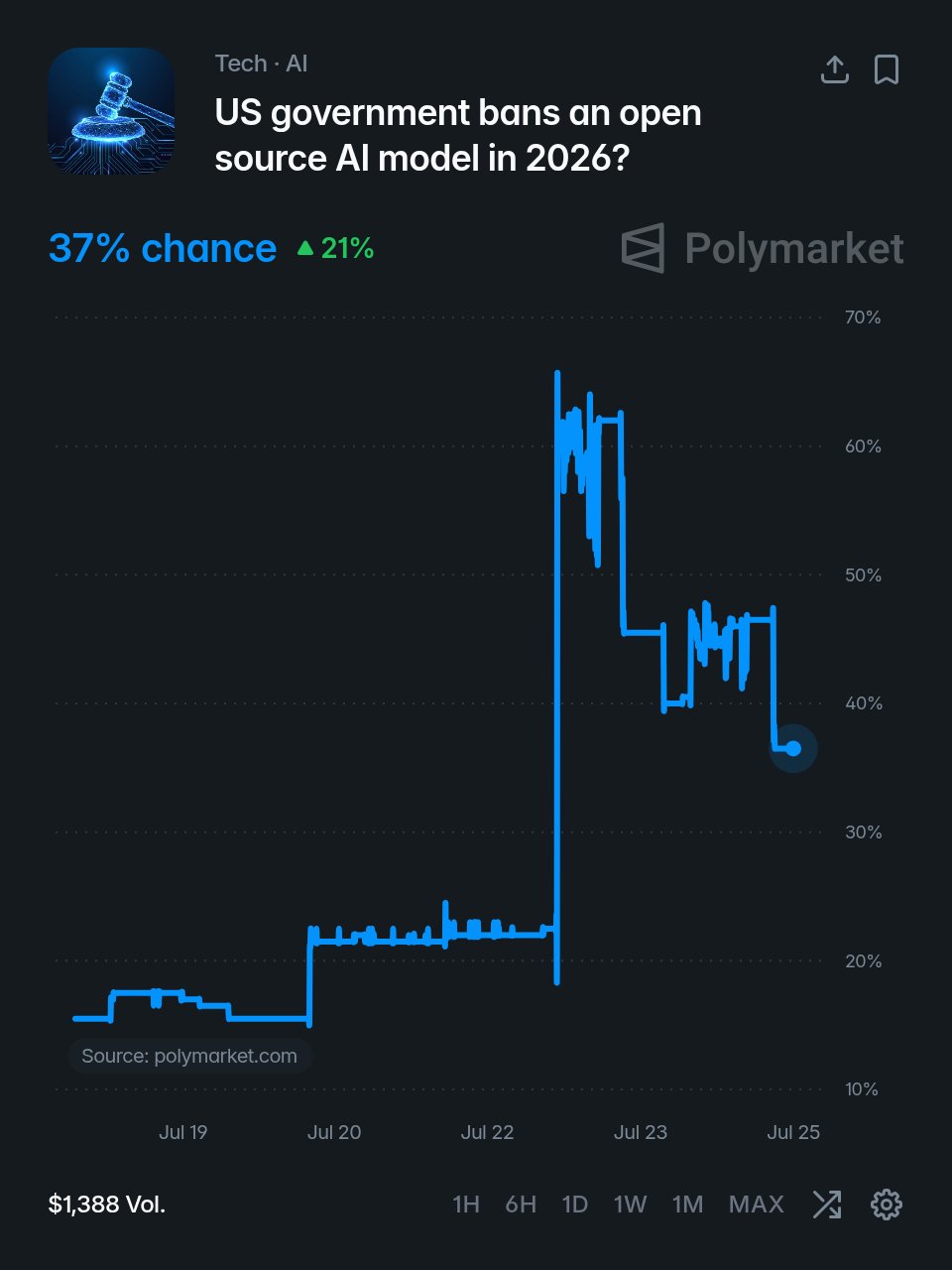
On 25 July 2026, the prediction market Polymarket priced the chance of a Ukraine-Russia ceasefire before 31 December at 37%, a number that does most of the talking on its own. Markets of this type do not vote; they clear. They take a position from someone willing to back it with cash, against someone willing to take the other side, and they print a price. The 37% reading sits between tail risk and coin flip, which is the band in which serious hedging begins but no one books it into their annual plan.
The price has to be read alongside the rhythm of the war it is trying to summarise. The Russian business daily RBC, relayed on Telegram on the morning of 25 July 2026, confirmed that four gas stations in Poltava oblast were damaged in an overnight Russian drone attack, with no casualties reported. Separately, the Telegram channel ClashReport reported on the same morning that Ukraine hit Russia's Tyumen oil refinery, more than 2,000 kilometres from the border, and that the regional governor confirmed a drone hit the site and started a fire. The market says there is a meaningful chance of a deal. The barrages, and the Ukrainian long-range strike that landed 2,000 kilometres inside Russia on the same morning, say there is not one yet.
A ceasefire contract that cannot catch a bullet
Polymarket's ceasefire market is structured as a binary: either a publicly verifiable ceasefire agreement between Ukraine and Russia is reached before 31 December 2026, or it is not. The 37% figure is a tradable mid-price, not a poll. It reflects what participants are willing to stake at that level right now. A price in the high 30s is consistent with a base case in which the market judges negotiations to be live, partial confidence warranted, but neither side has moved enough for the order book to lean past 50%. On a geopolitics desk, this kind of reading prompts two questions: what news is the market already discounting, and what news has it not yet caught up to.
The contract is a small but revealing artefact of how the war is now being priced in the open. The Polymarket ceasefire page and its accompanying public post are the only public artefacts of this market that the available source items directly cite; any broader characterisation of the user base, the depth of the order book relative to other exchanges, or how the contract is read across foreign ministries and treasury desks is not specified in the available source items.
The overnight tally and the fuel sites
Behind the price action, the physical war is grinding on with an industrial regularity. On the morning of 25 July 2026, RBC, cited by the Telegram channel wfwitness, confirmed that four gas stations in Poltava oblast were damaged in overnight Russian drone strikes, with no casualties reported. The regional attribution that earlier reporting had to leave open is now contained in the source items. TSN, in a separate post, reported that Russian strikes hit several gas stations in one of Ukraine's regions; the TSN post does not name the region. The wfwitness post, relaying RBC, does.
Monexus analysis: with the regional attribution now confirmed, the operational pattern is consistent with a continued Russian campaign against fuel retail across the country. On the demand side, that is a pressure on harvest logistics and on the diesel stocks the front line runs on; on the supply side, a pressure on refining margins and household stocks ahead of autumn. The available source items do not specify what type of drones were used against the gas stations, whether the sites were retail forecourts or bulk storage, what fuel categories were affected, what the brand or ownership of the stations is, or how the strikes were distributed across other regions on the same night.
On the financial side, the debate inside Ukraine and among its lenders is shifting from how much to lend to how the money is structured. A post that circulated on 24 July 2026 in a Telegram channel focused on economic politics captured the tension in these terms: "I agree that the terms of the IMF are not entirely fair to Ukraine. But first of all, the IMF loan is a signal to other states that Ukraine is capable. IMF loans are very small compared to what the EU…" The post is one of hundreds of similar exchanges running across Ukrainian-language and Russian-language networks, and it is worth flagging that the channel is anonymous rather than a named official or institution. The structural complaint it captures is real: IMF programmes impose conditionality that constrains fiscal and monetary policy at exactly the moment Kyiv needs to spend. The counterweight is also real. An IMF programme, whatever its fine print, is a third-party endorsement that lowers the perceived risk on the much larger bilateral and EU support package Kyiv is negotiating in parallel. The source excerpt cuts off mid-sentence; the precise size of the IMF tranche under negotiation, the comparable EU envelope, and the date of the next IMF review are not specified in the available items.
2,000 kilometres in the other direction
If the Russian side is striking fuel retail inside Ukraine, the Ukrainian side is striking downstream capacity inside Russia. The Telegram channel ClashReport reported on 25 July 2026 that Ukraine hit Russia's Tyumen oil refinery, more than 2,000 kilometres from the border, and that the regional governor confirmed a drone hit the site and started a fire. The strike is one of the deepest long-range Ukrainian drone operations of the war to be confirmed at this distance on this day, and it lands on a refinery that the source item identifies as Tyumen, in the heart of Western Siberia's oil country.
Monexus assessment: the structural read here is that the war is now being fought on energy infrastructure in both directions on the same morning. The available source items do not specify the extent of the damage at Tyumen, the units affected, whether the fire was contained within hours of ignition, or how the strike compares with prior Ukrainian long-range operations against Russian refining. Any broader claim about Russian air-defence coverage thinning at this distance, or about Russian domestic insurance and refined-product logistics repricing as a consequence, is not contained in the available source items and is therefore not made here.
Why the market cannot price what is not on the table
The 37% number, taken seriously, also exposes a category error that a lot of political commentary repeats. Prediction markets price things that can be cleanly defined and verifiably resolved. "Ceasefire before 31 December 2026" is clean. What is not clean is the policy environment that determines whether anyone signs. The same news flow that has lifted the price to 37% in late July could, by mid-September, push it back below 20% if a credible negotiating track freezes, or above 60% if a public framework emerges. The market is not forecasting a ceasefire. It is forecasting the probability that someone, somewhere, chooses to announce one within the window.
This is where the platform layer starts to matter for the war economy in a way that did not exist five years ago. Monexus analysis: the more interesting structural question is not whether 37% is right, but whether a market price is the right instrument to express a view on a process that is, at base, a sovereign decision. Whether the contract's read-through has propagated into Ukrainian sovereign credit bid-ask moves, hedge-fund positioning, or treasury-desk hedging in the way some commentary describes is not specified in the available source items; that broader propagation claim is therefore not made here.
Stakes and the next sixty days
For Kyiv, the asymmetry is uncomfortable. A 37% ceasefire probability is enough to justify preparing diplomatic tracks, but it is not high enough to relax the wartime fiscal posture. Confirmed overnight strikes on four gas stations in Poltava oblast raise the political cost of any deal on the Ukrainian side by reminding the public that infrastructure is being hit; the same strikes raise the political cost on the Russian side by demonstrating that the air campaign is still operational. The Tyumen strike is the reciprocal move: a signal that the Ukrainian side retains the ability to put points on the Russian energy map far from the front, and that the price of any settlement includes whatever happens to those facilities in the window before it is signed.
Monexus analysis: in a war that has run long enough to develop a market price, the side that escalates hardest in the window before any agreement is the side that has decided the cost of continued fighting is lower than the cost of the concessions it would have to make to sign. The Poltava gas stations are one half of that arithmetic. The Tyumen fire is the other half. The IMF debate, with Kyiv-side voices arguing in public that conditionality is unfair while the institution's seal of approval unlocks much larger EU flows, is the third. The available source items do not specify the date of the autumn IMF review, the size of the next EU tranche, the extent of damage at Tyumen, or the type of drones used against the Poltava gas stations; reporting on those details was left to the originating outlets.
The structural pattern here is familiar from other long wars. A market signal rises on rumours of a deal. Both militaries escalate to improve their position before any agreement crystallises. The escalation is then read as evidence that the talks are failing, and the market signal falls back. The question the next sixty days will answer is whether one side, or both, has decided that the cost of a sustained energy war through the autumn is higher than the cost of the concessions needed to close the year with something signed. Polymarket's 37% is, in the end, a guess that one of them will. The Poltava gas stations and the Tyumen fire are the other guess, in metal and fuel.
The available source items do not specify the extent of damage at the Tyumen refinery, the units affected, whether the fire was contained, the type of drones used against the Poltava gas stations, the casualty figures, the brand or ownership of the affected stations, the date of the autumn IMF review, the size of the next EU disbursement decision, or the depth and composition of the Polymarket order book; reporting on those details was left to the originating outlets. The original Polymarket reading and the overnight ceasefire-market context are carried forward from the earlier file; the confirmed attribution of the gas-station strikes to Poltava oblast (four sites, per RBC) and the Ukrainian long-range strike on the Tyumen refinery are added in this update.
Wire provenance and editorial framing
This editorial synthesis draws on the following public wire and social posts. The original Polymarket reading is carried forward from the earlier file; the confirmed attribution of the gas-station strikes to Poltava oblast (four sites, per RBC) and the Ukrainian long-range strike on the Tyumen refinery are added in this update.
- https://poly.market/upMSP1p
- https://x.com/Polymarket/status/2080660212759818519
- https://t.me/wfwitness/104840
- https://t.me/ClashReport/90340
- https://t.me/TSN_ua/581423
- https://t.me/Economics_Politics/904
Wire provenance
This editorial synthesis draws on the following public wire/social posts:
- https://poly.market/upMSP1p
- https://x.com/Polymarket/status/2080660212759818519
- https://t.me/wfwitness/104840
- https://t.me/ClashReport/90340
- https://t.me/TSN_ua/581423
- https://t.me/Economics_Politics/904