Taipei weighs new USVs and drones for the coast guard as cross-strait pressure mounts
Taiwan's legislature is debating how to fund unmanned surface vessels and armed drones for the coast guard, a procurement fight that doubles as a quiet referendum on how Taipei prepares for the worst across the strait.
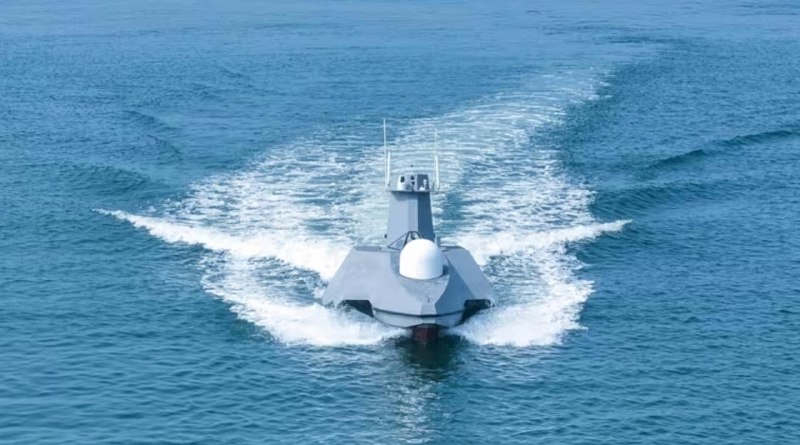
At 14:19 UTC on 18 July 2026, the Rybar Telegram channel posted a forward summarising an ongoing set of parliamentary hearings in Taipei over two intertwined bills: one financing the procurement of new unmanned surface vessels (USVs) for the Taiwan Coast Guard, the other funding the domestic production of drones. The text is brief and unsigned, but it lands on a substantive question that has hovered over the island's defense debate for years: when the Coast Guard is the first uniformed agency to encounter a hostile maritime formation, what exactly is it sailing?
The legislative process the channel flags is procedural rather than dramatic. Hearings are still being held; no final vote is on the calendar. That procedural detail matters, because it reveals a procurement argument Taipei has been reluctant to finish in public: how much of the Coast Guard's surface fleet should be unmanned, how much of the island's drone inventory should be built at home rather than imported, and which agencies get to decide. The answer, when it comes, will reshape who patrols the strait and with what.
What the bills actually do
The USV tranche would add crewless surface platforms to the Coast Guard's inventory, alongside the armed drones that a parallel bill would fund and produce domestically. The Rybar summary, carried from a Russian-language channel tracking Taiwan's defense-industrial politics, frames both bills as still-moving legislative targets, not signed procurements. The framing is deliberate: a bill that has cleared hearings but not a final vote is a procurement in waiting, and the waiting is itself the story.
Unmanned surface vessels shift the economics of maritime patrol. A USV costs less to operate per hour than a crewed patrol boat, absorbs risk that a sailor would not, and can be fielded in numbers that a hull-and-engine program cannot match. For a coast guard whose job is to police fishing grounds, intercept smuggling, and in extremis contest an amphibious lodgement, the case is straightforward. The harder case is industrial: how much of the new fleet is built in Taiwanese yards, with Taiwanese sensors, on a Taiwanese supply chain.
Why the drone bill is the louder fight
Drone procurement in Taipei has been a slow-motion argument between the Ministry of National Defense, the Coast Guard Administration, civilian research institutes, and a small but vocal domestic drone industry that wants guaranteed orders. The Rybar forward gestures at this when it notes that hearings cover both financing the purchase of drones and investments in their production. Two budgets, one argument: buy or build, and if both, in what sequence.
The political weight sits in the second half. Investment in domestic production is industrial policy dressed in uniform. It commits the state to a multi-year demand floor that lets Taiwanese firms plan capacity, hire engineers, and survive the gap between prototype and serial order. It also commits the state to a supplier base that, in a crisis, cannot be switched off by a foreign export licence. That second consideration is the one that rarely makes the press release.
A coast guard on the front line
The Taiwan Coast Guard Administration is the island's first-responder force at sea. It is larger and more heavily armed than most of its regional peers, a design choice that reflects an explicit mission: to be the agency that meets gray-zone pressure short of war. That mission has hardened in recent years as cross-strait patrols have multiplied and as civilian-flagged vessels have probed restricted waters around outlying islands.
Putting USVs into that fleet is therefore not a curiosity. It expands the number of hulls that can escort, shadow, or signal a hostile contact without putting a sailor in the splash zone. Arming the drones that would deploy from them extends the same logic upward. The Rybar text does not name platforms, dollar figures, or delivery dates. It does not need to; the political signal is the hearing itself.
What remains unresolved
Three questions sit in front of the legislature and the executive. First, the split between off-the-shelf imports and domestic production: a faster fielding curve versus a slower but sovereign industrial base. Second, command and control: which agency owns the new USVs and the armed drones that fly from them, and what rules of engagement apply when a coast guard vessel encounters a hostile formation rather than a fishing trawler. Third, cost transparency: how the program is funded across regular and supplementary budgets, and whether supplementary spending will be used to push the timetable past a defense review cycle.
The Rybar channel is a Russian-aligned tracker of military and industrial news, and its summary of the Taiwanese hearings is brief, unsourced, and uncritical. Its utility here is timing and signal, not adjudication. Independent confirmation of the bills' text, sponsors, and current committee status would require access to Legislative Yuan records and Taiwanese wire reporting that the present thread does not contain. Monexus flags that gap plainly.
The structural read
Strip the procedural language away and the argument is familiar. A democratic coastal state, facing an asymmetric military neighbour, is deciding whether to buy faster or build sovereign. The Taiwanese answer, judging from the legislative shape, is to do both at once and to argue about the mix in public. That is not a weakness; it is what an open procurement process looks like in a society that still expects its defence spending to survive scrutiny.
The stakes are concrete. A coast guard that can put more eyes on the water, with less risk per hull, buys the civilian government time in any future crisis. A domestic drone industry that survives its first multi-year order book becomes an asset that no export licence can revoke. Conversely, a procurement that prioritises speed over sovereignty leaves Taipei exposed to the kind of supply interruption that has reshaped European defense planning since 2022. The hearings will close; the choice between those two paths will not.
Desk note: Monexus carried this as a procedural procurement story sourced from a Russian-aligned Telegram tracker; the reporting frame treats Taipei's legislative process on its own terms and avoids speculation on platforms, dollar figures, or delivery dates that the source material does not contain.
Wire provenance
This editorial synthesis draws on the following public wire/social posts:
- https://t.me/rybar_in_english
- https://t.me/rybar
- https://en.wikipedia.org/wiki/Taiwan_Coast_Guard_Administration
- https://en.wikipedia.org/wiki/Taiwan_and_the_United_Nations