Russia–Iran financial wiring surfaces as Middle East strikes keep Gulf bases on edge
Russian sovereign-wealth head Kirill Dmitriev’s wartime outreach to Tehran is now sitting alongside fresh Wall Street Journal reporting on Iranian strikes on US assets in the region, and the two threads are starting to pull on each other.
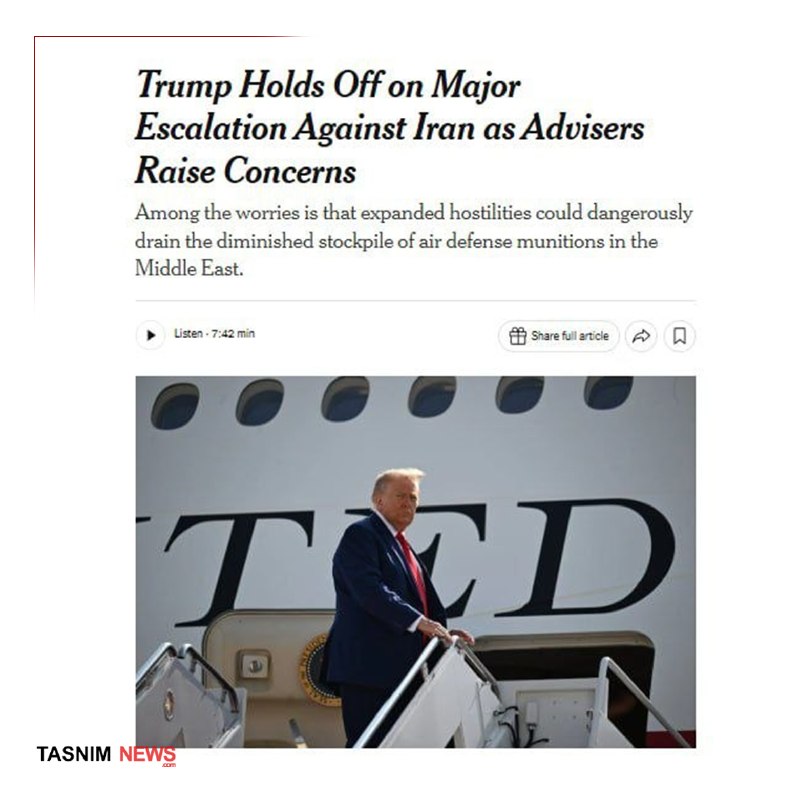
A pair of threads circulating on 18 July 2026 have put two long-running stories on the same desk at the same hour. The first is a wartime financial channel between Moscow and Tehran, traced through Russian Direct Investment Fund head Kirill Dmitriev; the second is fresh Wall Street Journal reporting that US officials are increasingly worried about Iranian strikes on US bases and infrastructure across the Middle East, layered on top of earlier WSJ coverage of the same dynamic. Read separately, each is a familiar strand. Read together, they describe a sanctions-era partnership hardening under fire.
The point is not that two autocracies are talking. They have been talking, in some form, since the start of the Ukraine war and well before. The point is that the financial wiring of that conversation, the part that lets it survive secondary sanctions, bank-disconnect risk and oil-price-cap policing, is now being named in the same reporting cycle as the kinetic conversation, the strikes on US positions in the Gulf and Levant. The two channels feed each other: each new Iranian strike gives Moscow more reason to keep the money pipes quiet, and each quiet handoff makes the next Iranian move slightly easier to absorb.
The Dmitriev line
The OSINTdefender channel, reposting Defense Bulletin, surfaced a thread earlier in the war pointing to a Politico report that was subsequently confirmed when Dmitriev's name appeared in connection with the Russian sovereign-wealth apparatus. The exact operational detail of what Dmitriev was carrying, and to whom in Tehran, is not in the public excerpts; the analytical claim is narrower than that, and worth stating precisely. It is that Moscow's sovereign-wealth vehicle, the RDIF, was used as one of the diplomatic and financial back-channels into the Iranian system during a period when conventional state-to-state communication was visibly strained. The same channel, in a separate post, ties that line to fresh Wall Street Journal reporting on Iranian strikes on US bases and infrastructure in the Middle East, and the worry those strikes are generating in Washington. The two notes are short; the implication they are drawing is long.
What the strikes are doing to the financial channel
The WSJ framing, as relayed by OSINTdefender, is that US officials are concerned that recent Iranian strikes on US bases and infrastructure in the Middle East are changing the cost calculus of the partnership. There is an argument in Western policy circles that the harder Iran strikes American positions, the more isolated Iran becomes from the dollar system, and therefore the more dependent on ruble-yuan-dirham plumbing. That is the optimistic read. The pessimistic read is the opposite: that the strikes push Iran to monetise its relationship with Russia in harder assets, and that the RDIF-style vehicle is the kind of institutional buffer that lets a sanctioned state absorb that monetisation without leaving a clean wire trail for OFAC to follow. The available reporting does not resolve which read is correct. It does suggest both are being modelled seriously in Washington and in Gulf capitals.
The structural frame
Step back from the named officials and the channel chatter. What is being described is a sanctions-era alignment hardening under kinetic pressure. Two states, one under a G7 oil-price cap and asset-freeze architecture, the other under comprehensive US secondary sanctions, have an obvious shared interest in building payment rails that sit outside the dollar system. They have been building them, slowly, since at least 2022. The new ingredient is the tempo: Iranian strikes on US positions in the region, by raising the temperature, shorten the political space in which any of those rails can be wound back. A banking channel that might have been tolerated as ambiguous can be reframed as material support once the strikes are in the headlines. The question Western enforcement bodies are now asking is whether the channel was always a sanctions-evasion architecture, or whether the strikes have made it one.
There is a counter-narrative worth holding in the same frame. Moscow's wartime financial contact with Tehran is not, on the public evidence, an outlier. China and the Gulf states run comparable back-channels with Iran for energy and industrial goods; Türkiye has, at various points in the last three years, hosted trilateral finance talks that included Iranian counterparts. The Russian line is distinctive not because it exists but because of who is on the Russian side of it, the sovereign-wealth fund rather than the central bank or the energy ministry, and because the sanctions architecture on the Russian side is more recent, more kinetic, and more politically charged than the parallel arrangements elsewhere. That distinction matters for how enforcement is designed. It does not, on the evidence, make the Russian line uniquely dangerous.
Stakes, and the dates worth watching
If the trajectory continues, three things are worth watching into the autumn. First, the next round of US Treasury advisories on sanctions evasion, which have historically been the formal mechanism for naming the institutional architecture of the Russian-Iranian financial line. Second, any reported disruption to the RDIF's visible footprint in the Gulf, which would be a tell that the channel has been formally reclassified. Third, the next Iranian move against a US position in the region: the harder and more visible the strike, the more pressure on Washington to escalate the financial response, and the more reason for Moscow to harden the wiring. None of these are predicted here; they are the data points the next six weeks of reporting will turn on.
What the sources do not specify is the size of any single transaction along the Dmitriev line, the counterparties inside Iran on the receiving end, or whether the financial channel has any direct operational tie to the strikes the WSJ is reporting. That is the part of the story that is still being assembled. The two threads are now on the same desk because the same names and the same institutional vehicles keep surfacing; the causal link between them is the working hypothesis, not the confirmed finding.
This publication framed the two threads as a single financial-and-kinetic story rather than two parallel ones, on the reading that the same sanctions architecture and the same regional temperature are driving both.
Wire provenance
This editorial synthesis draws on the following public wire/social posts:
- https://t.me/s/osintlive
- https://t.me/s/osintlive