Israeli strike on Gaza City apartment kills children as ceasefire framework buckles
An Israeli airstrike on a residential building in Gaza City's Al-Nasr neighbourhood killed at least five people, including three children, according to regional outlets, reviving questions about the durability of the truce framework.
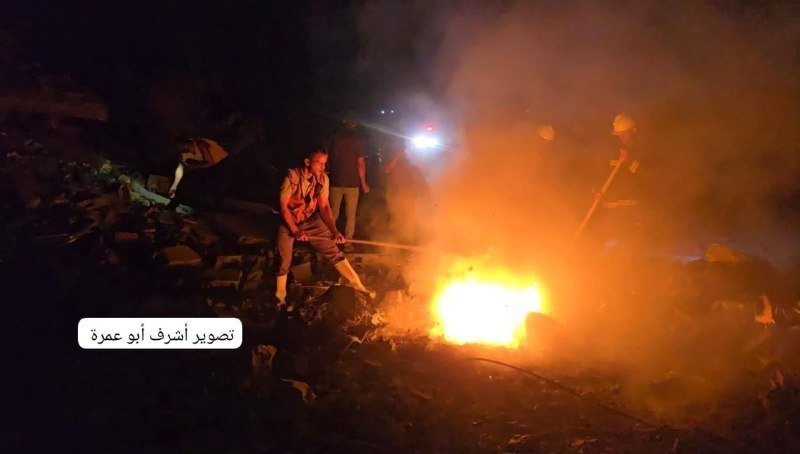
At 14:15 UTC on 18 July 2026, regional outlets began carrying footage from the rubble of a residential apartment in Gaza City's Al-Nasr neighbourhood. Iranian state-affiliated Press TV reported that Israeli forces had struck a residential building "despite the ceasefire," killing at least four Palestinians including a woman and a child. Within minutes, Lebanon's Al Mayadeen-aligned Al-Alam Arabic wire put the toll higher, citing Palestinian sources reporting martyrs and wounded after a strike on an apartment next to a hospital. By 14:22 UTC, Iran's Tasnim news agency had framed the incident in the starkest terms: five dead, three of them children, in the bombing of a residential house. By 14:33 UTC, Gaza-focused channel Gaza Alanpa was circulating images of a child's body pulled from the debris.
That sequence of dispatches, produced in under twenty minutes by outlets with very different political patrons, sketches the immediate shape of what is now the most serious reported violation of the ceasefire framework in Gaza since the truce took hold. The strike landed on a civilian residential block near a hospital, in a neighbourhood that has been on every casualty list since the war began. The reported toll, at least five dead including three children, has not yet been independently verified by United Nations agencies or by Reuters, the Associated Press, or the BBC at the time of writing.
What the wires actually said
The Telegram dispatches from the four channels carrying the story are consistent on geography and on the targeting pattern, less consistent on numbers. Press TV's English wire put the toll at "at least 4 Palestinians reportedly killed, including a woman and a child" and stressed the ceasefire violation. Tasnim, an Iranian state outlet, escalated to five martyrs and three children. Al-Alam Arabic cited "Palestinian sources" reporting "martyrs and injured" in a strike next to a hospital. Gaza Alanpa, a Gaza-based correspondent channel, focused its reporting on the visual: the recovery of bodies from a residential apartment, with no aggregate casualty count in its two visible dispatches.
The thread includes no Israeli military statement, no IDF spokesperson briefing, and no Israeli wire service report on the incident. The absence is not unusual in the first hour after an event of this kind; in past cycles, the IDF has typically responded several hours after the initial casualty reports circulate, and the relevant Israeli outlets (Times of Israel, Ynet, Haaretz, Jerusalem Post) had not yet published a verified account at the time the thread closed. The framing the four available wires converge on is unambiguous: a residential building struck, civilians killed, the ceasefire characterised as broken.
The ceasefire that wasn't
The phrase "despite the ceasefire" in Press TV's headline is doing real work. It is an editorial claim, not a neutral description: it asserts that a truce arrangement exists, was in force at the moment of the strike, and was violated. None of the four Telegram sources in the thread defines what ceasefire is meant, names the parties to it, or gives a date for when it took effect. The framework most analysts treat as the operative reference is the ceasefire arrangement that took hold in stages through late 2025 and into 2026; whether that arrangement remained in force on 18 July 2026, in what form, and under what reported terms, is not specified by any of the four channels in this thread. That is the single most important piece of context a reader needs and the thread does not provide it.
The Palestinian Islamic Jihad-linked and Hamas-affiliated outlets that have historically dominated reporting on Israeli strikes in Gaza are also absent from this thread. Gaza Alanpa, which is publishing the visuals, is the closest analogue, but the channel's editorial line is more focused on ground-level footage than on organisational framing. The political-organisational spin that often surrounds such events, including the question of whose rocket caused the original Israeli action and whether this strike fits into a broader pattern of targeted killings, is not visible in the available sources.
What can and cannot be verified
What the thread does establish, and what Monexus can publish on the basis of these sources: that on 18 July 2026, at approximately 14:15 UTC, an Israeli airstrike hit a residential apartment in the Al-Nasr neighbourhood, west of Gaza City, near a hospital; that multiple outlets reported civilian casualties including children; that the strike was characterised by Iranian state-aligned and Lebanon-based outlets as a violation of an existing ceasefire; and that no Israeli source had yet responded in the first twenty minutes of coverage.
What the thread does not establish: the precise casualty count beyond "at least four" or "five" depending on the wire; the identity of the killed beyond women and children; whether the apartment was an intended target or collateral damage from a nearby strike; whether Hamas, PIJ, or another armed group had a presence in or near the building; whether the strike was approved under an Israeli targeting protocol that treats proximity to a hospital as a separate legal question; and whether any ceasefire currently in force was, as Press TV framed it, in fact active at the moment of the strike. None of these questions can be answered from the four sources in this thread, and a responsible account does not pretend otherwise.
What this fits into
The strike, if the framing of the regional wires holds, sits inside a pattern this publication has tracked since the start of the war: ceasefire announcements followed within hours or days by individual incidents that the announcing party frames as violations and the other party frames as defensive operations or as responses to provocations. The Al-Nasr strike differs from that pattern in one respect. It was reported on by outlets with divergent political alignments, and they largely agree on the basic facts: a residential building, civilians killed, a truce of some kind under strain. That convergence narrows the space for dispute about what happened, even if it leaves the legal and political framing wide open.
The forward-looking question is whether the four available wires are the leading edge of a wave of reporting, or whether a verified Israeli account, when it arrives, will reshape the consensus. On past form, the IDF response typically arrives within six to twelve hours, naming the targeted individual if there was one, characterising the civilian infrastructure struck, and framing the operation inside the legal architecture of the war. The next twelve hours will determine whether Al-Nasr becomes another contested incident in the casualty ledger or a documented breach that further erodes the ceasefire framework. Watch, specifically, for an IDF spokesperson briefing and for any statement from the mediating parties responsible for the truce's enforcement.
This article was written from a Telegram thread of four regional outlets (Press TV, Tasnim, Al-Alam Arabic, Gaza Alanpa) carrying initial reports of the strike. No Israeli wire or international wire confirmation was available in the thread at the time of writing, and casualty figures are reported as the outlets framed them. Where the wire framing asserts a ceasefire violation, this publication treats the assertion as a claim made by those outlets rather than as an independently established fact.
Wire provenance
This editorial synthesis draws on the following public wire/social posts:
- https://t.me/presstv/
- https://t.me/JahanTasnim/
- https://t.me/alalamarabic/
- https://t.me/gazaalanpa/
- https://t.me/gazaalanpa/