Iran's Strike on Jordanian Bases Leaves U.S. Troops Wounded, Raising the Stakes for a Region Already on Edge
Multiple U.S. officials told CBS News that Iran struck at least two Jordanian bases this week, wounding American service members. The incident, if confirmed in detail, would mark a sharp escalation in a region already bracing for wider war.
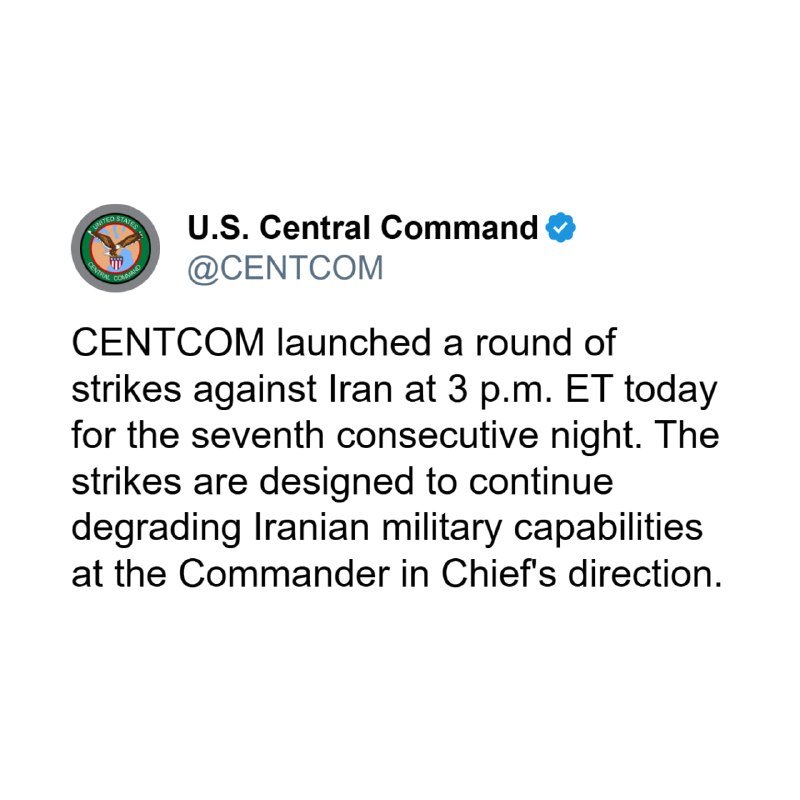
Multiple U.S. officials told CBS News on 17 July 2026 that Iran struck at least two bases inside Jordan during the week, wounding several American service members whose facility was hit. The report, propagated almost simultaneously across three independent OSINT Telegram channels by 22:47 UTC, is the most concrete public signal yet that the long-suspected Iranian corridor into the Jordanian and Iraqi borderlands has graduated from proxy harassment into direct fire on Western troops.
The reporting, as it currently stands, leaves more questions than answers. But the direction of travel is unambiguous: a regional escalation chain that began with strikes on Israel-aligned positions has now reached U.S. personnel on allied Arab soil. The immediate task for the public is to separate what has been confirmed from what is still being filled in, because the policy consequences diverge sharply depending on which version turns out to be true.
What CBS actually reported, and what it did not
CBS News is the original sourcing for the claim. According to the network, multiple U.S. officials said at least two Jordanian bases were struck by Iran this week, and that several American service members were injured after their facility was hit. That is the spine of every downstream alert. The phrasing is careful: officials, not on-the-record witnesses; wounded, not killed; at least two bases, a floor rather than a ceiling.
What CBS did not, in the alert as circulated, specify: the exact locations of the two bases, the weapons used, the precise number of wounded, the operational status of those wounded, or whether the strikes were retaliatory, pre-emptive, or unilateral. The Telegram re-sharers, several of which are pro-Iran or pro-Russian in their editorial tilt, all borrowed CBS's language verbatim, a tell that none of them had additional sourcing beyond the wire alert itself.
For a story of this weight, that thinness is itself the story. The U.S. Central Command public affairs line, as of the timestamps on the circulating alerts, had not yet issued a confirming or denying statement. Jordanian state media, in the form carried by the OSINT channels, was silent. Iranian state outlets had not, in the material reviewed, claimed the strike as Tehran rarely does in real time on cross-border operations of this kind.
The corridor everyone already knew about
Strip the new reporting back and the geography is familiar to anyone who has followed the post-7 October landscape. Jordan sits between Israel, the West Bank, the Syrian border, and the Iraqi airspace through which Iranian-aligned militias have moved weapons and drones for two decades. U.S. forces operate from bases inside Jordan, with Amman's permission, under a long-standing defense cooperation agreement. The bases are not secret at the level of host-country relations, even if their precise footprint and force posture are not advertised.
Iran's preferred mode of pressure on that corridor has historically been deniable: Shia militias in Iraq, drones and rockets launched from Syrian territory, and information operations aimed at nudging Jordan's sizeable Shia minority and its Palestinian-origin population toward hostility toward U.S. presence. A direct Iranian strike on bases where U.S. troops are billeted, with Americans wounded, breaks with that deniability. It accepts the cost of being named, by a U.S. outlet, as the attacker.
The plausible read is that the strikes sit inside a tit-for-tit cycle: Iranian or Iran-aligned action against Israeli or U.S. assets in the theatre, an Israeli or U.S. response, and now a direct hit on American troops. The counter-read, which cannot be ruled out on current sourcing, is that the strikes were a miscalculation: Iran or its proxies believing they were hitting a different target, or hitting Jordanian facilities in the mistaken belief that U.S. personnel were not present. The third read, less plausible but not dismissible, is that the strike was an intentional message to Washington: you can be hurt on Arab soil, not just on Iraqi or Syrian ground.
Why the wording matters for what happens next
American political vocabulary for a wounded-troops incident abroad is rigid and consequential. The phrase "attack" rather than "incident," the word "wounded" rather than "injured," and the classification of any individual as a casualty rather than a service member treated and returned to duty all shape what the U.S. executive branch can credibly request from Congress under the War Powers Resolution and the Authorisation for Use of Military Force frameworks.
For Tehran, the calculation runs the other way. An attack that produces wounded U.S. troops without fatalities leaves Washington a political off-ramp: a calibrated response that demonstrates reach without demanding a full retaliatory cycle. An attack that produced fatalities, especially if combined with strikes that hit civilian infrastructure, would close that off-ramp. The CBS report's repeated emphasis on wounded rather than killed, in the language of the officials it cites, is therefore not a throwaway detail. It is the entire diplomatic runway.
Iranian state media have, in past episodes, framed strikes on U.S. positions in Iraq and Syria as responses to Israeli operations and as legitimate defense of regional allies. That framing, were Tehran to adopt it here, would give the strike a legal-political cover story that lets the Islamic Republic claim consistency with prior doctrine. The hard counter is that a strike on a Jordanian base, a country with which Iran has no current active conflict, is not a posture of defense. It is a posture of escalation.
What we verified, and what we could not
What this publication could verify, on the sourcing available:
- CBS News is the original reporting outlet for the claim that Iran struck at least two Jordanian bases this week and wounded several U.S. service members. The wording was matched across three separate OSINT Telegram channels, two of which typically carry Western-wire alerts and one of which is Russian-aligned but used identical language.
- The strikes occurred "this week," per the officials cited, with the alerts surfacing on 17 July 2026 between 22:37 and 22:47 UTC.
- The injured are described as American service members whose facility was struck, a construction that places them inside a base at the moment of impact rather than in transit or off-base.
What could not be verified on this sourcing:
- The exact location of the two bases, including whether they are among the well-known U.S. installations in eastern and northern Jordan or are smaller forward operating sites.
- The number of wounded, beyond "several."
- The weapons used, including whether they were ballistic missiles, one-way attack drones, loitering munitions, or short-range rockets.
- Whether the strikes were carried out by Iranian regular forces, by Islamic Revolutionary Guard Corps units operating from Iraqi or Syrian territory, or by Iran-aligned Iraqi or Syrian militias acting in coordination with Tehran.
- Whether any Israeli operation immediately preceded the strike, in the chain-of-reaction framing the Iranian state has previously used to justify cross-border action.
- Any U.S., Jordanian, or Iranian official response beyond the sourcing already cited.
That ledger is short, and the shortness is the point. A wounded-troops story on this geography moves fast, and the next forty-eight hours will fill most of the gaps. The reader should treat anything beyond what is in the CBS alert, including the framing on this page, as inference rather than confirmed fact.
The structural frame, in plain language
The pattern in front of the reader is not new in form, only in target. For most of the last two decades, the United States has stationed troops in the Iraqi and Syrian borderlands on the implicit understanding that the cost of being there is periodic, deniable, low-casualty harassment. Iran tested that ceiling repeatedly, and the ceiling held, in part because the casualties stayed small and the attacks could be plausibly disclaimed. A direct Iranian strike on a Jordanian base, producing U.S. wounded and being named in a U.S. wire, is the ceiling moving up. Whether it is moving up because Iran has decided the cost-benefit has changed, or because a specific chain of escalation has run out of off-ramps, is the question that will define the next several weeks of policy in Washington, Amman, and Tehran.
The stakes are concrete on all sides. For the United States, the cost is a renewed domestic argument over the scope of force posture in the region and the legal basis for any response. For Jordan, the cost is the exposure of a population that has, by and large, avoided the direct fire that has hit its neighbours. For Iran, the cost is a closure of the diplomatic channel that has, despite everything, remained partly open. For Israel, the cost is a widening of a war whose edges it had been trying to manage. None of those actors chose this incident, and all of them now have to choose what to do about it.
This article is built on a single Western-wire alert and three Telegram resharers, all of which trace back to the same CBS News source. The sourcing floor for a wounded-troops story of this geography is normally much higher. The piece flags that thinness in the ledger above rather than padding it with inferred detail.
Wire provenance
This editorial synthesis draws on the following public wire/social posts:
- https://t.me/osintlive
- https://t.me/GeoPWatch
- https://t.me/intelslava
- https://t.me/s/osintlive
- https://t.me/s/intelslava
- https://t.me/s/GeoPWatch