US strikes hit Iranian provincial capitals as midnight blasts shake Yazd and Ahvaz
Iranian provincial officials report five explosions on the outskirts of Yazd and a separate blast in Ahvaz overnight, in what local authorities describe as US fighter-jet attacks.
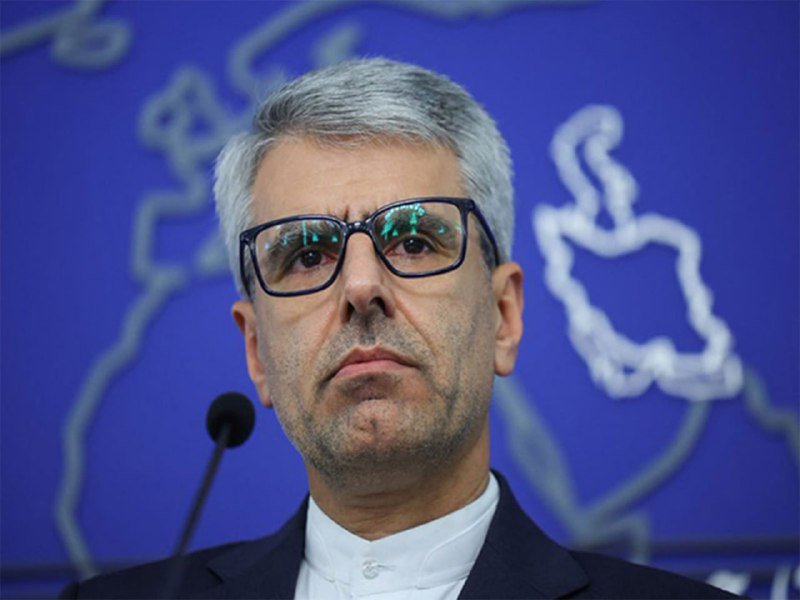
Five explosions were heard on the outskirts of Yazd at roughly midnight local time on 17 July 2026, after Iranian fighter jets were attacked by US aircraft, the deputy governor of Yazd Province told local media. A separate blast was reported hours earlier in the southwestern city of Ahvaz, where provincial authorities said no casualties had been recorded.
The strikes land on two of Iran's most symbolically distant cities from the conventional flashpoints of Tehran, Isfahan and the Strait of Hormuz. Yazd is a UNESCO-listed desert city in central Iran, more than 600 kilometres southeast of the capital. Ahvaz, capital of Khuzestan, sits near the Iraqi border and the oil-rich head of the Persian Gulf. Striking both in a single night expands the geography of an already widening US-Iran confrontation into the country's interior and its hydrocarbon-producing southwest.
What officials on the ground reported
The account from Yazd comes from the province's deputy governor for security affairs, relayed by the Iranian outlet Tasnim and corroborated in near-real-time by Telegram channels including Warfront Witness (@wfwitness) and Lebanon-based The Cradle Media. "In the middle of the night, with the attack of American fighters, the sound of five explosions was heard outside the city of Yazd," the security deputy said, according to Tasnim's English wire. A photograph circulated by @wfwitness shortly before the official statement shows a column of smoke rising on the Yazd horizon.
In Khuzestan, the deputy governor for security affairs told local media that an initial explosion had been recorded in Ahvaz, but that no casualties had been registered inside the city. Ahvaz had been hit before in earlier rounds of US-Iran tit-for-tat strikes in 2025; provincial authorities have, in past cycles, distinguished between impacts within city limits and strikes on outlying military or industrial sites.
The sources do not specify what was targeted in either city. Iranian provincial statements in previous rounds of strikes have typically described outskirt attacks as hitting desert military installations or Revolutionary Guard Corps logistics nodes, but the dispatch from Yazd on 17 July does not name a facility, a unit, or a weapon used. The sources also do not record any US statement on the strikes at the time of filing.
The information environment
All four reporting items in the live thread trace back to Iranian state-adjacent channels: Tasnim, the official news agency close to the IRGC; @wfwitness, a war-monitoring channel that has been among the fastest aggregators of Iranian domestic claims; and The Cradle Media, a Beirut-based outlet with an editorial line consistently sceptical of US and Israeli military action. None of the items in the thread is from a US official source, a Pentagon readout, an Israeli spokesperson, a Western wire service, or the IAEA.
That matters for how to read the night's claims. Iranian provincial officials have an institutional interest in confirming strikes took place but a parallel interest in keeping the political temperature inside the country manageable: death tolls are minimised in initial briefings and revised upward only after Iranian media has had time to shape the framing. Tasnim's English wire is, on balance, more reliable than its Persian front pages on tactical facts, because it tends to republish verified provincial statements rather than editorialise. The Cradle's reporting should be treated as a parallel frame, not as an independent corroboration: it amplified the Yazd statement within minutes of Tasnim but did not independently verify the count of explosions or the attribution to US aircraft.
The thread therefore supports two things and not a third. It supports that Iranian officials said there were explosions on the Yazd periphery and in Ahvaz. It supports that Iranian officials attribute the Yazd blasts to US fighter aircraft. It does not yet support an independent casualty count, a damage assessment, a list of targets, or a US confirmation.
What a single night of two-city strikes signals
Even read narrowly, the geography of the night is the story. Yazd is roughly equidistant from Iran's eastern border with Afghanistan and its southern coast. It is a city most associated with Zoroastrian heritage and silk-road caravanserais; it has no public profile as a military hub. If the strike hit a specific installation on its outskirts, that installation has not been disclosed. The choice to act over Yazd, rather than around Tehran, Isfahan, Bandar Abbas or the nuclear sites at Natanz and Fordow that have featured in earlier rounds, suggests either a deliberate expansion of the target set, or an attack on something specific to the central plateau.
Ahvaz, by contrast, is a familiar target. The city sits next to the Karun oilfields and the Abadan refinery complex. Strikes there have, in past reporting, been read as a warning to Iran's hydrocarbon exports: a reminder that the country's revenue-generating capacity is reachable without the air-defence density of the capital. The fact that the deputy governor flagged an explosion in Ahvaz without specifying damage is consistent with a strike on a peripheral site rather than on the city itself.
What remains unresolved
Three questions will determine whether 17 July becomes a routine escalation or a turning point. First, what was hit. Iranian provincial statements, by design, leave target identification for later announcements; until either Tehran's defence ministry or Washington's Pentagon speaks on the record, the targets live in the gap between official silence. Second, the casualty picture. As of 22:40 UTC on 17 July, no deaths had been reported from either strike; that figure typically moves within 24 hours. Third, the response. Iran has, in earlier rounds, signalled through proxies rather than direct statement. A read on whether the night's strikes stay bilateral or pull in Hezbollah, the Houthi axis, or Iraqi militias will come from those theatres, not from Yazd or Ahvaz.
For now, the official Iranian version of events is the only version on the record. That is not unusual at this stage of a strike cycle, and it is not, on its own, reason to doubt the basic claim of US action. It is reason to wait for confirmation before treating the night's geography as a fully mapped US-Iran battlefield.
Desk note: Monexus treated Tasnim and the two Telegram channels as primary Iranian official-record sources for provincial statements, and The Cradle as a parallel amplifier rather than an independent verifier. The wire at filing carried no US, Israeli or independent Western readout; readers watching for target identification and casualty revision should check Reuters, the Pentagon and Iranian state media within 24 hours.
Wire provenance
This editorial synthesis draws on the following public wire/social posts:
- https://t.me/thecradlemedia
- https://t.me/wfwitness
- https://t.me/tasnimnews_en
- https://t.me/wfwitness
- https://en.wikipedia.org/wiki/Yazd