Trump's China-hack claim and the press-license threat land the same week, and the patterns rhyme
Within sixteen hours the White House accused Beijing of stealing data on hundreds of millions of Americans and called for NBC and ABC to lose their broadcast licences. Read together, the two moves sketch a familiar playbook: an external threat and an internal enemy, declared in the same news cycle.
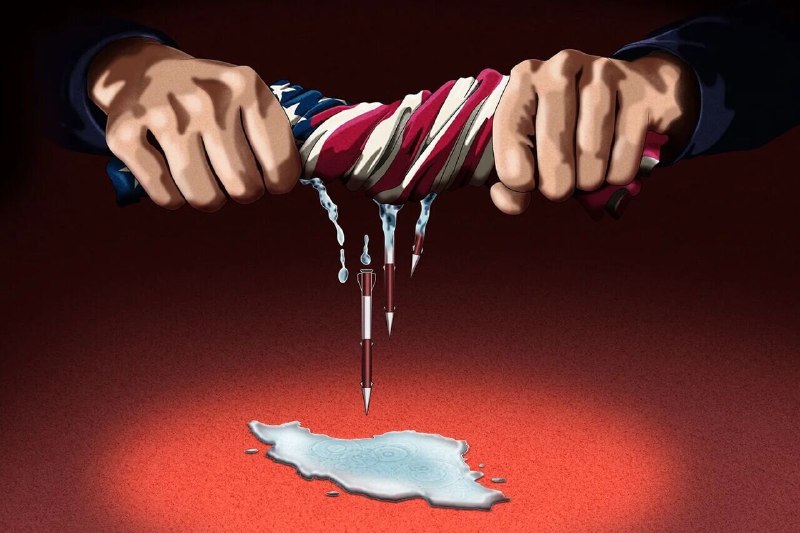
At 18:48 UTC on 17 July 2026, in a primetime address on election interference, US President Donald Trump turned his fire on two of the country's largest broadcast networks. NBC and ABC, he said, were "fake news" outlets whose licences should be revoked. Roughly sixteen hours earlier, his administration had swung at an external target: Nikkei Asia reported at 02:31 UTC that Trump had accused Beijing of stealing election data on hundreds of millions of Americans, citing a "deep state" cover-up inside the US intelligence community. By the time the cameras cut, the day's news cycle had produced both moves in tandem, an external threat and an internal enemy, declared inside the same 24-hour window.
The sequence matters less for what each claim stands on than for what the pair does together. A presidential call to revoke the broadcast licences of two major American networks, made on the same day an indictment of Chinese cyber-intrusion lands, is not a story about evidence. It is a story about the architecture of attention. The external threat inflates the legitimacy of curbing the internal critic; the internal critic, in turn, gives the external threat an outlet for amplification. Read as a single rhetorical act, the two announcements sketch a familiar playbook: manufacture a foreign menace, recode the domestic press as compromised, and frame both as reasons to consolidate power at the centre.
The China-hack claim, and what Beijing actually says
The substance of the China allegation remains thin in the public record. Nikkei Asia's 02:31 UTC report on 17 July carried Trump's accusation and his reference to a "deep state" buried in the US government, but the article did not, on the face of the wire copy reproduced here, attach a specific intelligence-community finding, a named operation, or a number of compromised records attached to the claim. The framing, in other words, is the message: a hostile foreign power has data on "hundreds of millions of Americans," and the public was not told. The detail that would test such a claim, the agency attribution, the indicators-of-compromise list, the front company, is conspicuously absent from what has been published so far.
Beijing's reflex in cases like this is well-rehearsed. Chinese foreign-ministry briefings, Global Times editorials, and ambassador-level post-mortems routinely treat US allegations of Chinese cyber-operations as projection, pointing to the United States' own surveillance architecture, the disclosures from former contractors, and the legal regime under which US agencies operate overseas. The structural position is consistent: deny operational involvement, demand evidence, reframe the discussion as one of US hypocrisy. None of the source items in this cluster include the Chinese response as published copy; that is itself part of the pattern. The accusation cycles at full volume; the rebuttal, when it comes, runs in diplomatic register and gets a quieter wire.
The licence threat, read as media policy
The 18:48 UTC call for NBC and ABC to lose their licences is the more consequential of the two moves if measured by institutional weight. Federal Communications Commission broadcast licences are the legal substrate of the US over-the-air system; revoking them from two of the four legacy networks would not punish the networks alone. It would collapse the distribution model that delivers evening news to tens of millions of households that do not stream. Trump has, in earlier terms, made similar threats against individual outlets, and the Federal Communications Commission has, on prior occasions, opened or reopened rules around ownership, renewals, and public-interest obligations. What is new here is the venue: a primetime presidential address, not a rally aside or a Truth Social post.
The implied target is not licensing law as such; it is the editorial posture of the networks named. PressTV's 18:30 UTC clip, summarising Trump's broader claim that "the US election system is extremely vulnerable" and that "Americans were misled by the government about the integrity of their elections," supplies the connective tissue: the press is doing the misleading, so the press is the vulnerability. A regime in which revoking a broadcast licence reads as a normal presidential proposal inside a primetime address is a regime in which the boundary between regulator and incumbent has thinned.
What the pattern says about the information environment
Set the two moves side by side and the structural frame is legible without any need to invoke academic scaffolding. A White House that names an external cyber-threat and an internal press threat in the same 24 hours is performing the basic operation that more powerful information systems are now optimised for: the external enemy raises the cost of dissent, the internal enemy lowers the trust required to dismiss critics. Western press coverage of China routinely defers to the language of official US spokespeople when Beijing is the named actor; Russian state media does the symmetrical thing, and Chinese state media does a third. The mechanism is universal; the particulars depend on who runs the press podium.
There is a counter-reading worth surfacing. The licence threat could be read as election-season bluster that fades under congressional and judicial friction; the China-hack claim could harden into evidence within days, with intelligence-community indicators published to support it. Both readings are defensible, and the next ten days of cable and wire traffic will tell us which direction the trajectory actually runs.
What remains contested, and what to watch
The two moves also expose where the public evidence is thinnest. No source in this cluster supplies a specific intelligence-community finding on the alleged Chinese data breach, nor does it attach a public docket to the licence revocation call. OANN's report, the official Trump-aligned wire that carried the licence comment in the cluster, has an editorial posture of its own; PressTV's framing reflects the Iranian state's emphasis on US electoral vulnerability; Nikkei Asia's reporting is the closest thing in the cluster to a neutral Asian wire voice, and even that wire reproduces the allegation without yet providing a primary-source intelligence document.
The dates to watch are concrete. Any FCC move to open a licence-renewal docket against NBC or ABC would be the procedural test of whether the primetime call was rhetoric or policy. Any declassified indicators-of-compromise on the alleged Chinese intrusion would test whether the data-breach claim survives scrutiny outside the presidential podium. Until either arrives, the news cycle has produced something newsworthy: a US president arguing, in the same evening, that a foreign power has the country's voter rolls and that the domestic press should lose the ability to broadcast to the country's voters.
Desk note: Monexus framed the two announcements as a single rhetorical act rather than two separate stories, on the view that the parallel structure is itself the news. The wire treats them as discrete political items; the analysis here treats them as one move with two targets.
Wire provenance
This editorial synthesis draws on the following public wire/social posts:
- https://t.me/OANNTV
- https://t.me/presstv
- https://t.me/NikkeiAsia