Japan moves to criminalise flag desecration as the culture-war map redraws itself
A new Tokyo statute makes burning or stomping on the Hinomaru a criminal offence. The move lands in a week that also saw a US immigration-policy reversal and a viral moment from Warsaw, exposing how national-symbol politics is migrating across continents.
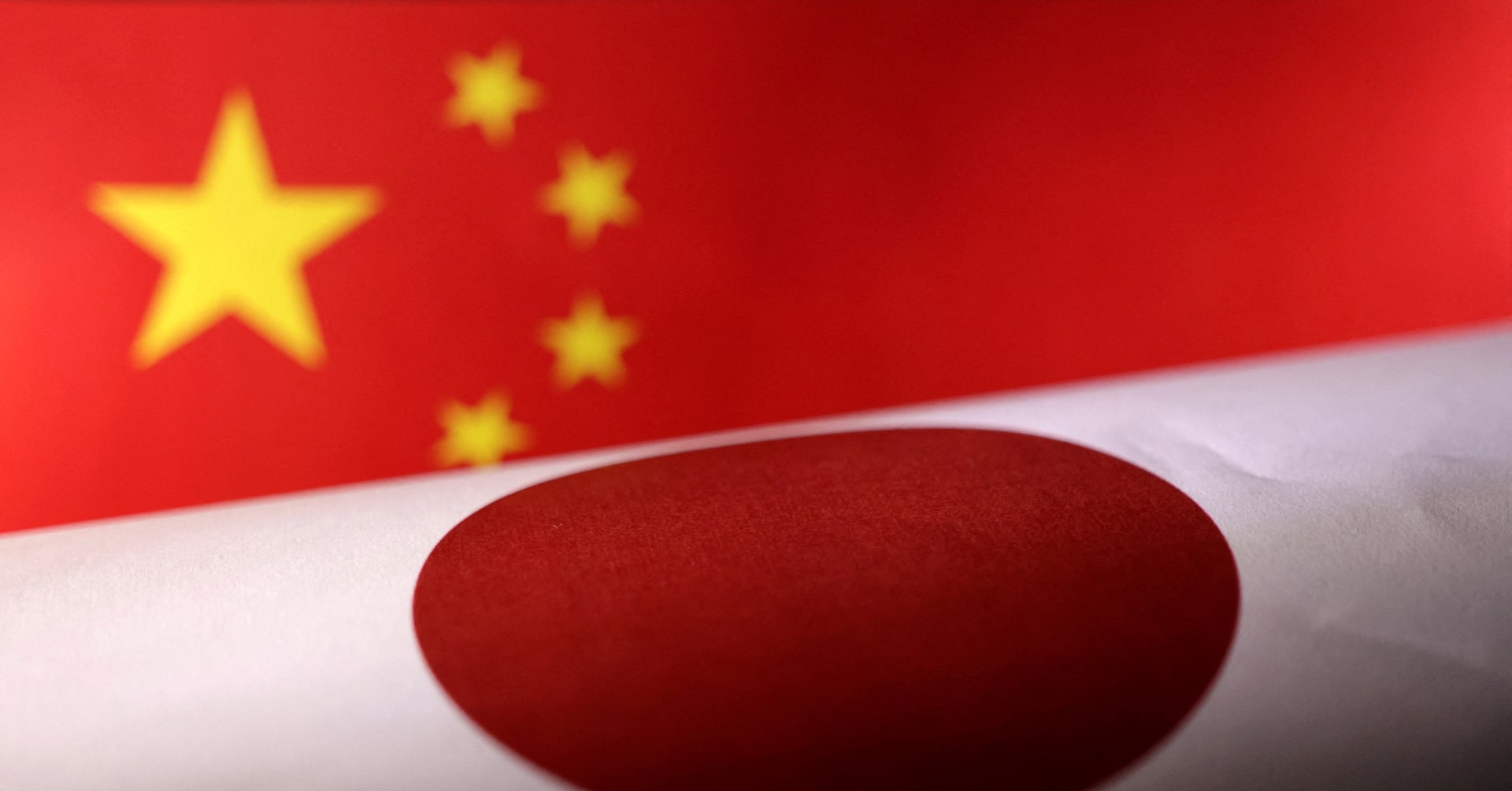
A Japanese flag burned in a Tokyo street on 17 July 2026 is now, by statute, evidence of a crime. That is the operative meaning of a new Tokyo law reported by the Polymarket JUST IN wire at 14:35 UTC, which makes it a criminal offence to burn, stomp on or otherwise deface the national flag in public (Polymarket wire, 17 July 2026, 14:35 UTC). The text narrows the previously civil-only treatment of flag-related expression and pushes Japan into a small club of democracies whose criminal codes single out disrespect to the national symbol for prosecution.
The statute lands as the culture-war map is being redrawn in real time, with Washington quietly softening one of its most contested immigration-enforcement tools the same afternoon. The Polymarket JUST IN feed carried a separate item at 19:01 UTC on 16 July reporting that US Immigration and Customs Enforcement traffic stops would resume only on the condition that at least one agent on each arrest team wears a body camera (Polymarket wire, 16 July 2026, 19:01 UTC). That condition, modest on paper, is the political price the Trump administration has chosen to pay in order to put uniformed officers back on American roads. Read together with Tokyo's move, the pattern is harder to miss: national symbols and state authority are being re-bulletproofed on opposite sides of the Pacific.
What Tokyo actually criminalised
The new Japanese provision, as reported by the Polymarket JUST IN wire on 17 July 2026 at 14:35 UTC, targets three concrete acts: burning, stomping on, and defacing the Hinomaru in public. The wire did not detail the penalties or specify the implementing ministry, but the structure of the rule matters more than its sentencing range. Japan has long treated flag-related offences as a matter of civil regulation rather than criminal liability; converting that posture into a punishable act repositions the flag from a piece of cloth protected by etiquette into an object protected by the state.
The change is not abstract. Tokyo has spent the better part of three decades managing the public-facing legacy of wartime flag policy, in which the Hinomaru was a mandatory civic emblem before its post-1945 demotion to a discretionary patriotic symbol. Bringing criminal sanctions back into the picture reverses the post-Occupation arc and tells prosecutors, and potential demonstrators, that the line between protest and offence has moved.
The American counterpart, hours earlier
Half a world away, the same news cycle produced a near-mirror image of state authority under conditional restraint. According to the Polymarket JUST IN feed timestamped 16 July 2026 at 19:01 UTC, ICE traffic stops are set to resume on the operational rule that at least one agent on each arrest team wears a body camera. The trigger is procedural rather than political: the camera requirement is the artefact of an internal review, not a legislative act.
The contrast is informative. Japan's flag statute is a parliamentary decision to widen the criminal law. America's camera condition is an executive-branch decision to narrow the practical exercise of enforcement power. One country is adding a prohibition; the other is attaching a transparency device to a permission. Both, however, are responses to the same underlying grievance: that visible state power has been operating without enough friction.
Why this is a structural story, not two anecdotes
Set beside each other, the two wires sketch the geometry of a wider shift. The pattern is not convergence but inverse parallelism. Where Tokyo criminalises a symbolic act, Washington conditions a coercive act. Where Tokyo treats the flag as a thing the state protects from insult, Washington treats the badge as a thing the state forces into view. The unifying feature is that both governments are using the instruments closest to hand, the criminal code in one case, an operational memo in the other, to redraw the relationship between citizen and state at the level of the street.
A viral counter-moment from Warsaw, captured in a Telegram-distributed clip at 15:00 UTC on 17 July 2026 under the X handle @sknerus_, illustrates how sharply that geometry is being contested by ordinary users (Telegram wire, 17 July 2026, 15:00 UTC). The clip, a brief, dismissive reaction to a visit by a public figure to a sensitive site, was treated by Polish-language commentary as a cultural marker of its own. Its presence in the same wire cycle as the Tokyo and Washington items is what makes the cluster worth reading as a unit: national symbols, civic space, and state presence are being renegotiated simultaneously in Tokyo, Washington and Warsaw, by legislatures, agencies and citizens respectively.
Stakes and the road ahead
For Tokyo, the practical question is enforcement. A criminal flag-desecration statute that is never prosecuted is a signal; one that is used against a single high-profile protester is a precedent. The wire item does not specify which ministries will implement the new rule, nor whether prosecutorial guidance will treat isolated incidents differently from organised provocations. That ambiguity is itself part of the story.
For Washington, the ICE camera condition opens a surveillance-of-the-surveillers architecture that civil-liberties advocates have spent years arguing for and that frontline officers are unlikely to welcome. Whether the policy holds past its first contested arrest, or becomes the new baseline for federal street-level enforcement across agencies, is the variable to watch in the second half of 2026.
For readers, the through-line is straightforward. The 17 July wire cycle is not a coincidence of two unrelated stories. It is a snapshot of national authority re-asserting itself through whichever instrument is locally available: criminal statute in Tokyo, body cameras in Washington, viral contempt in Warsaw. The contest over who gets to perform citizenship in public, and on whose terms, has gone transnational.
Desk note: Monexus framed this as a structural pattern across three jurisdictions rather than three discrete news items, on the strength of two Polymarket JUST IN wires and one Telegram-distributed clip from 16–17 July 2026. The source set is deliberately narrow; readers seeking statutory text, prosecutorial guidance or the ICE operational memo itself will need to consult primary government publications not present in this wire cycle.
Wire provenance
This editorial synthesis draws on the following public wire/social posts:
- https://x.com/polymarket/status/
- https://x.com/polymarket/status/
- https://t.me/s/sknerus_