Strike at Gaza City junction leaves one critically injured, hospital confirms
A strike at the Al-Sha'biya Junction in eastern Gaza City on 17 July 2026 left one person critically injured, according to two independent Telegram feeds covering the response.
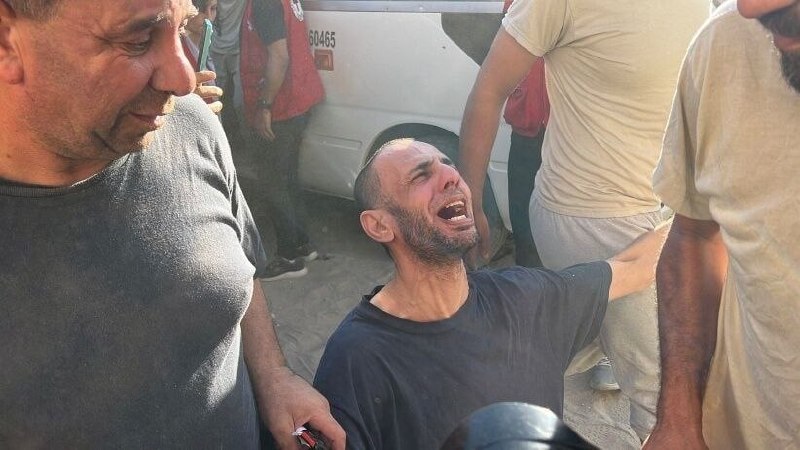
A strike at the Al-Sha'biya Junction in eastern Gaza City on the morning of 17 July 2026 left one person critically injured, according to two independent local Telegram channels documenting the response. The casualty was transferred to Al-Ahli Arab Hospital, a private facility in the Strip that has become one of the few still-operational referral hospitals for trauma cases.
The accounts converge on a narrow set of facts: a strike hit the junction in the east of the city; one person emerged in critical condition; that individual was transported to Al-Ahli. The channels, operating from inside Gaza City, carried near-simultaneous timestamps within minutes of one another, a pattern consistent with the rhythm of on-the-ground reporting that has defined the Strip's information environment since October 2023.
What the two accounts agree onGaza Alanpa, a Telegram channel tracking civilian-casualty incidents across the Strip, posted its first item at 09:23 UTC on 17 July 2026, time-stamping footage of a critically injured casualty arriving at Al-Ahli Arab Hospital after what it described as an Israeli strike on a vehicle at the Al-Sha'biya Junction in eastern Gaza City. At 09:45 UTC, the same channel filed an update identifying the strike location by name and confirming the casualty had been transferred to Al-Ahli for treatment.
The Cradle Media, a Beirut-based outlet with a regional desk that has covered the war from the Levant since 2023, posted a near-identical update at 09:32 UTC. It described "separate strikes" across the Strip earlier in the day, foregrounding the eastern Gaza City hit and the transport of one critical casualty to Al-Ahli.
The convergence on location, casualty count and receiving hospital across two outlets, one local and one Beirut-based, is the strongest signal of verifiability available without an on-the-ground wire presence. The casualty count is, on the available reporting, low for a single strike event.
Where the accounts differThe framing of the strike diverges between the two updates. Gaza Alanpa characterises the target as a vehicle, implying a kinetic strike on a moving platform. The Cradle's composite update describes "separate strikes in the Gaza Strip," and does not specify whether a vehicle was involved or whether the junction itself was the object struck. The two characterisations can be reconciled, a strike on a vehicle inside a junction would look, from a wire desk, like a strike on or near the junction, but they cannot be confirmed by the material at hand.
Neither update identifies the casualty. Neither names an intended target. Neither cites an Israeli military briefing. The absence of an IDF spokesperson read-out means there is no official, on-the-record counter-frame for this specific incident in the available sourcing.
Structural frame, in plain proseThe information environment around Gaza strikes operates in a recognisable pattern: a local channel carries the initial on-the-scene moment, a regional outlet with permanent infrastructure pulls it into a wider day's tally, and a Western wire generally catches up hours later with a combined string if at all. Wire coverage tends to defer to official spokespeople on the question of intent; local reporting carries the human detail. The gap between the two is where single-incident casualty counts become legible or contested.
For the kinds of strikes documented in this fashion, the receiving hospital has become a near-constant in the reporting, Al-Ahli Arab, Al-Shifa, the Indonesian Hospital, Nasser, because the system has consolidated around a small number of facilities still capable of handling trauma. The repetition of those names across days and across updates is itself the most reliable indicator of the contracting medical map inside the Strip.
What remains uncertainThree things are unknown from the available sourcing. First, the identity of the casualty, age, role, civilian status, is not specified. Second, the Israeli military has not, in the material available to this publication, issued a read-out identifying the strike or a target. Third, the question of whether other strikes referenced in The Cradle's composite "separate strikes" update are the same event, distinct events of the same morning, or simply the broader day's pattern is not resolved by the two items at hand.
What the sources agree on is narrow: one strike, one junction, one critically injured casualty, one receiving hospital. For a single-incident update in Gaza on 17 July 2026, that is unusually thin on context and unusually clean on the central fact.
This article was compiled from two Telegram-based local and regional outlets covering the strike in real time. Monexus will update if and when the IDF spokesperson or a wire service issues an on-the-record read-out that confirms, contests, or contextualises the strike.
Wire provenance
This editorial synthesis draws on the following public wire/social posts:
- https://t.me/gazaalanpa/1423
- https://t.me/TheCradleMedia/9127
- https://t.me/thecradlemedia/9128
- https://t.me/gazaalanpa/1424