Burnham takes the Labour crown: what a Manchester mayor in Downing Street actually means
Andy Burnham is set to be named Labour leader at a special conference in London on 17 July 2026 and become Prime Minister on Monday, succeeding Keir Starmer. The mechanics of the handover are settled; the politics of a mayoralty-to-premiership leap is not.
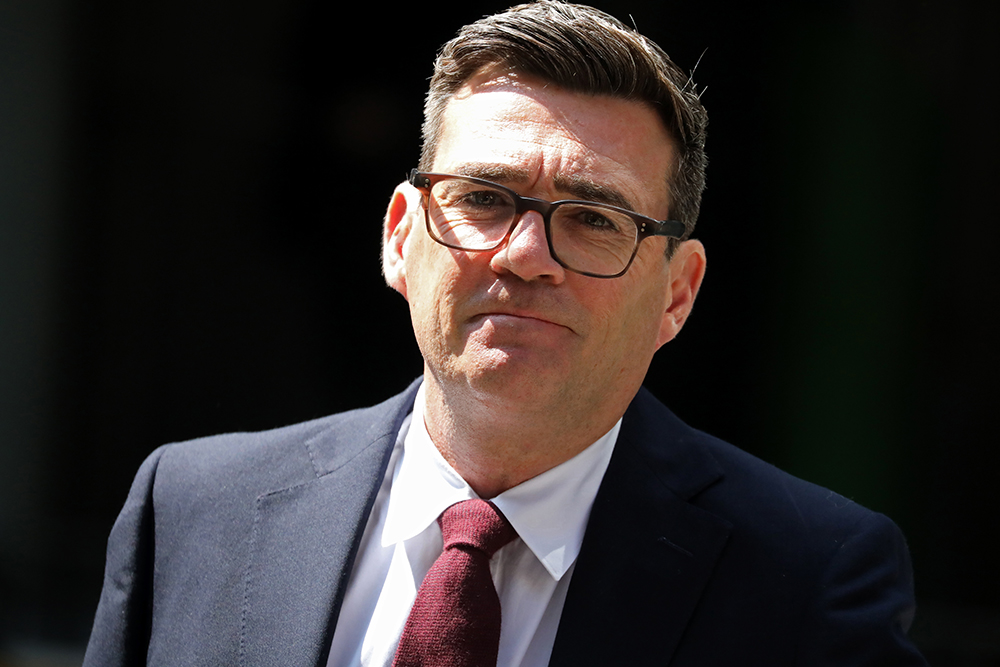
At 12:01 UTC on 17 July 2026, Telegram channels carrying UK political wire traffic lit up with the same sentence in three different shapes: Andy Burnham, the Mayor of Greater Manchester, had been confirmed as the new leader of the UK Labour Party and would move into 10 Downing Street on Monday 20 July. The BBC, reporting through the @wfwitness channel at 11:22 UTC, framed the moment as procedural: a leadership announcement at a special London conference, with Keir Starmer set to formally resign to King Charles before the weekend is out. By 11:40 UTC, the open-source intelligence account @osintlive was already attaching a number to the result: 379 votes in Burnham's column, enough to settle the question without a protracted run-off. Press TV carried the same story at 11:45 UTC with a single news photo and a single verb: "replacing."
What the wires agreed on, within an hour of the announcement, was the mechanics. What they did not agree on was the meaning. A mayor of a metropolitan county moving straight into the premiership is not a routine transition in British politics. It has happened in fragments before, and never cleanly. The question for the next 72 hours is not whether Burnham takes the office; he will. It is what he does with it, and how a parliamentary party built around Starmer's style of management absorbs a leader whose base is a regional executive.
A mayoralty, not a Commons career
The unusual feature of Burnham's CV is that his political capital was built outside Westminster. As Mayor of Greater Manchester, Burnham runs a combined authority with control over transport, housing, and a chunk of devolved spending: a regional machine with its own mandate, its own press operation, and its own constituency network. The @wfwitness wire characterised the move as a direct conversion of that mandate into a national one; the @myLordBebo channel emphasised the "I AM READY" framing from Burnham's own statement, in which he thanked Starmer for his work.
The internal Labour calculation is straightforward to reconstruct and harder to verify in detail. Parliamentary Labour wanted a leader who could survive a televised leaders' debate; Starmer's team had struggled with exactly that format. A mayor is a professional communicator by trade. The risk is the inverse of the asset: mayors answer to a region and a calendar of regional outputs, not to a whips' office and a Queen's Speech. Burnham's first weeks will be measured by how quickly the regional reflex recalibrates to the parliamentary one.
The counter-narrative: a coronation without a mandate
The most serviceable sceptic's read of the day is also the simplest. A leadership elected by Labour MPs and party members in a closed process is being framed by friendly channels as a national moment. The 379 votes reported by @osintlive do not, on their own, translate into a general-election majority. The Conservatives, Liberal Democrats, and a resurgent Reform UK presence in the YouGov trackers will not treat a Labour leadership contest as a fresh mandate to govern. The procedural confidence of the announcement obscures a harder political fact: a Burnham government will face its first electoral test on its existing parliamentary arithmetic, not on the basis of a new ballot.
There is also the question of the party's internal factions. The Starmer operation centralised decision-making to a degree that irritated several Cabinet voices; some of those voices are now positioned to expect a redistribution under Burnham. The Telegram traffic on 17 July did not surface specific cabinet expectations, only the leader's identity. Whether the new leader's first reshuffle reads as continuity or reset is the first signal markets and backbenchers will look for.
What changes structurally
A mayor in Downing Street changes the geometry of UK governance in three measurable ways. The first is devolution: the Burnham brand is built on the Greater Manchester model of combined authorities. Expect rhetorical, and possibly fiscal, pressure on Whitehall to deepen devolution settlements in the Midlands, the North East, and Yorkshire. The second is presentation: mayors campaign in town halls and on regional broadcast, not in the Commons chamber. The rhythms of Prime Minister's Questions, select-committee appearances, and late-night votes will not have trained him. The third is the lobby: a mayor has a single, disciplined press operation; a Prime Minister has a parliamentary party of 400-plus separate microphones. Burnham's media team is about to be outnumbered.
None of this is a verdict. It is a description of the operating environment. The structural frame is plain: British politics is being asked, again, whether a directly elected regional executive can scale to the premiership. The historical answer has usually been "with friction."
The week ahead
The dated milestones are now fixed. The Labour leadership announcement closes on 17 July. The formal resignation of Starmer to King Charles and the kiss-hands appointment of Burnham follows on Monday 20 July. Cabinet returns from recess shortly thereafter. By the end of the month the new Prime Minister will have made his first international call, faced his first PMQs, and either kept or moved his first set of departmental secretaries. Each of those moments is a small, observable signal.
The plausible alternative read is that none of this matters until the local and mayoral elections due in 2027, when the country returns a verdict on Burnham's politics rather than Burnham's appointment. A leadership transition is a story the Westminster lobby can report for a fortnight; an electoral cycle is the test that has to be passed. Until then, the wires will trade in atmosphere. The question is what substance the new administration can build before the cycle starts.
Desk note: Monexus has framed this as a procedural-plus-structural story, not a personality profile. The wire traffic on 17 July supplied the date, the vote count, the resignation sequence, and the leadership change; this publication has not added claims about cabinet composition, policy direction, or internal factional manoeuvring beyond what the sources can support.
Wire provenance
This editorial synthesis draws on the following public wire/social posts:
- https://t.me/myLordBebo
- https://t.me/presstv
- https://t.me/s/Osint61
- https://t.me/wfwitness