Zelensky taps SBU chief Khmara as acting defence minister, eyes parliamentary confirmation
President Zelensky has asked SBU head Yevhen Khmara to lead the defence ministry in an acting capacity, with a parliamentary vote on his formal appointment to follow. The move lands in the middle of a wartime government shake-up, and Kyiv has yet to spell out the timeline or the package of reforms Khmara is meant to deliver.
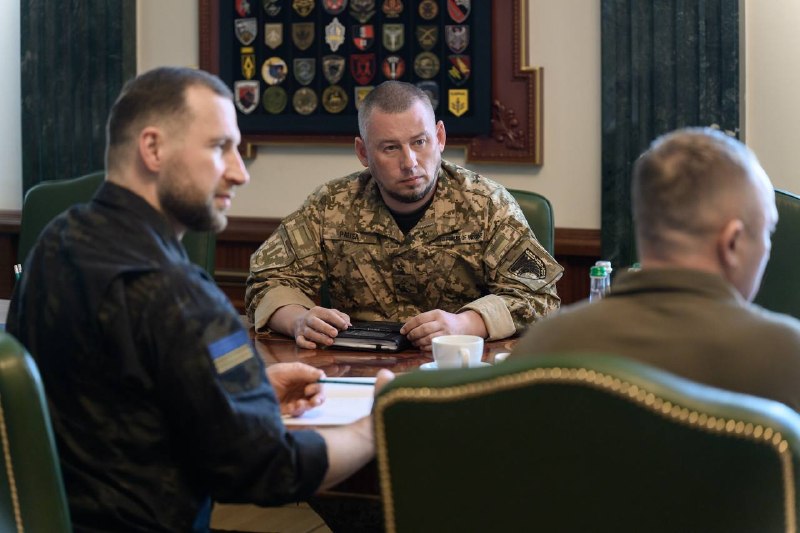
At 15:52 UTC on 16 July 2026, President Volodymyr Zelensky summoned the acting head of the Security Service of Ukraine (SBU), Yevhen Khmara, to the presidential offices in Kyiv and instructed him to carry out the duties of Ukraine's minister of defence. The interim mandate runs until the Verkhovna Rada, Ukraine's single-chamber parliament, completes the legal procedures required to confirm a permanent replacement. Zelensky framed the swap as continuity rather than rupture, telling reporters that Khmara's experience running a wartime intelligence service made him a natural fit for a ministry under sustained political and operational strain.
The change is the clearest signal yet that Kyiv is treating the defence portfolio as a security-and-intelligence job first, and a procurement-and-bureaucracy job second. It also lands with the war in its fourth year, with Western aid packages negotiated in tranches rather than years, and with public attention on corruption cases touching the ministry's procurement chains. The acting arrangement buys Zelensky political room to negotiate the parliamentary arithmetic for a formal vote, without leaving the seat formally vacant.
The move, in detail
Multiple Ukrainian outlets, including Ukrainska Pravda, the public broadcaster Hromadske and the operational Telegram channel operativnoZSU, reported the instruction within minutes of the meeting, each citing the president's own statement. Euronews's Ukrainian service added a procedural note: the temporary mandate runs until "the necessary legal procedures are followed," after which Zelensky will formally request a parliamentary vote on Khmara's appointment. Noel Reports, a Telegram channel that has tracked Ukrainian government personnel moves closely, summarised the rationale as Khmara's "experience in special services," a phrase consistent with Zelensky's own framing of the choice.
Khmara had been serving as acting head of the SBU. His elevation to the defence ministry, even on an acting basis, is unusual: defence ministers in wartime Kyiv have typically come from a military or political background, not from running the country's main domestic-intelligence agency. The framing the president is offering is straightforward: wartime Ukraine needs a defence chief who treats the ministry as a security organ first.
Why the timing matters
The reshuffle lands inside a wider pattern of personnel churn at the top of Ukraine's security architecture. Over the past year, Kyiv has rotated ministerial and service heads in response to investigations into procurement fraud, front-line resourcing decisions, and the political optics of wartime governance. Zelensky has framed each change as a tightening of accountability rather than a forced concession; critics, including figures inside the Verkhovna Rada, have argued that some moves look like the consolidation of loyalty networks around the presidential office.
Placing an intelligence chief at the defence ministry sharpens that debate. On one reading, Khmara brings a security-clearance discipline that the ministry's procurement and logistics arms have, by Kyiv's own admission, struggled with. On the more sceptical reading, the move narrows civilian oversight of one of the country's most consequential wartime bureaucracies at the moment when Western partners are pushing for stronger, not weaker, anti-corruption guardrails. The truth probably sits between the two: a security-services operator with a wartime record running a ministry whose biggest vulnerabilities are procurement, not operations.
Counterpoint: a wartime portfolio does not run on tradecraft alone
The plausible alternative read is that the qualities which make Khmara effective at the SBU are not the qualities that make a defence minister successful. The defence ministry's remit runs from arms purchases and ammunition logistics to relations with NATO liaisons, to the writing of military doctrine and demobilisation policy. None of those tasks disappears under wartime conditions; several become more politically charged, not less.
A security chief running a procurement-heavy ministry also has to navigate the European Union's accession-driven governance requirements and the conditionality attached to Western military aid. Several European partners have made continued support contingent on auditable procurement reforms. If Khmara's tenure is read as a signal of tighter operational control at the expense of transparency, it will complicate that conversation in Brussels and several NATO capitals, even if it delivers short-term gains in Kyiv. The structural tension is real: wartime command culture and Western donor conditionality pull in opposite directions, and the defence ministry sits exactly at the seam.
What is not yet known
Three things remain unclear. First, the timeline for the parliamentary vote: Zelensky has said he will ask the Rada to approve Khmara "after the necessary legal procedures," but no date has been published. Second, the policy direction: the president has cited Khmara's intelligence background as the relevant qualification, but neither his office nor the SBU has outlined a reform agenda for the ministry. Third, the fate of Khmara's SBU role during the acting period: the sources do not specify whether a separate acting head will be installed at the security service, or whether Khmara will hold both portfolios simultaneously in some form. Until those questions are answered, the reshuffle looks more like a holding pattern than a completed handover.
Stakes
If confirmed by parliament, Khmara would inherit a portfolio whose political risks have grown even as its operational demands have eased in some sectors. Front-line resourcing remains the dominant pressure; corruption investigations into procurement remain the dominant political vulnerability; Western donor conditionality remains the dominant external constraint. A defence minister whose primary credential is running the SBU signals to Kyiv's allies that the priority is internal discipline. It signals to Kyiv's critics that the priority may be tighter control. Reading which signal the Western partners actually receive will take a few more weeks, and probably a leaked readout from the first donor-coordination meeting Khmara attends in the seat.
Desk note: Monexus framed this as a personnel reshuffle whose significance sits in the intersection of wartime governance, anti-corruption conditionality and Western donor politics, rather than as a routine ministerial swap. The wire copies available to us all originate with Ukrainian outlets and Telegram channels tracking the president's office; we have not leaned on Russian state-media claims about the change, since they offer no verifiable facts beyond what Kyiv itself has published.
Wire provenance
This editorial synthesis draws on the following public wire/social posts:
- https://t.me/hromadske_ua
- https://t.me/ukrpravda_news
- https://t.me/operativnoZSU
- https://t.me/noel_reports
- https://t.me/euronews
- https://t.me/ClashReport