Zelensky confirms a Fedorov-Syrsky rift he now has to mediate himself
President Zelensky publicly acknowledged on 16 July 2026 that his defence minister and his top general could not work together without him in the room, a rare admission that turns the wartime cabinet into a managed feud.
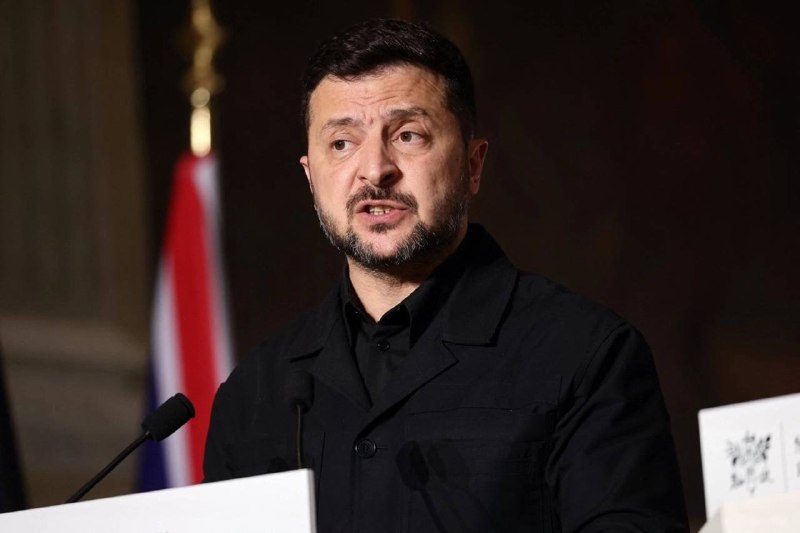
On 16 July 2026, inside the same presidential press gaggle that confirmed the sacking of his defence minister, President Volodymyr Zelensky conceded something Ukrainian officials rarely concede out loud: that the civilian head of the Defence Ministry and his own Commander-in-Chief no longer share a working channel, and that the only person holding the line between them is Zelensky himself.
The remarks, reported by Euronews from the briefing, put a public frame around a palace-war story that had been building for weeks. The official line in Kyiv had long insisted that Minister of Defence Mykhailo Fedorov and Armed Forces Commander-in-Chief Oleksandr Syrsky were coordinating through routine channels. On 16 July Zelensky said the opposite in plain words: "They don't get along. The Minister of Defence and the Commander-in-Chief could only work together through the mediation of the President." It is the first time the wartime leadership has publicly named a managed feud between its two top war managers, and it lands in the same news cycle as a farewell message from Syrsky to a minister who is already on his way out the door.
The farewell that read like a verdict
Twelve minutes later in the Telegram feed, the Commander-in-Chief's official channel posted a short, almost courteous note. "Thank you to Mykhailo Fedorov for your work," Syrsky wrote. "I am proud that thanks to the Kyiv defensive operation in 2022, we managed to hold the capital." That framing matters. The Battle of Kyiv in spring 2022 is the foundational myth of the post-invasion Ukrainian state: the moment when the country stopped being a victim of a three-day special operation and started being a country that could dictate terms on its own soil. By attaching Fedorov's name to that memory, Syrsky gave the outgoing minister a war-hero laurels, then sent him into the rain.
There is no combat record in the available record either side has been willing to publish on why exactly Fedorov is going. The Kremlin-aligned channel gruz_200_rus, which closely tracks Ukrainian command personnel changes, carried Syrsky's statement in full. That the wording was relayed by a Russian milblogger is itself a signal: in the information ecosystem around the war, the most consequential confirmation of an internal Ukrainian reshuffle came not from the Ukrainian cabinet's press service but from a Telegram channel whose job is documenting Ukrainian losses.
Why Zelensky admitted it now
Until 16 July the presidential playbook had been to absorb friction. The pattern is familiar from any wartime capital: deny, delay, promote one of the parties, hope the headlines move. Zelensky's choice to confirm the rift in his own voice changes the calculation. It tells Western donors that the cabinet churn is not bureaucratic housekeeping but a personal intervention by a commander-in-chief who has decided to stop pretending. It also signals to the General Staff that the President has read the room and chosen the field marshal, not the ministry. The cabinet meeting that produced the change was not, Zelensky's answer made clear, a routine reshuffle over policy disagreements. It was a choice about who runs the war on a daily basis: the uniformed commander or the political minister whose portfolio over the last two years has stretched from drones to digital transformation to procurement reform.
Fedorov's portfolio has always been the unusual one. Most defence ministers in Western-allied systems come from a uniformed background or a procurement one. Fedorov, in his mid-thirties when the full-scale invasion began, was the architect of the Diia digital-state platform, the same app that holds Ukrainian identity documents, business registrations and wartime permits. He brought the language of start-ups into a ministry that had previously run on paper schedules and patronage networks, and he pushed drone procurement and IT modernisation into the defence brief at speed. That record bought him room. It also made him the political principal who had to negotiate with a General Staff whose institutional reflex is to defend its own perimeter, particularly on operational planning and force generation.
The structural fault line
The dispute is, at root, the unresolved constitutional question every wartime presidency has to answer: who commands the army. In the Ukrainian system the Commander-in-Chief is constitutionally subordinate to the President, but operationally the General Staff and the minister answer through separate chains. When the president and the two principals agree, the seams are invisible. When they disagree, the seams are what a reader sees in 280-character headlines.
A separate pressure sits underneath. Mobilisation is the slowest-burning crisis inside Ukraine and the most politically radioactive. It is the single issue on which the Defence Ministry, the General Staff and the parliamentary committee on national security have spent more political capital over the last eighteen months than on frontline operations, foreign aid or sanctions policy combined. Whoever controls the levers of force generation controls the length of the war, the depth of the conscription pool, and the demographic arithmetic of every oblast. It is implausible to read the Fedorov-Syrsky standoff as anything other than, in part, a war over those levers, even if neither principal has been allowed to say so publicly. The available sources do not specify which policy disagreement triggered the dismissal. What they do show is that the President has now resolved the disagreement in his own person, has named the mediator, and has read the cabinet's resignation letter into the public record.
What changes on the ground
The resignation opens a vacancy that will be one of the most-watched appointments of the war. Names already circulating in Kyiv-based commentary include senior figures with procurement experience, but the available record does not confirm any of them. For now, two facts hold. First, Syrsky stays in post as Commander-in-Chief and now sits as the unambiguous operational principal, with the President's backing named in public. Second, the friction that produced the resignation has been acknowledged in public for the first time, which means any successor inherits an unwritten rule: the working relationship with Syrsky is the test, and the President is the umpire.
For Western capitals that have spent the last twelve months trying to align industrial-policy timelines on ammunition, drones and air defence with Kyiv's planning cycle, the immediate implication is procedural rather than strategic. The Zelensky-Syrsky-Fedorov triangle has been the slowest variable in the alignment problem: every time it shifted internally, planning calendars moved. Naming the triangle out loud, rather than absorbing the friction, makes the rhythm easier to read from outside, which is the opposite of what has been true for most of the war.
The risk runs the other way. Public naming of a feud between the political and military principals of a country at war is the kind of fact a hostile information operation does not need to invent. It is already a fact. The remaining uncertainty is what the next defence minister inherits, how quickly, and whether the new appointment resets the friction or just reroutes it. The sources available on 16 July 2026 do not name a successor, do not specify the policy trigger, and do not record any comment from Fedorov himself on the dismissal. Those are the three facts that will, in the next 72 hours, decide whether today's admission is the start of a clean reset or the first line of a longer resignation letter.
Desk note: Monexus frames this story through the political-military relationship inside Kyiv's wartime leadership, not through any individual officer's reputation. The Russian-aligned channel gruz_200_rus is cited here as the channel that relayed Syrsky's verbatim statement; the substantive reporting rests on the Euronews briefing and the Ukrainian commanders' own Telegram channels.
Wire provenance
This editorial synthesis draws on the following public wire/social posts:
- https://t.me/Kyivpost_official
- https://t.me/gruz_200_rus
- https://t.me/euronews