WHO warns Ebola in DR Congo is moving faster than any previous outbreak
The WHO said on Thursday that more than 2,000 cases have been confirmed in DR Congo, with the virus now spreading faster than at any point in the country's long history with the disease.
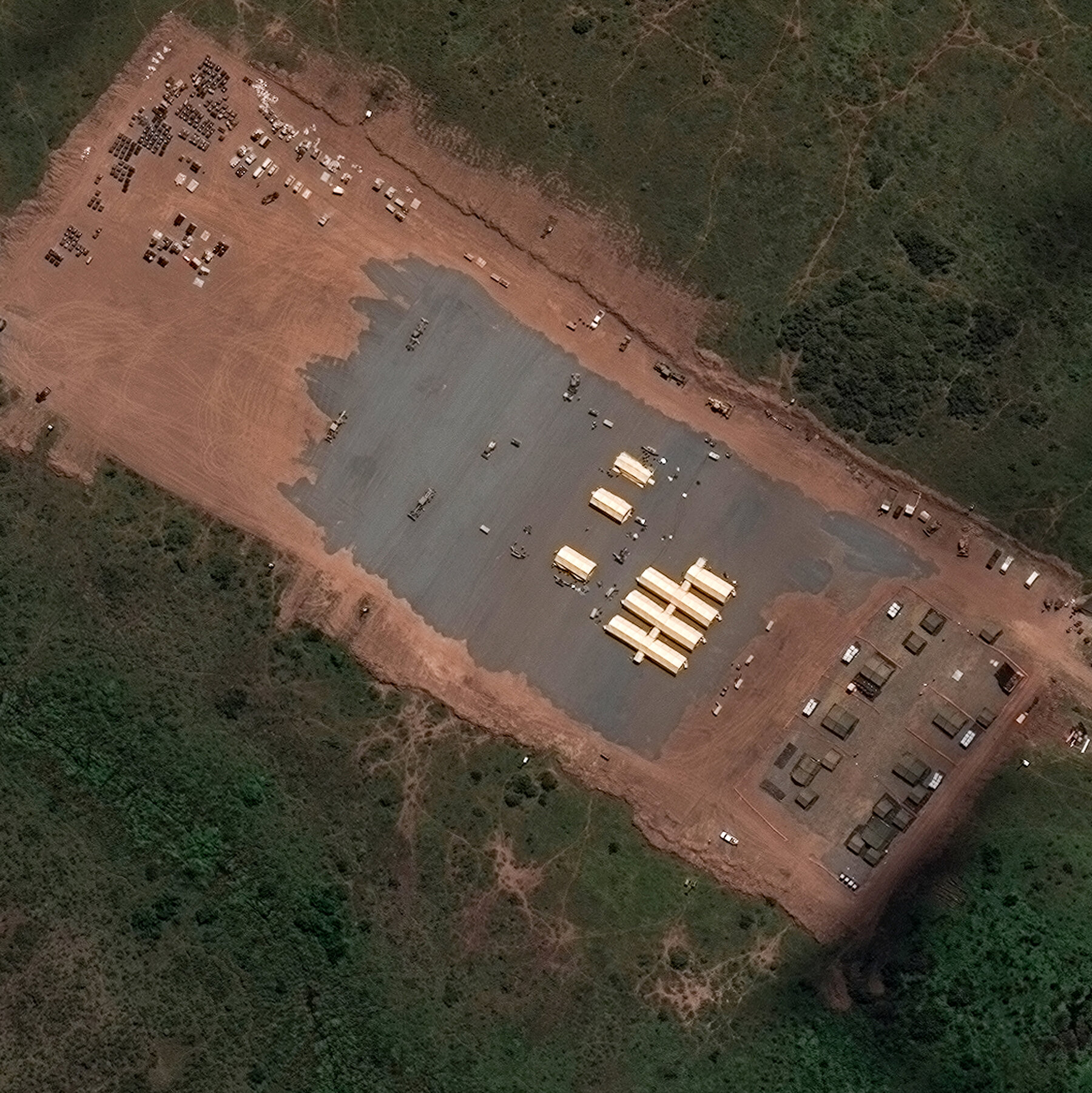
The World Health Organization said on Thursday 16 July 2026 that the Ebola outbreak sweeping the Democratic Republic of Congo is now spreading faster than any previous episode of the disease recorded in the country, with more than 2,000 confirmed cases logged since the current flare-up began. The Geneva-based agency framed the trajectory as unprecedented for Congolese Ebola, an unusually stark statement from an institution that has spent five decades watching the virus recur across the country's vast, road-poor interior.
The WHO's warning, issued from Geneva at roughly 13:00 UTC and amplified within the hour by France 24 and a swarm of monitored Telegram accounts, was brief on operational detail and heavy on alarm. Two figures anchored it: the 2,000-case threshold crossed during a single outbreak cycle, and a velocity comparison to past flare-ups that, on the agency's own accounting, this one now exceeds.
That combination matters. Ebola in DR Congo has historically unfolded in slow, geographically contained waves, often in remote health zones where bad roads and patchy surveillance slow both transmission and reporting. A faster-moving outbreak in 2026 suggests either that the virus has found more efficient routes through movement and trade, or that surveillance has finally caught up with cases that were always there. The WHO's framing leans toward the first reading; the evidence is not yet conclusive.
What the WHO actually said
The Thursday alert, reproduced verbatim by France 24 at 15:02 UTC and within an hour by monitored channels including insiderpaper and OSINTLive, contained a single comparative claim: that current transmission rates exceed those recorded during any previous Congolese outbreak. The agency did not, in the text circulated on 16 July, publish a per-day incidence curve, a serial interval estimate, or a district-by-district case map. The 2,000-case figure was a cumulative count, not a weekly one, and it carried no comparable denominator against earlier outbreaks.
That matters for readers trying to weigh the warning. Without a head-to-head chart of cases-per-week against the 2018-2020 Kivu outbreak, the largest in the country's history, the WHO's "faster than any previous" claim rests on institutional authority more than on numbers a journalist can independently check. France 24's wire copy carried the same wording as the WHO release. So did the Telegram relays. Nothing in the public trail so far adds granular epidemiology.
The structural problem DR Congo keeps running into
The DRC has now experienced more declared Ebola outbreaks than any other country on Earth, a record built on ecological reality as much as institutional capacity. The virus lives in fruit bats across the Congo Basin; it spills into humans when bushmeat is hunted, when forests are opened to logging or mining, or when a grieving family handles a body at a funeral. The country also has roughly 2.7 million people displaced by the long eastern conflicts involving the M23 movement and a constellation of armed groups, and those internally displaced people often live in places where clean water, primary care, and cold-chain vaccine storage are simultaneously scarce.
Against that backdrop, a faster curve is not a surprise. It is closer to a stress test the country has been failing quietly for years, and one that repeated WHO warnings, repeated deployments of the Africa Centres for Disease Control, and repeated vaccine rollouts have not yet shifted. The DRC's central government, headquartered in Kinshasa more than 1,000 kilometres from the eastern health zones where most outbreaks seed, has limited reach into the rural territory where transmission actually happens. International responders fly in. Vaccines arrive. Outbreak declared over. The next spillover prepares itself.
What makes 2026 different, if the WHO's claim holds, is not the virus but the speed. Fast-curving outbreaks compress the window in which contact tracers can isolate chains of transmission, and they sharply raise the per-case cost of ring-fencing vaccination. They also tend to spill across borders, a category of risk the WHO has flagged repeatedly this decade as West African and Ugandan health systems face their own recurring episodes.
What remains uncertain
Three things the Thursday alert does not resolve. First, the comparative baseline: which prior outbreak the current curve is being measured against, and over what window. Second, the geographic distribution of new cases: whether transmission is concentrated in known hotspots or whether new chains have appeared in previously unaffected provinces. Third, the operational response: how many contact tracers are deployed, how many vaccine doses are prepositioned, and which of the country's long-running eastern armed conflicts are impeding access for response teams.
The WHO tends to fill those gaps in its situation reports, which are typically published on a weekly cadence. The Thursday wire alert was a flag, not a situation report. Wire copy that circulates before the data does tends to harden into received wisdom before the epidemiology catches up. The reasonable read, on the evidence available at 16:00 UTC on 16 July, is that the WHO is genuinely alarmed and that the alarm is grounded in a real acceleration. The honest read is also that the granular proof is still on the way.
The stakes, briefly
If the curve continues to climb at the rate the WHO describes, DR Congo's eastern health zones will run out of the staffing and cold-chain capacity to ring-fence new cases within weeks, not months. Cross-border transmission into Uganda, Rwanda, or Burundi becomes a near-certainty rather than a risk. The international response budgets that have underwritten previous DRC outbreaks, funded largely by USAID, the UK's FCDO, the EU, and the Gates Foundation, will come under strain that none of those donors has publicly budgeted for in 2026. For Kinshasa, the political problem is older and harder: an outbreak that outruns the state's ability to be visibly in charge risks becoming, once again, a foreign-response story rather than a Congolese-response story. That has been the pattern for two decades. The question this week is whether the speed breaks the pattern or merely repeats it.
Monexus is reading this outbreak as a stress test of a system the WHO has warned about repeatedly, not as a discrete emergency. The story will be re-reported when the agency publishes its first full situation report with district-level case data, expected within seven to ten days.
Wire provenance
This editorial synthesis draws on the following public wire/social posts:
- https://t.me/s/france24_en
- https://t.me/s/insiderpaper
- https://t.me/s/osintlive