Trump floats Israeli pullbacks in Lebanon and Syria as Katz holds Iran talks with Hegseth
On 16 July 2026 reporting, President Trump privately described an Israeli redeployment in southern Lebanon and southern Syria as worthwhile while Israel's war minister held overnight Iran-focused talks with the US secretary of war.
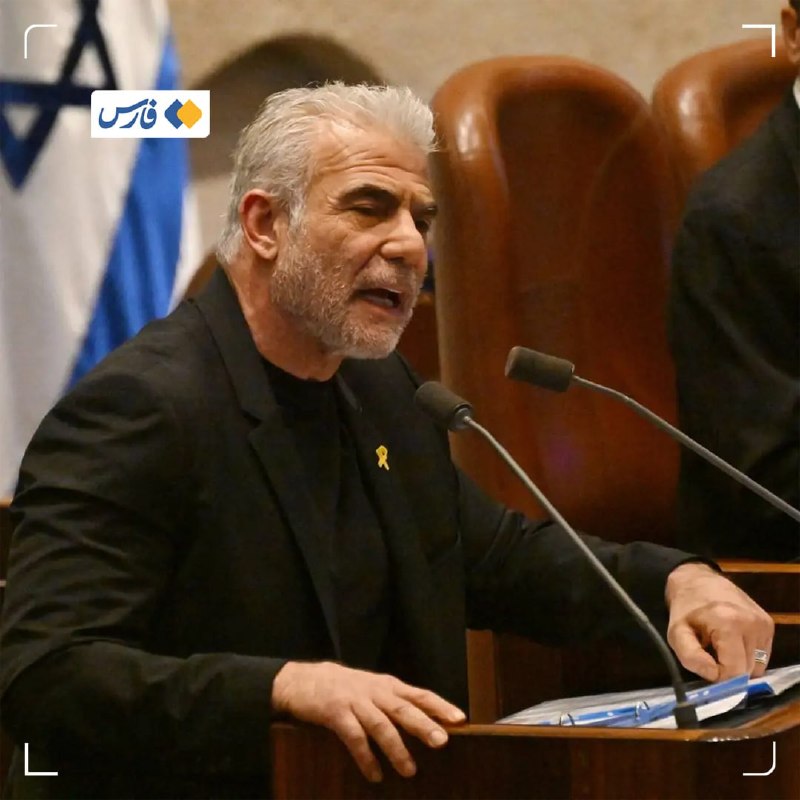
On the morning of 16 July 2026, two separate signals moved through the Israel–US channel within hours of each other. One came from Washington via a widely circulated Arabic-language report: President Donald Trump has told interlocutors that an Israeli withdrawal or redeployment in southern Lebanon and southern Syria would be "worthwhile," and that the question of dismantling Hezbollah's residual presence should in his view be left to the Syrian state. The other signal arrived from Tel Aviv: Israeli War Minister Israel Katz held an overnight phone call with US Secretary of War Pete Hegseth focused on Iran and regional security, according to Katz's own office, as reported by The Cradle Media at 09:28 UTC.
Read together, the two items sketch the outline of a possible Trump-era arrangement in which Israel steps back from two open fronts in exchange for a heavier, more explicit US-led effort on Iran, and the residual counter-Hezbollah fight is outsourced to Damascus. The arithmetic is geopolitically legible: Washington would compress its regional commitments, Israel would shorten its lines, and Syria's new authorities would inherit a security mission previously borne by the IDF. Whether any of that survives contact with realities on the Litani, the Golan frontier, and at Fordow is the open question this article tries to map.
What was actually said on Trump and the two frontiers
The more provocative of the two reports is the Trump item, first surfaced in English by the Telegram channel Englishabuali at 08:45 UTC on 16 July. It attributes to President Trump the view that Israel pulling back from southern Lebanon and southern Syria would be worthwhile, and that the matter of taking on Hezbollah should be left to the Syrian side. The report carries no second source and reads as a single-claim leak of private US thinking rather than a confirmed policy position. The White House has not, on the public record, elaborated the framing.
For Israel, the leap from "worthwhile" to "agreed" is a large one. Southern Lebanon remains a contested zone defined by the post-2006 UN framework and the recurring question of Hezbollah's north-of-the-Litani posture; the Syrian south, post-Assad, is a different and more fluid battleground in which Israel has conducted strikes and maintained a buffer presence as Damascus's new order consolidates. A US president signalling that both files are redrawable, on a single mid-week morning, is itself the news even before any Israeli response.
Katz and Hegseth, on Iran and "regional security"
Roughly forty-three minutes later, a separate read-out landed. The Cradle Media reported at 09:28 UTC that War Minister Katz's office confirmed an overnight call between Katz and US Secretary of War Pete Hegseth, framing the conversation around Iran and "regional security." Israeli ministerial read-outs of US calls are usually narrow and political; the choice to headline Iran first and a more elastic "regional security" second is consistent with a conversation that covered Lebanon, Syria and the residual IRGC posture across both, on top of the nuclear file itself.
Hegseth's portfolio as Secretary of War gives him direct authority over US Central Command and the forward posture that underwrites Israeli deterrence, which makes Katz's choice to engage him rather than, or alongside, the more usual diplomatic channels notable. The fact that the call is being read out in the middle of an active Israel-Hezbollah ceasefire period and a fragile Syrian transition, rather than during an open kinetic crisis, suggests coordination on the Trump framework above rather than an emergency response to a battlefield event.
The structural frame: a US-led handoff
If the two items reflect a single US policy posture, the structure underneath it is familiar even if the labels are new. An incumbent power, overstretched and politically fatigued at home, looks to shorten its regional supply lines by pushing security missions onto local partners. In this rendering, the partners are an Israel willing to trade buffer-zone deployments for quiet on the nuclear file, and a new Syrian order in Damascus whose incentive to police Hezbollah's presence north of the Litani is real even if its capacity is partial. US Central Command, under Hegseth, retains the Iran-flag deterrence mission; the ground game along the Lebanese and Syrian fronts gets thinned and re-tagged as host-state responsibility.
The pieces each make sense individually. Conjoined, they describe a regional settlement that compresses the IDF's exposure, reframes the Hezbollah dossier as a Syrian internal-security question, and reserves the US war-fighting instrument for Iran proper. It is the kind of arrangement a White House with a transactional instinct and an electoral calendar might attempt to broker. It is also the kind of arrangement that any one of its three parties can spoil: Israel by reading the Lebanon pullback as one-sided, Damascus by failing to do the work on Hezbollah, Iran by opening a new file under the cover of the handover.
Stakes, contested facts, and what to watch next
The concrete stakes run on three clocks. First, the military clock along the Israel-Lebanon border, where any redeployment will be read by Hezbollah's residual units as either a softening or a tactical trap; the IDF's own statements on buffer zones will move faster than any political declaration. Second, the diplomatic clock in Damascus, where the Syrian authorities' willingness and capacity to police Hezbollah's presence inside Syrian territory will determine whether Trump's outsourcing bet survives the next intelligence cycle. Third, the nuclear clock with Iran, where Katz and Hegseth's overnight call sets the pace; whether the conversation translates into a visible US force-posture change at CENTCOM or stays rhetorical will be the cleanest signal of which of the two morning items actually maps to policy.
Two items in the public reporting remain genuinely contested. The Trump "withdrawal worthwhile" framing exists, as of this article, in a single English-language channel's report, without an on-record US confirmation, an Israeli reply, or a Syrian response. The Katz–Hegseth read-out is confirmed by Katz's office but described only at a thematic level, with no specifics on agenda items, deliverables, or follow-up meetings. A second sourcing pass, both via Israeli establishment wires and via the more cautious Western desks, will be needed before either piece can be treated as anything firmer than current US intent, expressed privately and read out at the boundary of policy and politics.
What a deal on these terms would and would not solve
On the terms sketched above, the deal solves a problem of US bandwidth: the Middle East file compresses from three open sub-fronts to one, and the war-fighting instrument is reserved for the Iran file alone. It would, by construction, also give the new Syrian order a stake in Israeli quiet, which is itself a regional asset. It does not solve the underlying question of whether Hezbollah, under sustained political and military pressure from Damascus, demobilises, relocates, or merely rebrands inside Syrian territory. It does not solve the question of what Israel gets from the buffer it currently holds on the Syrian side: a posture it has argued, in its own UN correspondence over the past decade, is non-negotiable until the threat picture changes.
The clearest forward marker is a written US–Israeli joint statement. Until that exists, what is on the table on 16 July 2026 is the more interesting and less certain thing: a Trump-era framing that has reached Israeli ears through the back channel, and an Israeli war minister on the phone overnight with his US counterpart, in a week that the world will read as either a turning point or a trial balloon.
Desk note: Monexus is treating both items as preliminary: the Trump withdrawal framing currently rests on a single Arabic-language English-channel report and is read as US intent ahead of policy; the Katz–Hegseth conversation is read-out on the Israeli side only, and is being read against the live Lebanon and Syria files rather than the Iran file alone. Where wire desks will likely compress the read into a single "Israel retreats" line, this desk keeps the two tracks separate.
Wire provenance
This editorial synthesis draws on the following public wire/social posts:
- https://t.me/englishabuali
- https://t.me/TheCradleMedia
- https://t.me/thecradlemedia