NBC and ABC Pull Trump's Primetime Election-Security Address
Both major networks declined to carry a planned primetime address on election security, citing scheduling and editorial judgement, in a decision likely to amplify rather than settle the political fight it was meant to address.
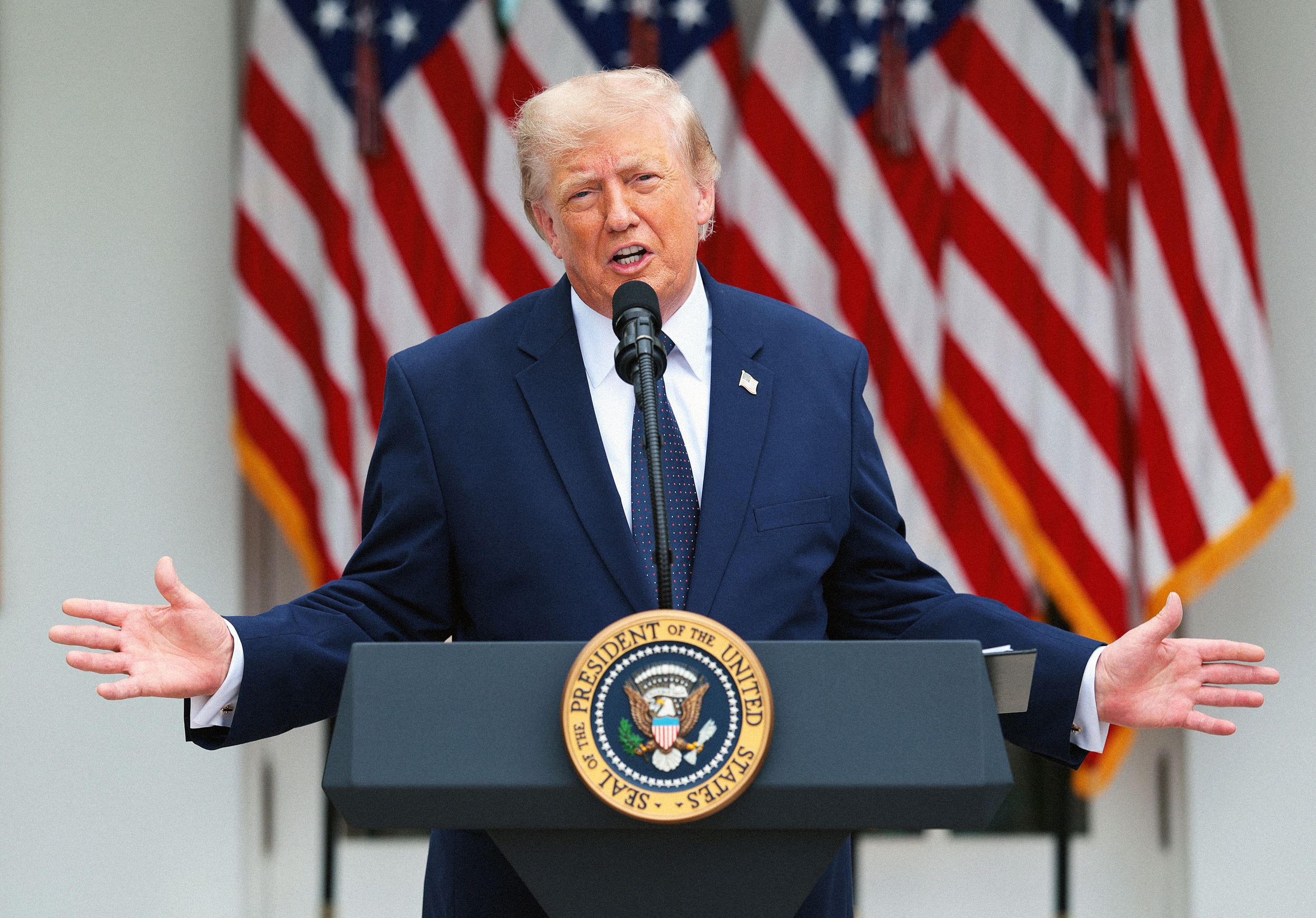
At 21:51 UTC on 16 July 2026, the Telegram channel @insiderpaper flashed a single line: NBC and ABC would not carry President Donald Trump's planned primetime address to the nation live on their main broadcast networks. Reuters confirmed the decision forty-seven minutes later, via the @wfwitness relay, and the unusual-whales account on X (formerly Twitter) had already framed it as a breaking story by 21:52 UTC. The networks' refusal to clear a slot on their flagship evening schedules for a sitting president's address on election security is the kind of decision that, in ordinary politics, would resolve itself inside a news cycle. This one is unlikely to.
The choice forces a familiar argument into sharper relief. A president of the United States, preparing to make a primetime case to voters about the integrity of the ballot, cannot rely on the three traditional broadcast networks to carry him. The networks, in turn, face a choice between deference to the office and deference to their own editorial judgement about what an unscheduled address actually warrants. Neither side has clean hands. Both sides have structural incentives that pre-date this particular Thursday night, and both sides have spent the last nine years rehearsing the lines they will use to explain themselves.
The networks' calculation
The wire reporting gives the networks room to claim neutrality. NBC and ABC, as reported by Reuters via the @wfwitness Telegram channel, framed the decision around scheduling and editorial standards rather than the content of the address itself. That framing is not unreasonable. The broadcast networks are not state media; they are not obligated to clear time for a presidential address simply because the White House asks. Primetime slots are inventory, and inventory that could carry scheduled programming or breaking news carries real revenue consequences when given up.
What the framing does not do is hide the pattern. Major networks have spent the better part of a decade negotiating, sometimes in public and sometimes in private, how to handle Trump-era presidential communications. Carrying an address live is a guaranteed audience and a guaranteed controversy; declining to carry it is a smaller audience and a different controversy. The decision calculus tilts depending on the news cycle, the administration's relationship with the press, and the political weight of the specific subject. Election security, the ostensible topic of this address, sits on the heavier end of that scale, which makes the refusal the more consequential choice. Reuters, the only major wire in the thread, treated the decision as newsworthy on its face rather than as a partisan event; that is itself a signal of how settled the institutional view has become.
What the address was meant to do
According to @insiderpaper on Telegram, the address was expected to include a specific claim: that at least 278,000 noncitizens are currently registered to vote in U.S. federal elections. The figure is large, the kind of round number that lands in a primetime address because it travels well in clips. It also lands at the centre of a long-running fight over how election systems are administered, who is allowed to vote, and what counts as evidence of fraud.
That fight has its own structural shape. State-level voter rolls are maintained by a patchwork of secretaries of state, county clerks, and election boards; the federal government has limited visibility into the day-to-day contents of those rolls. A national figure purporting to show noncitizen registration therefore rests on a chain of administrative claims that is hard for an outside audience to verify in real time. The address was meant to compress that chain into a single, broadcast-friendly assertion. Without a live network feed, the assertion will still circulate; it will do so on cable, on social platforms, and through the White House's own distribution channels. The audience shrinks; the spread does not.
The press freedom frame, and its limits
The reflexive media-side response to the decision is that editorial independence is the point. A broadcast network is entitled to decide which presidential addresses it carries, and a refusal is not a blackout. The reflexive administration-side response is that a sitting president addressing the country on election integrity deserves the largest possible audience, and that declining to provide one is itself a form of political speech. Both responses are real. Neither exhausts the situation.
Coverage routinely defers to the language of official spokespeople; this case, unusually, is shaped less by what officials said than by what networks declined to amplify. The decision will be parsed as a First Amendment question by some commentators and as a ratings-and-access question by others. The truth, as the Reuters wire implies, is that the two questions have been braided together for so long that separating them in a single news cycle is no longer possible. A network that clears a slot is endorsing the address; a network that declines is editing it. The middle position, of carrying the address with extended commentary, has its own costs: it transfers the framing power to the commentators and away from the president, which is neither what the White House asked for nor what the critics of the address want.
What the trajectory looks like from here
The near-term mechanics are predictable. The address will run on cable news, on the major network streaming platforms, and on social media; the White House will release the full video and a transcript; clips will dominate search results and trending lists within an hour of the 23:36 UTC announcement on @insiderpaper. By Friday, both NBC and ABC will have published editorials explaining their decision. By the weekend, congressional responses will have begun, and at least one committee will have written a letter. The address will have done the work the address was meant to do, just not on the platforms the president would have chosen.
The longer-term stakes sit underneath that surface churn. The United States has historically treated the major broadcast networks as a shared public square: not state media, but a space where the sitting president can be heard at moments of national consequence without routing through partisan intermediaries. That informal arrangement depends on mutual trust between the networks and the White House, and it depends on the networks' willingness to clear time even when they would rather not. If a major-network refusal becomes a recurring feature of presidential communications, the next administration of either party will inherit a system in which primetime access is conditional rather than assumed. The address on 16 July 2026 is a single data point; the question it raises is whether the data point marks a line or a drift.
This piece was written from the wire reports and Telegram relays circulated on the evening of 16 July 2026. Monexus has not embedded video from the address; the substance of the planned remarks is taken from @insiderpaper's account and should be read as a preview rather than a transcript. The networks' reasoning, where quoted above, is the reasoning Reuters reported; their fuller internal deliberations are not on the public record.
Wire provenance
This editorial synthesis draws on the following public wire/social posts:
- https://t.me/insiderpaper
- https://x.com/unusual_whales/status/
- https://t.me/wfwitness
- https://t.me/insiderpaper