Explosions Reported at US-Linked Facilities in Kuwait and Bahrain as Iranian State Media Frames Bahrain Strike as the War's Largest
Local and Iranian-state reporting describes coordinated strikes on American-linked sites in Kuwait and Bahrain overnight, with PressTV calling the Bahrain attack the largest on US positions since the war began.
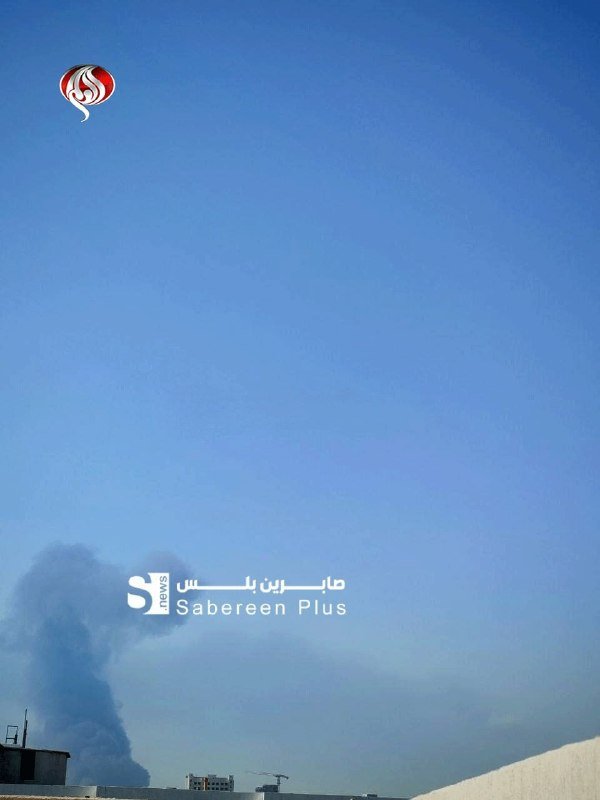
A string of explosions struck facilities tied to American economic and military interests across the Persian Gulf overnight, with local and Iranian-state outlets reporting simultaneous attacks on a US-linked site in Kuwait and on the US naval presence in Bahrain between roughly 22:21 UTC on 15 July and 00:33 UTC on 16 July. The most expansive claim came at 00:33 UTC on 16 July, when PressTV, carried by Iran's Mehr News Agency, described the strike on American bases in Bahrain as "the biggest attack since the beginning of the war."
The picture that emerges from the wire traffic is one of a coordinated, multi-theatre overnight operation rather than an isolated incident: a Kuwait strike at dawn local time, a separate attack on US positions in Bahrain activated by warning sirens, and an Iranian-state media apparatus already framing the Bahrain strike as a milestone. Western wire confirmation of damage, casualties, or attribution has not yet appeared in the materials this publication reviewed.
What the overnight traffic actually says
At 22:21 UTC on 15 July, Fars News International reported "several explosions in Kuwait," citing local sources that described attacks on American economic interests and facilities in the country. The agency repeated the framing at 22:51 UTC, again pointing to "local sources" reporting an attack on American economic interests and facilities in Kuwait on Thursday morning. The language in both Fars posts is identical: "the attack on American economic interests and facilities in Kuwait."
At 23:11 UTC, Fars added a second front: reports of an attack on a US base in Bahrain, with local Bahraini media cited as saying warning sirens were activated at the same time the American military position was targeted. Forty minutes later, at 23:40 UTC, the Beirut-based Al-Alam Arabic channel carried an urgent item: "Explosions sound at American bases in Bahrain."
Then, at 00:33 UTC on 16 July, Mehr News Agency republished a PressTV assessment that explicitly named Iran as the actor and escalated the rhetorical weight of the reporting: "Reports indicate that Iran's attack on American bases in Bahrain on Thursday was the biggest attack since the beginning of the war."
The throughline is consistent across three separate channels, Fars, Al-Alam and Mehr/PressTV, and across roughly two and a half hours. The Kuwait item is framed as strikes on "economic interests and facilities," a category broader than a single military base. The Bahrain item is framed as strikes on a US base, with sirens sounding locally.
A counterweight the wire is not yet showing
Every named outlet that has so far published on the strikes is either Iranian state media (Fars, PressTV, Mehr) or Iran-aligned regional Arabic-language media (Al-Alam). The thread material reviewed for this article does not contain US Central Command confirmation, Pentagon readout, Bahraini government statement, Kuwaiti interior ministry acknowledgment, or independent wire reporting from Reuters, AP, AFP, the BBC, Bloomberg or Al Jazeera English. Reuters, AP, AFP, the BBC and Al Jazeera are all approved outlets whose direct confirmation would weigh materially more than the regional feeds currently in circulation, but their URLs do not appear in the materials available to this article.
That asymmetry matters. Iranian state outlets have a documented interest in amplifying the scale and success of strikes against US positions; Al-Alam, owned by Iranian state broadcasting, inherits a similar editorial line. When three of the three voices in the overnight traffic share an institutional origin, the read of "coordinated and unprecedented" that PressTV advances should be treated as a claim in search of independent corroboration, not as an established fact.
What the framing tells us, even before confirmation lands
The vocabulary itself is informative. PressTV's claim is calibrated to a specific rhetorical move: it does not merely report damage, it inserts the Bahrain strike into a timeline. "The biggest attack since the beginning of the war" is a comparative claim; it asks the reader to locate last night on a chart of escalating strikes since the war's opening phase. The framing assumes a continuing war, assumes an Iranian role, and assumes a baseline of prior strikes against which this one ranks. Each of those assumptions needs separate verification.
Fars's language in the Kuwait posts is more clinical: "attacks on American economic interests and facilities." The phrase carefully avoids calling them military bases, which leaves open the possibility that what was struck were diplomatic compounds, oil-sector installations with US partners, logistics hubs, or private-sector sites with American equity. A Kuwait strike on "economic interests" reads differently from a Kuwait strike on a base, because the former implies a widened target set and a more ambitious theory of pressure.
The Bahrain item, by contrast, is framed unambiguously as a US base, with the local colour of warning sirens providing a civilian-defence timestamp. That distinction, economic targets in Kuwait, a military target in Bahrain, is the kind of detail that, if it holds up, indicates a deliberately diversified attack envelope rather than a single opportunistic launch.
Stakes and what to watch next
The pattern, if corroborated by independent reporting, would extend the geography of Iran's reported retaliation beyond the Israeli theatre and the Strait of Hormuz transit lanes into the Gulf's anchor US basing footprint. Bahrain hosts the US Navy's Fifth Fleet and the Naval Forces Central Command; Kuwait hosts Camp Arifjan, a major US Army logistics hub, alongside commercial facilities with significant US equity. A combined attack envelope across the two countries, hitting both a logistics centre and a fleet headquarters, would be an unambiguous escalation of target set, not merely of tempo.
The verification queue is therefore specific and concrete: a US Central Command briefing acknowledging or denying damage; a Bahraini government statement on sirens and any casualties; a Kuwaiti interior ministry or oil-sector statement on the "economic interests" Fars named; and independent wire reporting that confirms, qualifies or contests the PressTV "biggest attack" claim. Until at least one of those independent data points lands, the night's events should be read as an Iranian-state claim of a coordinated, multi-country operation against US-linked sites in Kuwait and Bahrain, sustained across three Iranian or Iran-aligned channels over roughly two and a half hours.
The wider question is whether the overnight traffic represents a single coordinated launch or a clustering of unrelated incidents into one reporting cycle. The timing, a Kuwait item at dawn local time, a Bahrain item shortly after, and a same-night PressTV framing of the Bahrain strike as historic, leans toward the former reading. But leaning is not landing, and the ledger on the night, at this hour, is still mostly drawn in the ink of the actors claiming the strikes.
This article drew exclusively on regional and Iranian-state channels available in the overnight wire. Monexus will update with independent confirmation as it becomes available; a Western-wire read of the same night is not yet in the public record.
Wire provenance
This editorial synthesis draws on the following public wire/social posts:
- https://t.me/FarsNewsInt
- https://t.me/FarsNewsInt
- https://t.me/FarsNewsInt
- https://t.me/alalamarabic
- https://t.me/mehrnews