Israel's war minister and the Pentagon reopen the Iran channel
Israel Katz and Pete Hegseth held an overnight call on 16 July 2026 about Iran, while the White House floated a partial Israeli withdrawal from southern Lebanon and southern Syria.
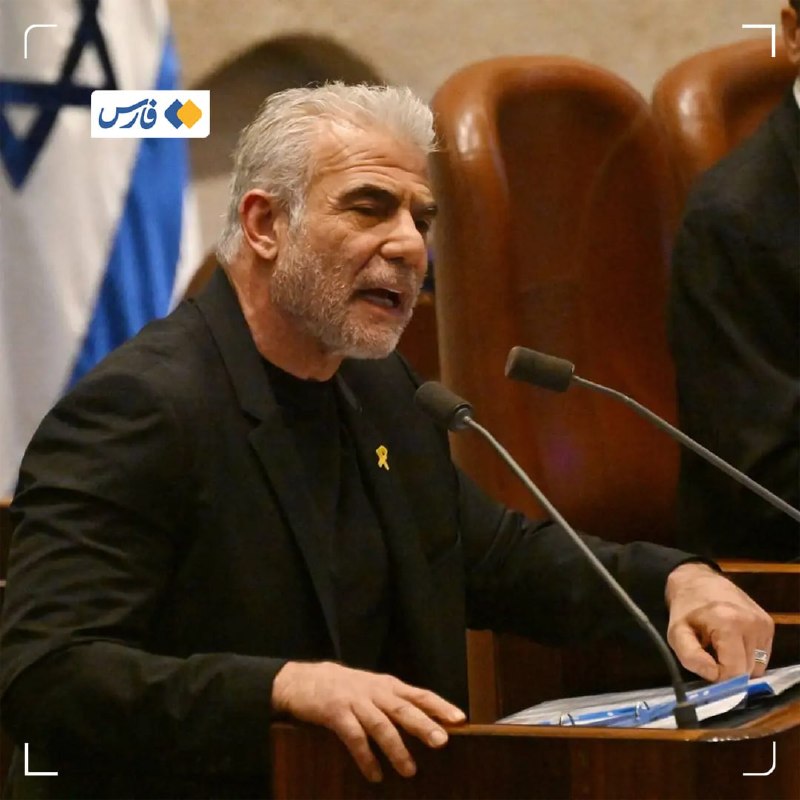
Israel's War Minister Israel Katz held an overnight call with US Secretary of War Pete Hegseth on 16 July 2026, with Iran and regional "security" topping the agenda, according to reporting by The Cradle Media citing Katz's office. The conversation lands the same day President Donald Trump publicly suggested that a partial Israeli withdrawal from southern Lebanon and southern Syria would be worthwhile, and that degrading Hezbollah should be left, in his framing, to the Syrian government. Read together, the two signals point to a quieter diplomatic channel being reactivated, one in which Tel Aviv and Washington are trading terms on the northern front while the wider contest with Tehran continues in the background.
The pairing of an Israeli war minister's office statement and a presidential remark about redeployment is the kind of choreography that precedes a substantive policy shift. Whether it produces one this week is a different question.
The overnight call, and what Katz's office chose to disclose
Reporting from The Cradle Media on 16 July 2026 records that Katz and Hegseth spoke overnight, with Iran's nuclear file, Hezbollah's post-war posture, and the security architecture along the Syrian and Lebanese frontiers on the agenda. The Israeli side put the conversation on the public record through Katz's office, a deliberate choice. Israeli ministries do not normally volunteer the substance of a war-minister-to-Pentagon call unless they want a domestic or allied audience to register that the channel is live and that the United States is engaged. The readout, as relayed, is the minimum disclosure that serves that purpose.
The political weight sits in who picked up the phone. Hegseth, as Secretary of War, runs the department that supplies Israel with the materiel, the targeting intelligence and the airlift capacity that sustain operations on the northern border. A call between the two men on Iran is not a courtesy; it is the operational back-channel. When Israeli media reports a Katz-Hegseth exchange, it is usually because one of the two offices wants something visible to follow.
The fact that the call was overnight, Israeli time, also matters. It places the conversation inside a US working day in Washington, not in the margins of a foreign minister's schedule, and suggests that the trigger came from the American side, or at minimum that Washington wanted the exchange on the record while it could still be read by the morning briefers in both capitals.
Trump, Lebanon and Syria: the parallel track
Hours before the Katz-Hegseth call became public, Trump's remarks on southern Lebanon and southern Syria surfaced via English-language reporting attributed to him on 16 July 2026. The position, as conveyed, is that an Israeli withdrawal or redeployment in both theatres would be "worthwhile," and that the United States would prefer to leave the question of taking on Hezbollah to the Syrian government rather than treating it as a standing Israeli ground mission.
That formulation does several things at once. It signals to Jerusalem that the White House is prepared to underwrite a drawdown along two of the most exposed Israeli frontlines. It reframes Hezbollah from a target for Israeli forces into a problem to be absorbed by a Syrian state apparatus that, in 2026, is itself a partially reconstructed and politically fragmented entity. And it binds Israeli movement on the ground to a Syrian-led outcome that no one in the chain of command fully controls.
For Israel, the calculation is narrow. A pullback from southern Lebanon would close the most politically costly chapter of the northern campaign. A redeployment inside Syria would relieve the manpower and budgetary pressure of a long occupation. The price is the acceptance of a model in which residual Hezbollah capability is contained rather than destroyed, and in which Damascus, however imperfect, becomes the interlocutor.
For Washington, the same statement does something else. It opens space for a renewed diplomatic exchange with Tehran without the optics of Israel pressing the accelerator in the background. A quieter northern front is a useful precondition for any nuclear conversation, sanctions recalibration or prisoner-track negotiation that the administration may want to stage in the months ahead.
What the Iranian side has not said, and why the silence reads
Iranian state media has not, in the material available to this desk on 16 July 2026, been formally cited on either the Katz-Hegseth call or the Trump remarks. The absence is itself a signal. Tehran has spent the past two years calibrating its public line on any Israel-US exchange: visible protestation when the conversation is about weapons deliveries; studied ambiguity when the conversation is about boundaries. An overnight minister-to-secretary call about "security" sits in the second category.
The structural read is straightforward. A US administration that is talking to Israel about withdrawal in the north is, by definition, not arming a northern escalation. Tehran reads that posture and adjusts its proxy tempo accordingly: quiet on the border, slower Hezbollah rearmament cycles, more diplomatic flexibility on the nuclear file. The pattern is not new. It is the same alignment that produced the 2023 deconfliction framework around the eastern theatre, and it is the alignment that any new arrangement on the Golan and the Litani will have to navigate.
The counter-read is that an Israeli redeployment that hands residual responsibility to Damascus risks a vacuum that Iran is well placed to fill. Syria's post-2024 transitional government has shown neither the capability nor the political appetite to suppress a Hezbollah-adjacent infrastructure on its own soil. A US-brokered pullback that assumes a functional Syrian partner assumes more than the evidence warrants.
The structural picture, in plain prose
What is unfolding is the slow re-engineering of the Israel-Iran contest away from open fire along the border arc and back into the long, layered terrain of sanctions, proxies and red lines. Overnight calls between a war minister and a secretary of war are the connective tissue of that re-engineering: not dramatic enough to make a headline, frequent enough to constitute a posture. Presidents set the frame; ministers execute inside it. The frame set on 16 July 2026 is a partial Israeli pullback, a Syrian-led containment experiment, and an Iran track that the United States wants to keep open without paying for it in escalation.
The stakes are specific. A successful redeployment would let Israel consolidate politically at home, give Washington room on the nuclear file, and reduce the daily risk of a border incident that neither side can afford. A failed one would restore the conditions for a wider war by early 2027. The next forty-eight hours, when Katz's office and the Pentagon decide how much of the overnight call to brief out, will tell which way the bet is leaning.
What remains genuinely uncertain is whether the Syrian government has been consulted, and whether it has the capacity to perform the role Trump has sketched for it. The reporting available on 16 July 2026 does not address either question. Until that picture fills in, the line between a controlled drawdown and an open-ended vacuum is thinner than the official readouts suggest.
This desk reads the Katz-Hegseth call and the Trump remarks on Lebanon and Syria as the visible end of a coordination process that has been running, mostly out of public view, for several weeks. The wire ledes on the two items were filed as separate stories; the underlying posture is one story.
Wire provenance
This editorial synthesis draws on the following public wire/social posts:
- https://t.me/TheCradleMedia
- https://t.me/thecradlemedia
- https://t.me/englishabuali