Iran strikes US bases in Kuwait: what the first 30 minutes of reporting actually show
Iranian missiles and drones hit US air-defence positions in Kuwait late on 16 July 2026, producing visible fires. The first 30 minutes of reporting are Iranian and Iraqi-aligned, and the picture is still incomplete.
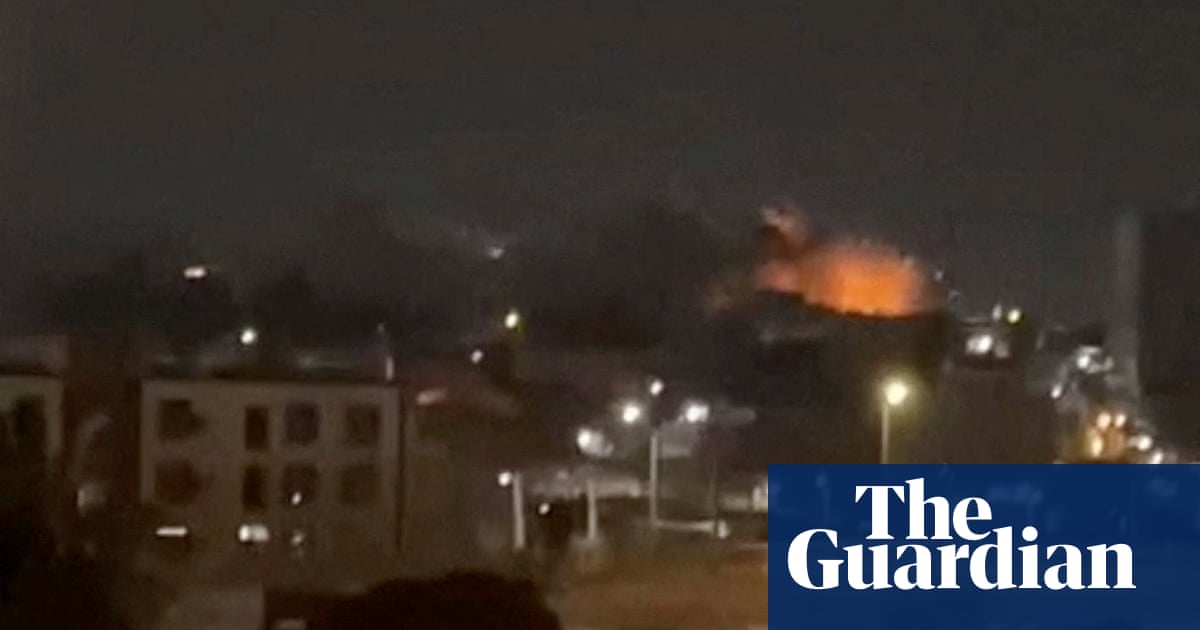
At 22:11 UTC on 16 July 2026, Al-Alam Arabic broke in with two short red banners: multiple explosions at American bases in Kuwait. Twenty-two minutes earlier, the Iraqi outlet Jahan Tasnim had reported a "massive fire" at a US base in Kuwait "following Iran's missile and drone attacks." By the time the night settled, two distinct video clips had circulated on X from the account @sprinterpress, both showing detonations, burning launcher platforms and Iranian framing of a direct hit on US air-defence assets.
In plain terms: Iran appears to have struck US positions inside Kuwait late on Wednesday. The first half-hour of reporting is Iranian and Iraqi-aligned, and the picture is far from complete. What follows is what can be said with confidence, what is contested, and what the dominant wire narrative is likely to settle into once Western outlets land.
What the initial reports actually say
Two Telegram accounts and one X account carry the entire first wave of verifiable reporting. Al-Alam Arabic, the Iranian-aligned channel that frequently surfaces first on strikes against US assets in the Gulf, posted at 22:11 UTC that multiple explosions had been heard at American bases in Kuwait. Jahan Tasnim, an Iraqi outlet with a record of carrying Iranian-press framing, posted at 22:05 UTC that a "massive fire" had broken out at a US base in Kuwait after missile and drone attacks attributed to Iran. At 22:01 UTC, @sprinterpress on X reported that Iran had launched a direct attack on American air-defence systems in Kuwait, with "intense fires" at multiple locations, attaching video. At 21:49 UTC, the same account posted a second clip purporting to show the destruction of US launch platforms inside Kuwait.
No Western wire has confirmed the strikes at the time of writing. No US Central Command statement, no Kuwaiti government statement, and no Iranian official readout appear in the first cluster of reporting. The visible record is video, the alleged target set is US air-defence infrastructure, and the framing is uniformly Iranian.
Why the framing matters
The sources carrying this story are not a neutral cross-section. Al-Alam Arabic is owned by Iranian state media and reaches Arabic-speaking audiences with the Islamic Republic's editorial line. Jahan Tasnim operates in the Iraqi media ecosystem with documented ties to Iranian-aligned political factions. @sprinterpress on X is a Baghdad-based account that has previously circulated footage of US positions in Iraq and Syria with pro-Iranian framing. That is not a disqualification; it is a provenance statement, and the pipeline the story is travelling through is an Iran-led one.
When Reuters, the AP and the Pentagon finally publish, the read-out is likely to differ in three predictable places: the scale of the damage (Tehran's first claims tend to overshoot), the response posture (US and Kuwaiti statements will stress operational continuity), and the choice of target language (Iranian sources describe "launch platforms" and "air-defence systems"; Western briefers will more often refer to "support facilities" or decline to specify pending battle-damage assessment). Monexus is flagging this gap rather than waiting for it to resolve.
The structural frame, in plain prose
Iran has built a layered escalation ladder with US forces in the Gulf over the past two years, calibrated to stay below the threshold that triggers a US retaliatory strike while still demonstrating reach. Strikes on US positions in Syria and Iraq have become near-periodic; strikes inside a Gulf monarchy allied to Washington are a different order of move, both because the host country is a formal US security partner and because the optics inside Kuwait itself, with its parliamentary politics and visible US footprint, are harder for Tehran to ignore.
The dominant wire framing on Thursday morning will, in all likelihood, treat this as another round of Iran-US tit-for-tat and slot it into the familiar rhythm of strikes, condemnations and de-escalation. That framing is not wrong, but it understates the regional cost: every strike on a Gulf base raises the question of whether the host state is being defended against, or being defended from. Kuwait has spent two decades managing the political fragility of hosting US Central Command's forward presence; an Iranian strike on its soil forces a domestic conversation that the government in Kuwait City has been able to defer.
What we still do not know
The sources do not specify which US installation was struck, the number of incoming missiles and drones, intercept outcomes, or casualties. The video clips from @sprinterpress are consistent with the location claims, but their origin and timestamp cannot be independently verified from the available reporting. No Kuwaiti interior ministry statement, no US Central Command briefing, no Iranian Revolutionary Guard Corps communique has appeared in the first cluster. The range of plausible outcomes runs from a contained strike on a radar or launcher site with no casualties, to a more significant attack that prompts both a US response and a Kuwaiti demand for clarification. Until Western wires land, Monexus treats the damage assessment and any casualty figures as unverified.
The headline that will travel on Thursday, when the wire consensus arrives, will probably be "Iran strikes US base in Kuwait". The story underneath that headline is older and less tidy: a Gulf monarchy absorbing a strike it did not invite, on facilities whose presence it hosts but does not always celebrate, in a contest between Washington and Tehran whose principal casualty so far has been the fiction that any Gulf capital can stay outside it.
Monexus led on this story when only Iranian-aligned and Iraqi Telegram channels plus one Baghdad-based X account had reported it. We name the provenance of those sources rather than presenting them as a neutral first wave, and we hold the damage assessment until Reuters, the Pentagon or Kuwait's government confirm.
Wire provenance
This editorial synthesis draws on the following public wire/social posts:
- https://t.me/alalamarabic
- https://t.me/JahanTasnim
- https://t.me/alalamarabic