Tehran warns of 'no red lines' as US strikes hit Ahvaz hospital zone
An IRGC spokesperson vows the fight 'will not be limited' hours after reports of a US strike near a children's oncology hospital in Ahvaz, as the conflict's geometry widens beyond the nuclear file.
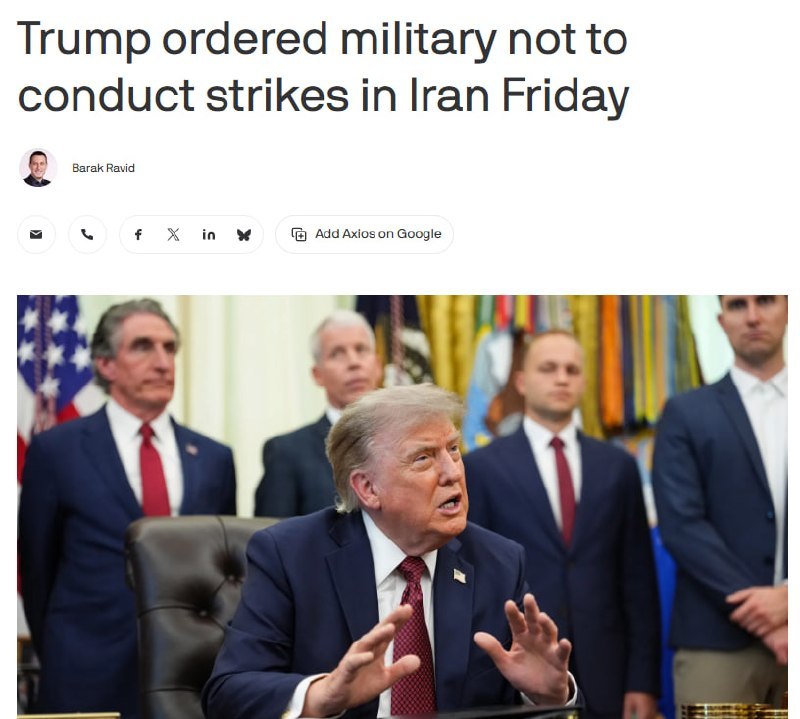
At 05:14 UTC on 16 July 2026, a Tehran-based account on X reported that US aircraft had struck dozens of Iranian cities overnight, and that the area surrounding a children's oncology hospital in Ahvaz, in Khuzestan province, was hit. Within the hour, two Telegram channels with established track records of carrying Iranian Revolutionary Guard Corps statements, @englishabuali and @abualiexpress, posted a warning attributed to an IRGC spokesperson: "The enemy should not assume that it can continue on its current path of fighting and turn the confrontation into a limited one."
The geometry of the confrontation has shifted in 36 hours. Iran's guards are no longer talking about retaliation calibrated to a strike on a nuclear site; they are talking about removing the ceiling on the fight altogether. That is the news, and it is the one the wires are carrying in their hedged, fact-bound style while the Tehran messaging apparatus pushes a simpler, more menacing line.
From nuclear file to open confrontation
For two years, the operative frame around Iran's nuclear programme was a hostage negotiation: enrichment caps, IAEA access, the slow rolling back of capabilities in exchange for sanctions relief. The strikes over Ahvaz, if the initial reports are borne out, sit outside that frame. A children's oncology hospital is not a centrifuge hall at Natanz or Fordow. Striking it is a different kind of message, one aimed less at the country's enrichment capacity than at its political will.
Iran's stated response, in the language carried by @englishabuali and @abualiexpress, is to disclaim the very category of "limited" war. Read carefully, the IRGC line is not a threat of a single retaliatory strike; it is a declaration that the regime will not accept a sequencing of operations in which the United States sets the tempo and the targets. That distinction matters for oil markets, for shipping through the Strait of Hormuz, and for the dozen-plus countries whose citizens live in the cities now reportedly under bombardment.
What the counter-narrative says
Tehran's messaging apparatus does not operate in a vacuum. The IRGC's English-language channels have, over months, framed every Western statement as proof of an intent to dismantle the Islamic Republic. Sceptics of that framing note that the guards have a domestic audience to manage, that the language of "no red lines" is also a way of compelling a domestic rally-round-the-flag effect at a moment when inflation and water stress have eroded public patience. The same sources that carry the IRGC's warning are also the loudest amplifiers of any claim of US or Israeli overreach, a structural feature, not a bug.
A second counter-read holds that the strikes reported around the Ahvaz hospital area remain unverified by independent journalists on the ground, and that the first hours of any strike campaign are the period of greatest informational fog. Casualty counts, target identification, and the question of whether the hospital zone was deliberately struck or collateral damage from a nearby target, all of this will be contested for days. The report was first pushed by an X account with a known pro-Iran framing; until wire services with embedded correspondents or commercial satellite imagery corroborate, the prudent reading is that US strikes hit multiple Iranian cities overnight, and that one site reportedly near a paediatric hospital was among them.
The structural pattern
What we are watching is a familiar arc in US-Iran confrontations: an opening round that targets the visible military-industrial assets, followed by a rhetorical escalation from Tehran that seeks to widen the aperture of the conflict beyond what Washington is prepared to manage. The pattern cuts two ways. It raises the cost for the US of staying narrow; it also tests the cohesion of Iran's own coalition, which includes actors who would prefer a return to negotiation and actors who see any deal as surrender.
The oil and shipping dimension is the most concrete near-term stake. Even a credible threat to close, or to mine, the Strait of Hormuz would push benchmark crude and freight rates through the Gulf in a direction that no major importer, China, India, Japan, South Korea, the European Union, has any interest in. The conflict's centre of gravity is no longer the nuclear file; it is the question of whether Iran's regime is willing to impose economic costs on its principal oil customers in defence of a war it did not start.
What remains uncertain
The sources do not specify the exact targets hit in Ahvaz, nor confirm a deliberate strike on the hospital compound rather than damage from a nearby munition. They do not name the IRGC spokesperson quoted in the Telegram posts, nor do they attribute the statement to a named official such as the IRGC public-relations chief. Wire confirmation from Reuters, the Associated Press, the BBC, or Al Jazeera of the strike pattern and any civilian toll is the threshold the story needs before casualty figures can be reported with confidence. Until then, the available record supports a narrower claim: US aircraft struck multiple Iranian cities overnight on 15–16 July 2026, Iranian state-aligned channels are reporting damage near a children's oncology facility in Ahvaz, and the IRGC's public voice is signalling an intent to reject any framing of the conflict as bounded.
The next 72 hours will test both sides. A US administration under political pressure to demonstrate resolve will want visible Iranian pain. The IRGC's signal, taken at face value, is that the response will be measured in kind, and then some. The dates to watch are the next IAEA board session, the next Hormuz shipping incident report, and any movement on the Swiss-channel talks that have been the diplomatic back-channel for the past year.
This publication framed the overnight strikes through the Iranian state-adjacent reporting that surfaced first, then applied the source floor of unverified wire confirmation that a major strike campaign on a hospital zone demands before casualty language is used. Where the available record is thin, the copy says so.
Wire provenance
This editorial synthesis draws on the following public wire/social posts:
- https://t.me/englishabuali
- https://t.me/abualiexpress