Tehran says it will keep Hormuz closed to those who ‘threaten’ it, as US Navy escorts commercial traffic
Iran’s army says it will keep the Strait of Hormuz under Tehran’s control and neutralise US regional interference, while the Pentagon begins formal notification to Congress of additional deployments to escort commercial shipping.
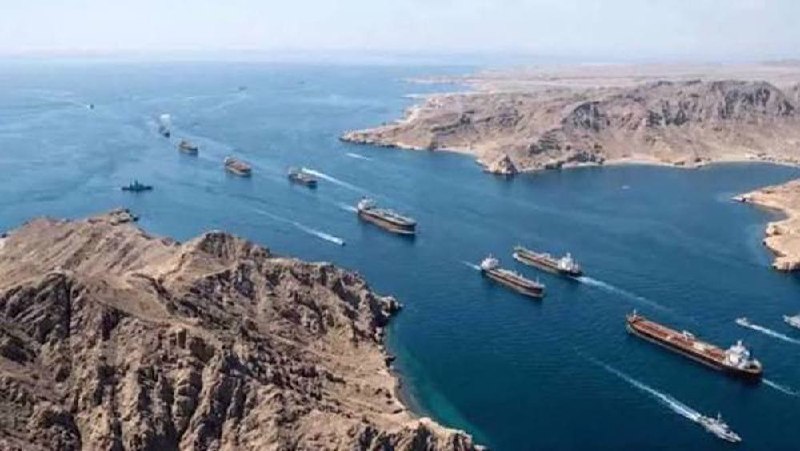
At 11:05 UTC on 16 July 2026, Iran’s Army spokesman told state media that the Islamic Republic would continue to neutralise what it called US interference in the region while retaining control of the Strait of Hormuz, the waterway through which roughly twenty per cent of the world’s oil and gas normally flows. The statement landed the same morning that Washington moved to formally notify Congress of additional US Navy deployments to escort commercial vessels through the chokepoint.
The exchange crystallises a contest that has been moving from the diplomatic back-burner to the open sea. Iran is asserting jurisdiction over a corridor that no state legally owns. The United States is signalling it will keep that corridor open, by force if necessary. The two postures are now bumping up against each other in real time, with the price of seaborne crude and the safety of civilian crews as the immediate collateral.
The army’s line
The Army statement, carried by Press TV on 16 July, framed the US presence in the Gulf as the interference to be neutralised, and presented Iranian control of Hormuz as a settled matter of regional balance. The spokesman’s language, that Iran would counter US moves while keeping control of the strait, is the formal version of a position Tehran has held in practice for decades: that the strait cannot be neutralised against the littoral state, and that any attempt to do so will be met.
What is new is the public restatement, on the record, against the backdrop of attacks on commercial shipping that Western and Iranian-aligned outlets now describe from incompatible angles. According to The Epoch Times, the US move comes in the wake of Iran’s attacks on commercial vessels in the strait. Tehran has, in parallel messaging, framed those same incidents as enforcement actions against what it describes as hostile traffic. The two readings cannot both be operative; the question of which dominates the next forty-eight hours is, in effect, the question of whose navy is doing the escorting.
The US posture
Washington’s response is procedural as well as naval. The notification to Congress, referenced in a 15 July 2026 dispatch from the market-tracker Unusual Whales on X, is the administrative trigger that allows additional destroyers, surveillance aircraft, and escort task groups to operate forward under existing authorities. The dispatch places the notification squarely inside the fight over control of the strait, framing the US posture as a direct answer to Iranian moves on shipping.
The institutional design matters here. US Central Command’s maritime presence in the Gulf is layered: a standing task force already runs escort operations through the strait, and a smaller coalition, Combined Task Force 153, focuses on maritime security in the Red Sea and approaches. What changes with notification is capacity and political signalling, not the existence of a US naval mission. Iran’s army has read that capacity addition as escalation; the Pentagon will present it as risk reduction for civilian tonnage.
What the corridor actually carries
Around one fifth of global oil and gas transits the strait, a figure cited in the 15 July 2026 Unusual Whales dispatch and consistent with widely reported baseline figures. The arithmetic of any sustained disruption is simple and ugly. Even a partial closure of a few days, the kind that Iranian fast-boat tactics and limpet-mine cycles have produced in the past, forces shippers to route around the Arabian Peninsula, adds ten to fifteen days of voyage time per tanker, and pushes freight insurance into the stratosphere. Saudi Arabia’s East-West pipeline and the UAE’s Habshan-Fujairah line offer partial bypass capacity; neither was designed to absorb more than a fraction of Hormuz volumes.
The economic consequences are not evenly distributed. Asian buyers, China, India, Japan, South Korea, take the largest share of Hormuz crude. Refineries on the US Gulf Coast are partially insulated by domestic production, but the global benchmark price still moves on Hormuz risk. Tehran knows this. So does Beijing, which buys the bulk of Iranian sanctioned exports and has, in past episodes, used the moment to negotiate discount terms.
Counter-narratives and what is contested
Two competing framings now sit on top of the same set of incidents. The Western framing, anchored in The Epoch Times and the Pentagon’s notifications, treats Iranian action as the proximate cause and US escort as the stabilising response. The Iranian framing, carried by Press TV and the army spokesman’s office, treats US presence as the cause and Iranian enforcement as the legitimate response.
Neither framing is wrong on the facts available; they differ on which fact comes first. The sources do not yet specify the number or identity of vessels struck in the latest cycle, nor do they specify whether any casualties have been confirmed aboard commercial tonnage. Until those numbers are public, both sides can credibly claim self-defence.
The structural pattern is familiar. A chokepoint becomes the stage for a sovereignty dispute; both sides stage operations in the same water; each describes the other as the aggressor; insurance markets price the ambiguity and pass the cost to the global consumer. The script has played in the Gulf of Aden, the Bab el-Mandeb, and now the Strait of Hormuz. What changes each cycle is the depth of the underlying political rift, and in 2026 that rift runs through Iran–US nuclear-file talks that have produced, so far, more rhetoric than agreement.
Stakes and the next forty-eight hours
The market signal will arrive in the next trading session. Any confirmed strike on a commercial vessel, any Iranian announcement of a tanker inspection regime, any US Navy boarding action against an Iran-flagged or Iran-linked ship will move the Brent benchmark and the war-risk insurance premium. Each of those moves feeds back into domestic politics in Washington, Tehran, and the Asian capitals that depend on the corridor.
The wider contest is whether the strait becomes a managed-risk zone, with escort task forces, agreed inspection protocols, and a hot-line, or whether it slips into a chronic low-grade crisis in which tonnage reroutes, premiums rise, and the parties read each other’s moves through the worst possible lens. Tehran’s army has chosen the language of control; Washington has chosen the language of freedom of navigation. The strait itself is waiting to see which language the next incident is written in.
This publication framed the army statement as a posture declaration rather than an operational order, and the Pentagon notification as administrative trigger rather than escalation, to keep the two moves in their actual proportion. The contested ground, who struck what and in what order, remains under-sourced in the public record and is treated accordingly.
Wire provenance
This editorial synthesis draws on the following public wire/social posts:
- https://t.me/presstv/
- https://t.me/epochtimes/
- https://x.com/unusual_whales/status/