Missiles hit Bahrain as Iran-Israel exchange reignites Gulf corridor
Two interceptors failed to stop missiles that struck Bahraini territory late on 15 July 2026, the latest spillover from an Iran-Israel exchange that is now hitting Gulf infrastructure and airspace.
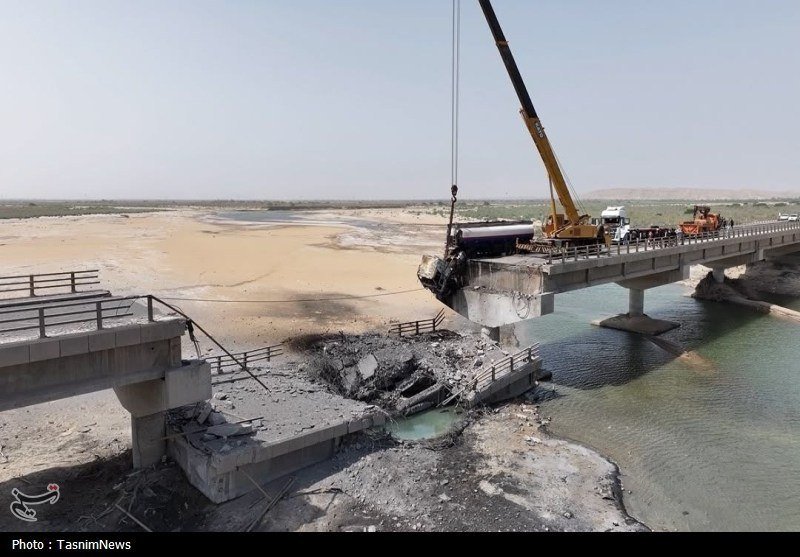
Two missile impacts were recorded inside Bahrain late on 15 July 2026, after air-defence systems failed to intercept incoming projectiles, according to regional channels tracking the exchange. Sirens sounded across parts of the kingdom, and follow-up posts specified that two interceptors failed to stop the missiles, with debris and impacts reported on Bahraini soil.
The strikes mark the first publicly confirmed impact inside a Gulf Cooperation Council state during the latest Iran-Israel exchange, and they are now reshaping how the smaller monarchies of the Arabian Peninsula calculate their exposure. Bahrain hosts the US Fifth Fleet and Naval Forces Central Command at Mina Salman, making it both the most militarised GCC capital and the most exposed. The exchange also lands on a region whose leaders have spent two years positioning themselves as indispensable mediators, not parties, in any widening war.
What the initial reporting actually shows
The first signal came at 23:12 UTC on 15 July, when the Telegram channel GeoPWatch posted that sirens were sounding in Bahrain alongside explosions, framed as an Iran-versus-Bahrain exchange. Within a minute, Middle East Spectator reposted the alert, amplifying the report of fresh explosions in Bahrain. By 23:14 UTC, a follow-up from the same channel provided the operational detail: two interceptors had failed to stop missiles that ultimately impacted inside the country. A fourth post at 23:34 UTC reiterated the impact reports.
Three of the four thread items originate from a single Telegram channel that has aligned itself with anti-Iran-regime framing, and the fourth is a repost by a parallel Middle East monitor. The reporting is uniform in its claims but light on independent confirmation. Bahrain's Ministry of Interior had not, at the time of these posts, issued a public statement naming the point of impact, the type of projectile, or the casualty and damage picture. The framing that places Iran as the firing party is consistent with how regional observers have read the exchange, but it is a framing, not a verified attribution.
The exchange itself is not in doubt. The unresolved question is whether what landed in Bahrain was a deliberate Iranian strike, an Iranian missile that lost course after being engaged by Israeli or US systems over the Gulf, or debris from an interceptor engagement that came down inside Bahraini territory. Each of those reads carries a very different policy weight for Manama, for Washington, and for Tehran.
The Gulf's mediator posture, now under stress
For most of the past two years, Bahrain, Qatar, the UAE and Oman have pitched themselves as the indispensable diplomatic back-channels between Washington and Tehran, and between Tehran and its Arab neighbours. Doha hosted indirect nuclear talks. Muscat kept a quiet line open during periods when the Gulf's larger capitals were frozen out. Manama, while more aligned with the Saudi-Emirati line, hosted reconciliation forums and positioned itself as a security partner of choice for Western navies.
That posture assumes the Gulf is a platform for negotiation, not a target. The 23:12–23:34 UTC reports puncture that assumption. Once sirens sound in Manama and interceptors fail, the political geometry shifts. Bahrain now faces the same decision that Saudi Arabia faced after the 2019 Abqaiq-Khurais attack: whether to attribute, whether to retaliate through coalition channels, and whether to publicly name Iran. Each of those choices costs something, and silence costs something too, because it ratifies the idea that Bahraini airspace is negotiable.
Why the Fifth Fleet matters
The Mina Salman port complex is the operational home of the US Fifth Fleet and the forward headquarters of Naval Forces Central Command. It is the largest sustained American naval presence in the western Indian Ocean. A missile impact inside Bahrain, even a small one, is not just a Bahraini incident. It is, by geography, an incident on a base the United States uses to project power across the Strait of Hormuz, the Bab el-Mandeb, and the wider Indian Ocean.
This is why the structural read matters more than the tactical one. The corridor from the Suez to the Strait of Hormuz carries roughly a fifth of seaborne oil. Any contested airspace along that corridor raises insurance premia, reroutes commercial shipping, and forces Western navies into closer protective postures around tankers and LNG carriers. The Gulf monarchies have spent years trying to keep that corridor insulated from the Iran-Israel confrontation. The events of 23:12 UTC onward suggest the insulation has thinned.
What remains unresolved
Three things still need corroboration before the picture firms up. First, the chain of attribution: did the missile originate from Iranian territory, from an Iranian proxy, or from an engagement over the Gulf in which the projectile lost heading? Second, the damage and casualty picture inside Bahrain, which the initial Telegram reporting does not address and on which Manama has not yet spoken. Third, the diplomatic posture of the United States, which has not commented on the impact reports as of the most recent posts in the thread.
What can be said with confidence is narrower than the framing the channel posts adopt. Sirens sounded in Bahrain. Explosions were heard. Two interceptors failed. Missiles impacted on Bahraini territory. The rest is a contest of interpretation, and the next 24 to 48 hours of Bahraini, US, and Iranian official statements will determine which interpretation hardens into the public record.
Desk note: Monexus is leaning on Telegram channels GeoPWatch and Middle East Spectator as the immediate trail, because wire confirmation from Reuters, AP, or AFP on the Bahrain impact has not yet appeared in the source feed. Once it does, the attribution line and the casualty picture will be updated in place.
Wire provenance
This editorial synthesis draws on the following public wire/social posts:
- https://t.me/GeoPWatch
- https://t.me/Middle_East_Spectator
- https://t.me/GeoPWatch
- https://t.me/GeoPWatch
- https://en.wikipedia.org/wiki/Naval_Forces_Central_Command