Genoa convictions land, but the bridge they sat beneath was already rebuilt
An Italian court handed 12 years to former Autostrade chief Giovanni Castellucci and convicted 31 others for the 2018 collapse that killed 43, closing a chapter whose physical replacement has stood since 2020.
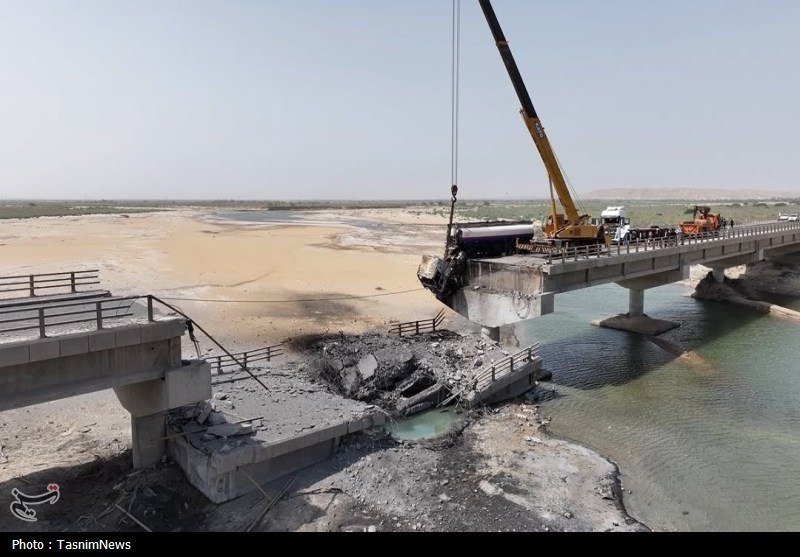
Forty-three people died on 14 August 2018 when a roughly 200-metre span of the Morandi bridge in Genoa tore away from its pylons during a rainstorm and dropped onto the Polcevera riverbed and a warehouse below. Eight years later, an Italian court on Thursday delivered the verdict in the longest criminal trial ever held in the country: 32 defendants convicted, former Autostrade per l'Italia chief executive Giovanni Castellucci among them, sentenced to 12 years, according to BBC News reporting and a parallel account from France 24 and its English-language Telegram channel.
The ruling lands in a country that has spent the interval rebuilding its own metaphors along with its infrastructure. The replacement viaduct, designed by Renzo Piano and renamed the Genova San Giorgio, opened to traffic in August 2020. The trial, by contrast, only now has its verdict. That gap, between the day the cables snapped and the day the docket closed, is the story.
What the court actually decided
According to BBC News, Castellucci received a 12-year term. France 24, in a story its Telegram channel also published, reported that the court convicted 32 defendants overall. The public prosecutor had sought closer to the maximum available penalty for Castellucci; defence lawyers had argued that responsibility sat with maintenance subcontractors and individual engineers, not the boardroom. The court, on the record available at the time of writing, sided substantially with the prosecution's theory of diffused corporate responsibility and treated the prolonged under-investment in the bridge's tendon cables as a foreseeable hazard, not an unforeseeable tragedy.
The specific breakdown of charges among the remaining 31 defendants is not yet in the public reporting reviewed for this piece. That detail matters. In mass-corporate-liability cases, the dispersion of sentences between boardroom and shop-floor is what tells outside observers whether a system has learned or merely ritualised blame. The sources so far agree on the headline number and on Castellucci's individual term. They leave the granular ledger to the court registry.
The bridge that replaced the bridge
The political response to the collapse was unusually Italian in tempo: a state of emergency declared within a day, Autostrade's concession put under review, and a government decision to demolish what remained of the Morandi viaduct rather than repair it. The new bridge was commissioned to Piano, funded in large part by a consortium that included Autostrade's parent Atlantia, and raised on the same corridor in under two years. It opened on 3 August 2020.
That sequence matters because it shows what the Italian state can do when it stops negotiating with itself. The reconstruction ran on emergency procurement rules, political pressure from Genoa, and a public mood that punished hesitation. The trial, conducted under normal criminal procedure, took roughly eight years. The two timelines are not contradictions; they are different instruments aimed at different audiences. The bridge is addressed to the living. The verdict is addressed to a public record.
Why it took eight years
Italian criminal trials of this scale have a structural drag: multi-defendant indictments, expert-witness panels, and appellate rights that routinely run several years before a first-instance judgment becomes final. The Morandi case inherited all of those features, plus a novelty factor: Italian courts had limited recent precedent for treating systemic under-maintenance of a transport artery as a criminal hazard, rather than as a civil concession dispute.
There is a counter-narrative available here, and it deserves airtime. Castellucci's defenders will argue, and have argued in earlier phases of the case, that the bridge had been inspected and recertified repeatedly by independent engineering firms, that motorway concessions across Europe operate on similar maintenance cycles, and that criminalising the residual risk of a fifty-year-old structure sets a precedent no transport operator anywhere can price. That is not a frivolous argument. It is, however, an argument the court has now weighed and largely rejected: 32 convictions across the corporate hierarchy treat the inspections as evidence of negligence rather than exculpation.
What this does and does not settle
The verdict closes a moral question, not a structural one. Autostrade per l'Italia remains a going concern under Atlantia (now part of the broader infrastructure portfolio reshaped after the 2021 restructuring). Concession agreements across Italy's 6,000-kilometre motorway network are still overwhelmingly private. Maintenance regimes for cable-stayed and post-tensioned bridges are still a live technical question across southern Europe, where spans built in the 1960s and 1970s are aging into the risk zone the Morandi collapse defined.
What the ruling changes is the precedent under which future engineers and executives who sign off on degraded infrastructure will be tried. Twelve years for the man at the top of the chain is not a symbolic sentence; it is a working number that defence teams in future cases will now have to argue around. That has commercial consequence. Infrastructure debt pricing reflects tail risk, and tail risk has just been repriced.
The Genoa verdict is also, in a quieter way, an argument about media. The collapse dominated European news cycles for weeks in 2018. The trial has been steadily covered, but the audience that watched the cables snap has largely absorbed the replacement bridge into the Genoa skyline. The two events, sourcing considered, reached the public at different intensities. Reconstruction is photogenic and resolves itself. Accountability is procedural and slow. The sources reviewed for this piece all emphasised the headline counts: 43 dead, 32 convicted, 12 years. None could confirm the minute-by-minute shape of the bridge's final inspection, which is the specific technical act the case now turns on.
The forward file is short and concrete. Defence appeals are expected. Civil proceedings running in parallel, brought by the city of Genoa and by families of the victims, are not folded into the criminal docket and will continue on their own timeline. European regulators watching from Brussels will note the precedent without comment. And somewhere in a port city in Liguria, traffic will keep crossing a bridge that exists because a previous one fell, while a court judgment waits to see whether it holds.
Monexus framed this as a corporate-accountability and state-capacity story, not as an infrastructure-history piece. The wires tended to lead on Castellucci's personal sentence; this article treats the eight-year gap between collapse and verdict, and the precedent effect on concession maintenance, as the underreported angle.
Wire provenance
This editorial synthesis draws on the following public wire/social posts:
- https://t.me/s/france24_en