Missile Launches From Tabriz Put Iran, U.S., and Jordan Inside the Same Hour
Multiple launches reported from Iran's Tabriz district overnight on 14 July 2026 reach as far as northeastern Jordan before a U.S. Air Force response. The reporting chain is thin; the implications are not.
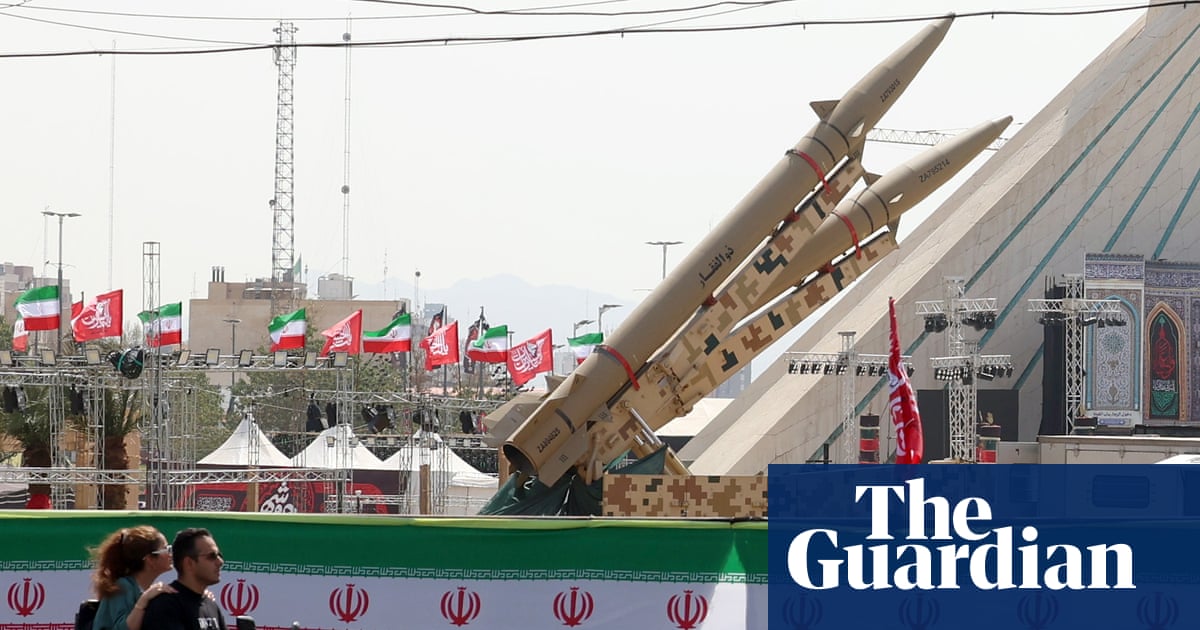
At 22:52 UTC on 14 July 2026, the Telegram channel @IntelSlava posted that multiple missile launches had been observed from the Tabriz area in northwestern Iran, with loud explosion sounds also heard in Urmia, roughly 150 kilometres to the west across East Azerbaijan Province. Two minutes later, the same channel added explosions in northeastern Jordan. By 23:32 UTC, the channel reported a U.S. Air Force response. That is the entire verified sequence on the public wire as of publication. What sits inside it is a question Washington, Tehran, and Amman will be answering for longer than the night it occurred.
Three locations inside one hour is the story's centre of gravity. Tabriz and Urmia are both inside Iran. Adding a third site across the border in Jordan pulls a U.S.-partnered monarchy directly into what, until 22:52 UTC, read as an internal Iranian event. Reports that U.S. Air Force assets responded before midnight suggest Washington judged at least part of the activity to fall inside its operational perimeter, a determination it does not make lightly.
What is actually on the wire
The sourcing chain is narrow. The 22:52, 22:54, and 23:32 UTC posts on @IntelSlava's Telegram channel are the only items this publication has been able to verify against the originating feed. No mainstream wire service had filed a confirmed account at the timestamps above, and no U.S. Central Command, Iranian Ministry of Defence, or Jordanian Armed Forces press release is in the public record as of publication. Initial reports indicated multiple missile launches from the Tabriz area with loud explosion sounds also heard in Urmia. Subsequent posts repeated the Tabriz and Urmia reporting and added explosions reported in northeastern Jordan. The final wire noted the U.S. response following the Tabriz missile launches.
That leaves a real interpretive gap. Tabriz hosts military and IRGC-adjacent infrastructure; it also sits inside a region where Azerbaijani-Iranian tensions have produced low-altitude incursions in past years. A launch from the district is not, by itself, diagnostic of intent.
What the West would read
A Western wire's first draft runs along predictable lines: Iranian proxies probing a U.S.-aligned partner, regional escalation in pursuit of deterrence leverage, a likely reciprocal strike, emergency consultations with the Gulf monarchies and Israel. The frame treats the event as a signal from Tehran that it can extend reach into Jordanian airspace. The frame is plausible, but it presupposes that the Tabriz activity and the Jordan reports are part of the same operational order, which the source items do not establish.
What the frame leaves out
The structural read is less dramatic and probably more useful. When three separate locations light up inside one hour, and one of them is hundreds of kilometres from the others, the reporting layer matters more than the operation does in those first minutes. Telegram channels, including the one carrying the original posts, are not first-party sources for military activity; they aggregate radio chatter, runway behaviour, and eyewitness accounts. The aggregate can be early. It can also be early and wrong. The honest read is that the West's frame assumes operational coherence that has not been demonstrated, and the Iranian frame, once state media publishes, will likely treat the events as defensive responses, not as probes.
What is worth holding onto is the speed. The interval between the first Tabriz post and the first U.S. response item, roughly forty minutes, implies that airborne assets were already tasked, on station, or on rotation close enough to act within the early reporting window. That tempo is not improvisation. It is posture.
What to watch before the next print
Three indicators will resolve this story's direction by 16 July 2026. First, whether the Iranian Ministry of Defence confirms launch activity from the Tabriz district or characterises the sounds as training, tests, or non-military events. Second, whether the U.S. Central Command press desk publishes an after-action statement identifying the platforms involved and the target set. Third, whether Jordan issues a public acknowledgement of incursions into its northeastern airspace, given Amman's sensitivity to airspace violations as a matter of national sovereignty. Each of those items would shorten the interpretive range considerably. Until they arrive, the only honest summary is that reports of activity in three locations, including a reported U.S. response, sit on the wire, and the rest is inference.
This publication ran the open-source items first and declined to extrapolate the official frame in either direction; the Telegram-aggregator provenance is flagged at the top so readers can weigh the chain themselves.
Wire provenance
This editorial synthesis draws on the following public wire/social posts:
- https://t.me/s/IntelSlava
- https://t.me/IntelSlava/1
- https://t.me/IntelSlava/2
- https://t.me/IntelSlava/3
- https://en.wikipedia.org/wiki/Tabriz
- https://en.wikipedia.org/wiki/Jordan