Reports of strikes on Shiraz put Iran’s escalation arithmetic back under the microscope
Telegram channels linked to Iranian and pro-Iran opposition networks reported US airstrikes on Shiraz overnight, a city that sits alongside major military-industrial sites in Fars Province. The reporting remains unconfirmed by any Western wire or the US military.
At 09:49 UTC on 15 July 2026, a Telegram channel known as War Footage Witness posted two short messages: explosions in Shiraz. Within eight minutes, a second channel, @intelslava, was running the headline "🇺🇸❌🇮🇷, U.S. airstrike reported in Shiraz, Iran." A third channel, @rnintel, added a US–Iran flag tag and a timestamp inside the last ten minutes. By 10:11 UTC the Iranian military-aligned @IRIran_Military account was issuing what read as a conditional threat: "If they attack Iran's infrastructure...".
Six unconfirmed posts, all clustered inside a 22-minute window, are now the factual basis the rest of the world has to work with. Until a Western wire or a US Central Command briefing confirms or denies, the strikes on Shiraz sit in a suspended state, simultaneously a fait accompli for those who say so and a non-event for those waiting on corroboration. The reporting itself is the story: a fast, encrypted, multi-language relay that moves faster than any official channel, and a reminder that Iran's escalation arithmetic is once again being decided in the most opaque kind of space.
What the messages actually say
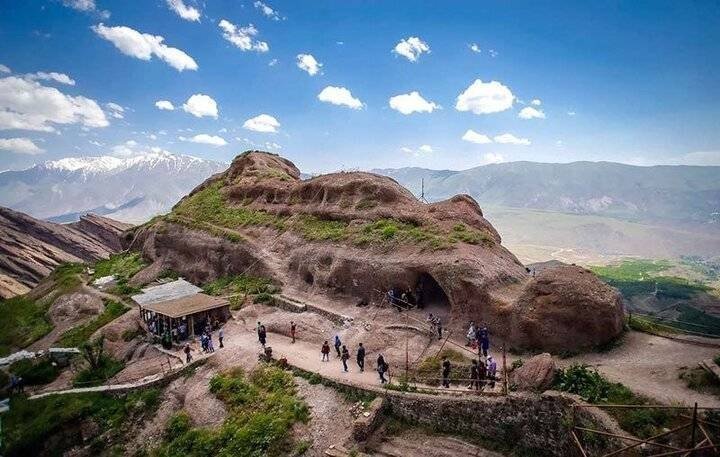
Read closely, none of the six posts claims an authoritative source. @wfwitness attaches an image it says is from Fars Province. @rnintel frames the reporting as "reports" of an air strike. @intelslava asserts the strike but supplies no provenance. The Iranian military channel's tone is conditional: it anticipates an attack on infrastructure without confirming a hit. No death toll, no target identification, no weapon type, no specific neighbourhood of Shiraz. The weight of the claim is carried almost entirely by the repetition across independent-feeling channels and by the speed of the relay.
Shiraz is the capital of Fars Province and roughly 920 kilometres south-east of Tehran. It is also the city most often associated with Iran's southern military-industrial complex: nearby facilities at Marvdasht and the broader Fars corridor have appeared in past Israeli and US targeting discussions as nodes connected to missile production and drone assembly. That geography gives the report its plausibility even without confirmation, and that same geography is why the gap between "reported" and "confirmed" is politically loaded.
Why a Telegram cluster moves markets before jets scramble
The last several major Iran escalations have followed this pattern: encrypted channels flag an event in the first ten minutes, opposition-aligned networks repackage it inside thirty, Iranian state-aligned outlets either deny, downplay, or lean into the claim depending on the politics of the moment, and only then do wires arrive on a delay measured in hours. By the time a Reuters or AP alert surfaces, derivatives desks in London and Singapore have already priced the headline. The information arbitrage has migrated to the channel layer; the diplomatic layer still runs at 1990s speeds.
For Iran, that gap is useful when the news is one Tehran wants the world to absorb, and dangerous when the news is one Tehran wants to suppress. Today the messaging is bifurcated: state-adjacent and Iranian-military channels are signalling resolve, while the more cautious, including parts of the regional press waiting for confirmation, have not yet endorsed the strike. The pattern the outside world usually sees in this split is that Tehran escalates the framing before it commits to the fact.
The structural read
Shiraz sits inside a wider pattern of shadow exchanges that have defined the Iran file since at least the spring. Reports of US strikes on Iranian-backed assets in Syria, of Israeli action against Iranian missile convoys in Iraq, and of Iranian retaliation against Gulf shipping have all been broken first via channels of the kind now buzzing about Fars Province. The mainstream Western wire is, increasingly, downstream of that relay: it confirms or denies, but it does not set the news cycle.
Two things are true at the same time. The relay's velocity makes early claims more authoritative-seeming than they are. And the relay's accuracy record, looked at across months of similar claims, is uneven, a meaningful number of strike reports have been quietly retracted or downgraded once satellite imagery caught up. The structural problem is not that the channels lie; it is that the cost of getting it wrong is now borne almost entirely by the country on the receiving end, which has to absorb the diplomatic and military consequences before the verification arrives.
What happens next, and what to watch
The next twelve hours will be diagnostic. If a US Central Command briefing appears, the strikes become a known fact and the question becomes target, weapon, and signalling. If an Iranian state outlet confirms with casualty figures, the same. If neither surfaces and the post volume on the originating channels slows without contradiction, the report will quietly migrate into the long shelf of unverified claims that nonetheless shaped a trading day. Watch for any movement order on the Strait of Hormuz tanker trade, which historically responds within hours to confirmed or strongly suggested strikes on Fars Province targets. Watch for the second statement from @IRIran_Military, which set the conditional at 10:11 UTC and is likely to convert the conditional into a claim if and when Tehran wants one on the record.
What remains most uncertain is the most consequential question: whether anything was actually struck at all. The sources do not specify, the channels carrying the claim cite no eyewitness beyond the image attachment, and the geography of Fars Province makes both confirmation and refutation slow operations. Until a wire, a satellite, or a government statement breaks the tie, the strikes on Shiraz remain a credible unconfirmed report, weighted heavily by repetition and by the political usefulness of the claim to every actor who would like it to be true.
This publication treats Telegram-sourced strike reports as initial signals to be corroborated, not as established fact. Where Western wires and Iranian state outlets are silent, the gap is itself part of the story.
Wire provenance
This editorial synthesis draws on the following public wire/social posts:
- https://t.me/wfwitness
- https://t.me/wfwitness
- https://t.me/intelslava
- https://t.me/rnintel
- https://t.me/IRIran_Military