Tehran's phone-tracing hack lands as Trump opens the blockade gunwale
Iranian hackers reportedly geolocated US service members in Gulf states by compromising commercial phone networks, while Washington moved to a formal maritime blockade of the Islamic Republic.
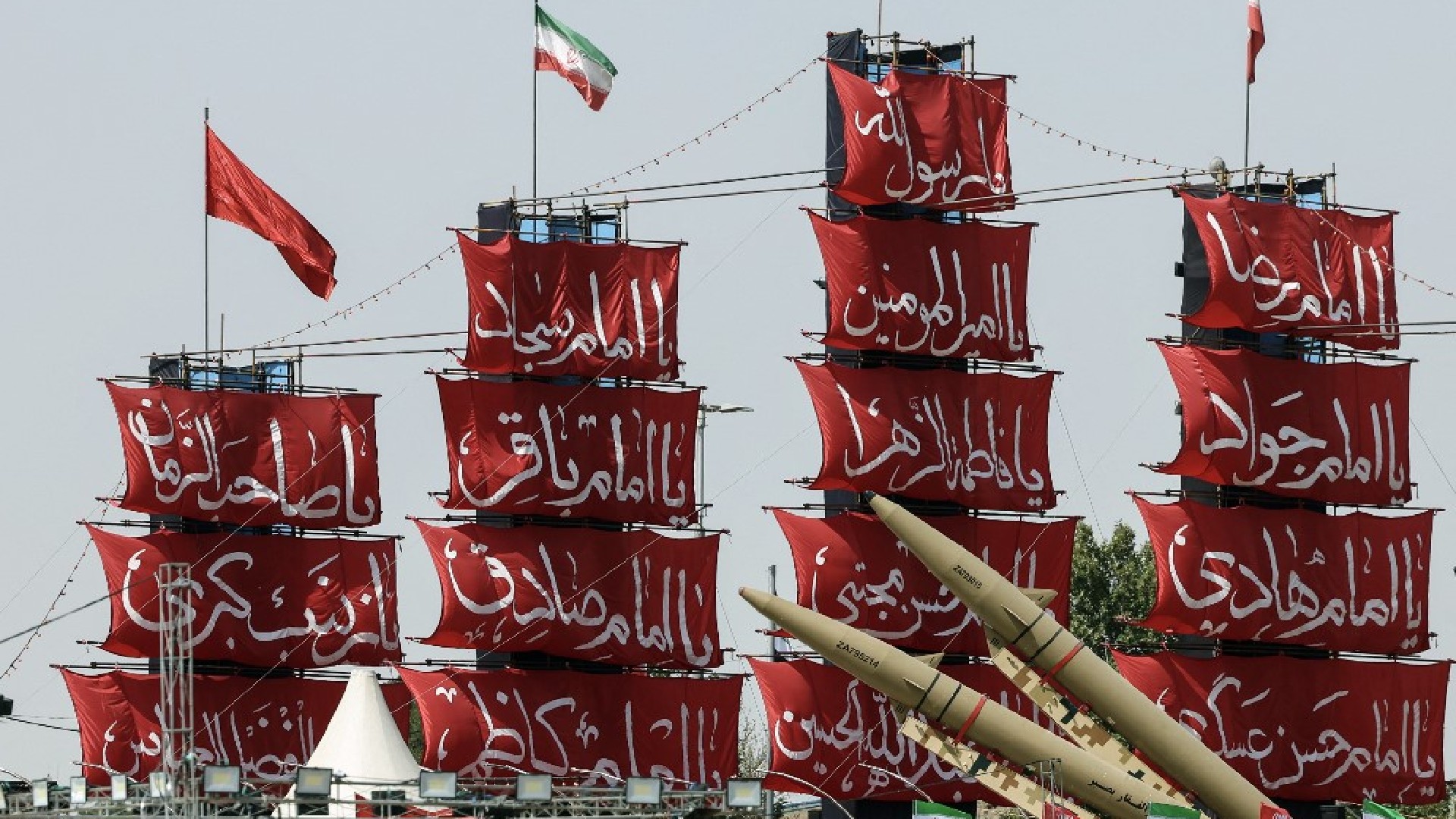
Two stories converged on the Gulf on 14 and 15 July 2026, and together they sketch an escalation few observers had pencilled in for the middle of summer. According to a New York Times report cited by the Telegram channel @Megatron_ron on 15 July at 13:01 UTC, Iranian state-aligned hackers have used a cyber operation to locate the mobile phones of United States military personnel stationed across Gulf countries. Twenty-three hours earlier, in a series of posts tracked by Polymarket's news desk, the Trump administration signalled that the long-threatened maritime squeeze on Iran was about to harden into a formal blockade, taking effect at 4 PM Eastern Time on 14 July.
The pairing is more than coincidental. A cyber operation that effectively fingerprints where American service members sleep, eat and travel gives an adversary a targeting menu at exactly the moment Washington is choosing how visibly to enforce a blockade whose kinetic trigger is a single fast-attack craft straying across the wrong line. Whatever one thinks of the wisdom of either move, the two together compress the room for miscalculation into hours rather than weeks.
The phone operation
Reporting carried by Telegram channel @Megatron_ron on 15 July at 13:01 UTC, attributing the underlying work to the New York Times, claims that Iranian hackers successfully located the personal phones of US military personnel deployed in Gulf states by exploiting commercial telecommunications infrastructure rather than classified networks. The operational claim is narrow: location data on service members, not a penetration of Pentagon systems. That distinction matters less than it sounds. Where a service member parks, which gym they use and which street they live on is exactly the dataset a hostile intelligence service wants when it cannot fly a SIGINT aircraft close enough.
Theatre commanders have spent the better part of two decades telling troops to assume that commercial handset data is hostile-collection gold. That an adversary can now reach it at scale, across multiple host-nation networks, suggests either that the discipline has slipped or that Tehran's access is more technically sophisticated than the rote OPSEC briefings assume.
The blockade
By the late evening of 14 July, the naval posture in the Strait of Hormuz had changed on paper. Polymarket's account posted at 19:52 UTC that the US military had announced a formal blockade of Iran would take effect at 4 PM Eastern Time the same day, and at 22:49 UTC the same source flagged that President Trump had declined to rule out a ground operation against the Islamic Republic. Earlier, at 16:51 UTC, Trump had told reporters that Iran's military power is "just a tiny fraction" of what it was four months ago, framing the blockade as the act of a stronger party closing the trap on a weakened one.
If the declaration holds, every Iranian-flagged or Iran-bound commercial vessel is now a test case for the rules of engagement. The tanker traffic that moves roughly a fifth of global seaborne oil through Hormuz is the implicit hostage; the same flows are the implicit pressure point on Tehran's revenue.
What Tehran wants
Iranian strategy in such moments tends to be asymmetric. With conventional forces degraded to the degree Trump claims, the regime's most plausible levers are the ones it can pull without a fleet: harassment of commercial shipping, drone strikes on Gulf infrastructure, mobilisation of allied militias in Iraq and Yemen, and exactly the kind of intelligence operation now reported against US personnel in host nations. A geolocation dataset that lets Iranian planners watch individual American officers move around Doha, Manama or Dubai is not a weapon in itself, but it is the prerequisite layer for one.
There is a counter-reading worth weighing. Public framing of Iranian cyber capability is uneven and tends to inflate reported operations into confirmed ones. Telegram channels that relay Western wire copy often compress nuance, and what the New York Times has actually established versus what an aggregator has summarised from a headline cannot be verified without the underlying article. The honest statement is that the report is credible and the specifics are not yet in the public record at a level this publication can independently check.
The escalation ladder
The most plausible read of the next seventy-two hours is that the blockade operates as a pressure instrument while the cyber operation operates as a deterrent instrument. Each is calibrated to avoid the level of force that would force the other side to retaliate in kind. The trouble with that equilibrium is that it depends on both sides behaving like the rational actor the textbooks imagine, and on the absence of a third-party trigger, such as a tanker strike, a high-casualty terror attack, or an Israeli operation that the United States is not informed of in advance.
Polymarket's flag at 22:49 UTC that Trump refused to rule out a ground campaign is the line that does the most analytical work. Blockades are slow; ground campaigns are not. The willingness of the US commander-in-chief to leave the heaviest option on the table, while telegraphing a weakened adversary, narrows Tehran's diplomatic space and raises the cost of any miscalculation by an Iranian proxy. It also raises the cost of miscalculation by Washington, which is the part of the equation the wire coverage tends to underweight.
What to watch
Three filings matter in the days ahead. First, the actual text of the blockade order and its rules of engagement, particularly whether third-country tankers are being warned off Iranian ports or actively turned around. Second, any cybersecurity advisory from US Cyber Command or CISA that confirms or denies the @Megatron_ron / New York Times report and names the compromised networks. Third, Gulf-state public statements on whether their own telecoms infrastructure was used, and whether they were informed in advance, since host-nation consent is the legal foundation on which US troops in the Gulf actually sit.
This publication framed the cyber claim and the blockade as parts of a single escalation sequence, on the judgment that the operational pairing is the story rather than either item alone. The blockade is sourced to Polymarket wire posts; the cyber claim is sourced to a Telegram relay of a New York Times report that the editorial pipeline could not directly verify within the writing window.
Wire provenance
This editorial synthesis draws on the following public wire/social posts:
- https://t.me/megatron_ron