IDF says it killed a captor from the October 7 kidnappings; the announcement rode two Telegram channels in an hour
A single operational statement crossed the IDF's official channel and the English Abu Ali relay within an hour. The captor named in both posts had been linked to the abduction of Colonel Asaf Hamami, Staff Sergeant Tomer Ahimas and Sergeant Kiril Brodski.
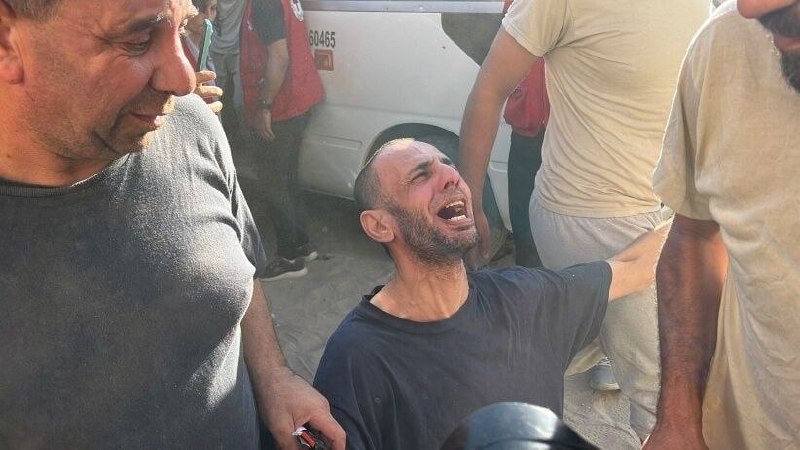
At 12:03 UTC on 15 July 2026, the IDF Spokesperson's Unit posted on Telegram that the military had "eliminated a terrorist who took part in the abduction of Colonel Asaf Hamami, Staff Sergeant Tomer Ahimas, and Sergeant Kiril Brodski during the October 7th massacre." The post identifies the prior day, Tuesday 14 July, as the date of the strike. By 13:19 UTC the same string had been reposted by the English-language Abu Ali channel, and a third copy followed at 13:25 UTC. Two channels, one identical statement, eighty-two minutes apart. The relay looks coordinated rather than cumulative; nothing in the second post adds context, geography, or the name of the militant killed.
The brief fits a pattern the IDF has been running since late 2023: a public confirmation that a named hostage-taker has been killed, issued through the spokesperson's channel after the fact, naming the captives whose fate is being addressed. The three soldiers named here were taken from different locations on 7 October 2023. The framing is precise: the post attributes the killing to a captor, not to a combatant in a firefight, and ties the killing directly to the kidnapping rather than to a battlefield exchange. That distinction matters inside Israeli domestic politics, where the families of hostages and the dead have spent two and a half years pressing for individual accountability rather than aggregate casualty figures.
What the post does and does not say
The IDF statement is short. It names the three hostages, identifies the dead militant as a participant in their abduction, and dates the strike to the prior day. It does not name the militant, specify the unit that carried out the strike, identify the location inside Gaza, or describe the operation's circumstances. The absence of a location is consistent with the IDF's standing practice of withholding tactical detail while strikes are still being assessed or while related operations continue nearby.
The two channel posts are textually identical down to the line break, which suggests the second and third copies were relays rather than independent reporting. Abu Ali is an English-language aggregator that frequently carries IDF releases for an Arab and diaspora audience. Its appearance in the relay chain is a reminder that the Israeli military now publishes English copy through a distributed set of outlets, not only through Western wire services.
Why the three names keep returning
Colonel Asaf Hamami commanded the Southern Gaza Brigade's multidimensional unit; his death was confirmed by the IDF in late November 2023 after he had been declared missing. Staff Sergeant Tomer Ahimas and Sergeant Kiril Brodski, both infantry soldiers, were also confirmed killed in the initial wave, with their bodies later returned to Israel. Public memory of October 7 has organised itself, in part, around named individuals. Announcements like the one carried on 15 July are designed to close individual loops: to tell a specific family that the person who took their relative has been found and killed, and to tell the broader public that the chain of custody from the massacre has been broken, link by link.
The Israeli hostage file is not closed. As of mid-2026, hostage recovery remains politically and militarily active, and operational announcements of this kind are read both as battlefield news and as signals inside ongoing negotiations about remaining captives and about Gaza's governance after the war. A captor's death reduces, by one, the pool of individuals who could in principle be traded or questioned; it does not, by itself, return a body or change the status of any hostage still held.
What this announcement does not resolve
The post leaves the central factual questions unanswered in public: which militant was killed, where in Gaza the strike landed, and whether the operation produced additional intelligence about the hostages themselves. Telegram posts from the IDF Spokesperson are not adjudicated documents; they are operational communications, and they are followed, sometimes weeks later, by fuller disclosures, court filings, or independent reporting from Israeli outlets. Until at least one of those secondary confirmations lands, the announcement stands as an Israeli military statement about an Israeli military action. The relay through Abu Ali, while it widens the audience, does not add evidentiary weight.
The English-language coverage of this kind of announcement has been uneven. Major wires tend to wait for an Israeli readout that includes a name and a location before publishing; aggregators pick up the Telegram post directly. Readers who only see the aggregator version get the headline without the verification that an attached wire story would carry. That gap is structural: Telegram is fast, wires are slow, and the gap between the two is filled, by default, by whoever is willing to publish first.
The stakes inside the hostage file
Each captor-elimination announcement is also a political signal. Inside Israel, the families of the dead from 7 October have organised publicly to keep individual cases in view; the broader public reads each named killing as a small but countable act of redress. The cumulative effect of two and a half years of these statements is a public ledger of named accountability that runs in parallel to the larger, much more contested count of overall wartime deaths on every side. That ledger is one of the few things in the Gaza file that moves slowly and visibly at the same time.
For the wider reading public, the practical takeaway is straightforward: the IDF is signalling that it is still running targeted operations against the specific network of militants responsible for the original kidnappings, and that it intends those operations to be visible. The relay through an English-language aggregator channel suggests the intended audience now extends well beyond Israeli domestic media. What remains unsaid, and what will need to be filled in by reporting from Israeli outlets, the wire services, or independent investigators, is the identity of the dead militant, the location of the strike, and any operational consequences for the remaining hostage file.
Desk note: Monexus has read the IDF Spokesperson's Telegram post and the two Abu Ali relays as a single operational announcement, not as three independent reports. The lede is anchored to the post timestamps rather than to derivative wire coverage, which had not yet appeared at the time of writing. The article does not name the killed militant because the IDF post itself does not.
Wire provenance
This editorial synthesis draws on the following public wire/social posts:
- https://t.me/idfofficial
- https://t.me/englishabuali
- https://t.me/englishabuali
- https://en.wikipedia.org/wiki/Asaf_Hamami
- https://en.wikipedia.org/wiki/2023_Hamas_attack_on_Israel