Cuba pulls the grid back from the brink, again
Cuba's national grid collapsed at the start of July and was finally reconnected at 07:00 on 15 July 2026. The restoration papers over a deeper question about how an island of ten million funds its next power plant.
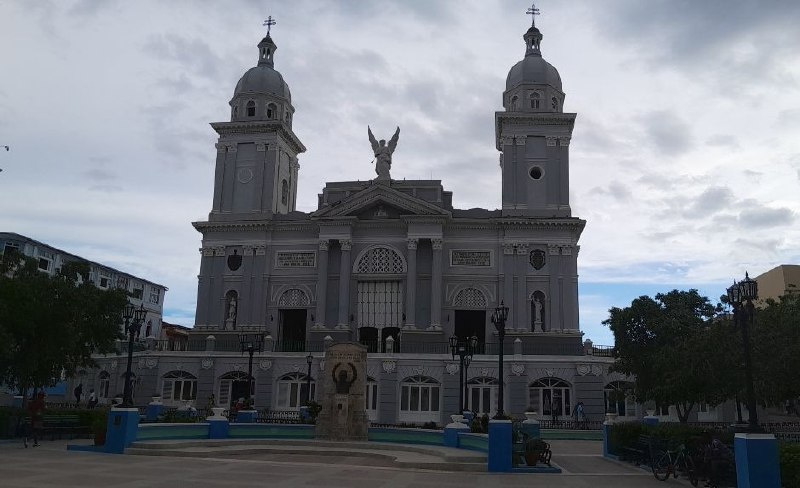
At 07:00 on 15 July 2026 the Electrical Union of Cuba reported that the country's National Electrical System, known by its Spanish acronym SEN, had been "completely restored" two weeks after a nationwide collapse knocked the island into darkness. The brief announcement, carried by state outlet CubaDebate, ended the most serious test of Cuba's grid since the island's thermoelectric fleet began shedding load in earnest in 2024. It did not explain how long the fix will hold.
For ten million Cubans the question is no longer whether the lights come back, but whether they stay on through August, when air-conditioning demand peaks and the same ageing units that failed earlier this month will be asked to carry their heaviest summer load. The grid's recovery is a fact; the system's underlying fragility is also a fact. Both can be true at once.
The collapse, in sequence
The SEN went down at the start of July in a cascading failure that Cuba's Ministry of Energy and Mines attributed to a combination of fuel shortages and the unplanned shutdown of several thermoelectric units, including the Antonio Guiteras plant in Matanzas. Rolling blackouts had already become a daily feature of life across Havana and the eastern provinces, but the early-July event was different in kind: it disconnected the eastern and western halves of the grid, idled water-pumping stations, and forced hospitals in several provinces onto generator-only operation. State media described the disconnection as an "islanding" event, with the eastern subsystem running independently for days before partial reconnection.
The early-morning 15 July announcement, broadcast by CubaDebate and attributed to UNE, said crews had managed to synchronise generation and transmission across the national grid. It did not quantify the reserve margin available to operators, did not name which plants were back online, and did not give a target date for full demand coverage. UNE's daily bulletins through 2025 and into 2026 have consistently reported a structural deficit measured in hundreds of megawatts between installed capacity and peak demand, a gap that the floating Turkish and Venezuelan power barges in Havana harbour have narrowed but never closed.
What the official line leaves out
The government's framing is recovery, not reconstruction. The language is careful: the SEN is "restored," not "renewed"; it is "synchronised," not "expanded." This matters because the same thermoelectric units that failed in early July were already running on deferred maintenance cycles before the blackout. Cuban engineers interviewed by independent outlets in recent years have described a fleet in which critical boilers, turbines and fuel-handling systems are operating well past their design life, with spare-parts inventories dependent on a narrow set of suppliers and on whatever foreign currency the central bank can allocate in any given quarter.
The structural read is straightforward. A national grid is only as resilient as the marginal generator that fails last under stress. In Cuba that marginal generator is almost always one of a handful of large thermoelectric plants built between the late 1970s and the early 1990s, several of them using Soviet-era designs adapted for Cuban fuel-oil specifications. Distributed solar, the most visible addition to the generation mix in 2024 and 2025, has grown from a low base but remains a small share of total output and is concentrated in western provinces, leaving the eastern grid structurally exposed during peak events. The blackouts are not a weather story, although heat waves worsen them. They are a capital-spending story.
The political economy of the plug
Two external pressures shape what comes next. The first is fuel supply: Cuba's electricity generation depends on domestic heavy crude, on residual fuel oil imported primarily from Venezuela and Mexico, and on diesel for the floating barges and peaking plants. Disruptions to any one of those channels show up in the dispatch curve within weeks. The second is foreign exchange. Maintenance, parts, and fuel imports are paid for in dollars or euros; Cuba earns those currencies through tourism, remittances, nickel exports, medical-services contracts and a thin slice of pharmaceutical exports, all of which have been volatile in recent years.
This is where the grid story shades into the wider Caribbean picture. Several Caribbean Community partners have moved in the past two years to integrate renewable generation and to build cross-border interconnectors, partly to hedge against exactly the kind of single-point failures Cuba is now exporting to its population. Jamaica, Barbados and the Dominican Republic have all signed memoranda with regional development banks on grid-modernisation financing. Cuba, excluded from most multilateral lending windows and operating under US sanctions that restrict third-country transactions, is largely outside those conversations, even as the technical problem it faces is the same one its neighbours are paying to solve. The 15 July announcement is therefore a domestic news event with a regional subtext: a neighbour is still running a 1990s grid in a 2020s climate.
What to watch through August
UNE's 15 July statement is the end of one crisis, not the resolution of the underlying deficit. Three indicators will tell readers how seriously to take the "restored" claim. First, the daily peak-hour shortfall figures in UNE's evening bulletins, expressed in megawatts, which since 2024 have routinely exceeded 500 MW during the summer months. Second, the duration and frequency of programmed rotations, known locally as "apagones," in Havana and the eastern provinces of Santiago de Cuba, Holguín and Guantánamo. Third, any official acknowledgement of fresh generation capacity coming online, including the long-promised floating power barges and any new solar parks in the eastern grid.
The honest framing, given the evidence available, is that Cuba has pulled the system back from the edge once again, that doing so is genuinely difficult, and that the next test of whether the 15 July synchronisation holds will arrive within weeks rather than months. Ten million people will draw their own conclusions about what kind of grid they are getting, and at what cost.
How Monexus framed this: the wire has covered the early-July collapse as an emergency and the 15 July announcement as a fix. We have read both signals together and asked the harder question, which is whether the same marginal generators that failed will carry the August peak. The grid is back; the system is not yet sound.
Wire provenance
This editorial synthesis draws on the following public wire/social posts:
- https://t.me/cubadebate/1