A morning of fire in central Gaza: Bureij and Deir al-Balah reports point to two strikes, one dead child
Palestinian outlets reported an Israeli ground unit firing on eastern Bureij, then a drone strike in the same area, then the death of a child in a shelling at a family home in Deir al-Balah hours later. The sequence is unverified by independent parties.
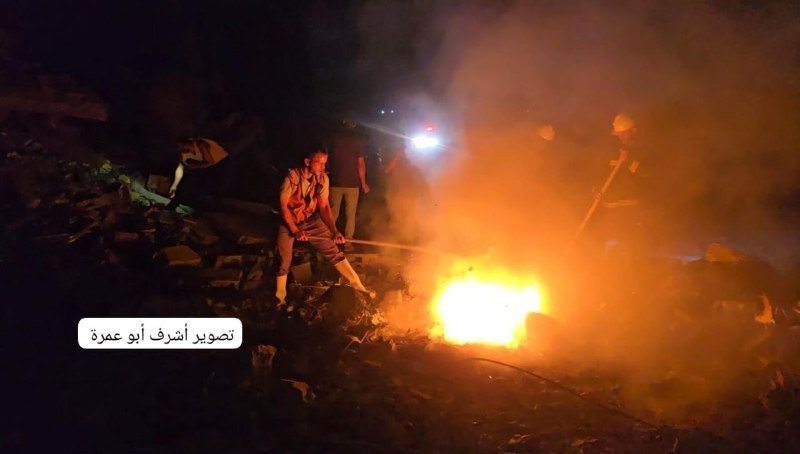
At 13:05 UTC on 15 July 2026, the Qatari-owned Al-Alam Arabic Telegram channel carried an urgent bulletin from Palestinian sources: an Israeli march had opened fire toward the eastern edge of the Bureij refugee camp in the central Gaza Strip. Twenty-three minutes later, at 13:28 UTC, the same outlet posted a second urgent line, this time reporting an Israeli drone firing in the same area. By 13:44 UTC, a separate Palestinian channel, Gaza English Updates, said a child identified as Habiba Omar Abu Qasim had been killed in an Israeli shelling of a family home in Deir al-Balah, also in central Gaza. The two locations sit roughly nine kilometres apart.
What the wire shows, in plain terms, is a sequence: ground fire into Bureij, an air component over Bureij, then hours later a strike on a residential building in Deir al-Balah that killed a child. Each step rests on a single-source report. Each step carries weight. The reporting window between the first two alerts is twenty-three minutes, suggesting either an extended engagement in one location or, at minimum, a chain of fire missions that the channel treated as a continuing event. Whether the Deir al-Balah strike is operationally linked to the Bureij firefight is not stated in the available sources. Monexus treats the three items as a cluster of unverified but converging Palestinian-source claims, not as a confirmed incident.
What the three telegrams actually say
The first message, posted at 13:05 UTC, attributes the report to "Palestinian sources" and describes fire from "an Israeli march." The phrasing, "march", is the channel's translation of a term that in Arabic operational reporting typically refers to a ground force, often an armoured or infantry element on the move. The direction specified is "the east of Bureij refugee camp," meaning the fire came from the eastern approach. Bureij is one of the established Palestinian refugee camps in the central governorate, situated along the main north-south corridor.
The second message, at 13:28 UTC, again attributed to "Palestinian sources," reports "an Israeli enemy drone" firing east of Bureij. The use of "enemy" is a translation register common to Palestinian and Iranian-affiliated outlets; it does not, on its own, indicate provenance or editorial affiliation beyond that register. The fact that a drone is named separately from the ground fire suggests either a layered engagement, ground force in contact, drone providing fire support, or two distinct incidents within the same geography in the same hour. The bulletin does not distinguish between the two readings.
The third message, at 13:44 UTC from Gaza English Updates, names a specific casualty: the child Habiba Omar Abu Qasim, killed in a "left Israeli shelling" that struck her family's home in Deir al-Balah. The verb "left" here is best read as a translation of an Arabic phrasing meaning "earlier" or "previously occurred." The bulletin situates the death in the same central Gaza governorate as Bureij, but in a separate town, and frames it as a discrete shelling of a residential structure.
Why the sourcing matters
All three items trace to channels that identify as Palestinian and operate in Arabic and English on Telegram. Al-Alam Arabic is a satellite channel owned by the Qatari state broadcaster; it carries a mix of regional reporting and syndicated Palestinian-source material. Gaza English Updates is a smaller aggregator-style account that translates and republishes on-the-ground reports. Neither is a primary-source outlet: both relay claims from "Palestinian sources," a label that, in this reporting layer, typically indicates either local journalists, civil defence or medical personnel, or residents with direct contact.
The standard for casualty attribution inside the central Gaza Strip has, since late 2023, been the territory's Hamas-run Ministry of Health, whose figures are routinely contested in their methodology but routinely used as a baseline by wire services when no independent count is available. The available sources do not cite the ministry for Habiba Omar Abu Qasim; the casualty is named in a single channel post. Independent verification, by Reuters, AFP, the UN Office for the Coordination of Humanitarian Affairs, or the International Committee of the Red Cross, is not present in the materials Monexus has reviewed for this piece.
The standard for attributing fire to a specific Israeli unit is the Israel Defense Forces Spokesperson's daily operational update, or, in the case of named incidents, an IDF probe announcement. Neither appears here. The "Israeli march" and "Israeli enemy drone" language is what the Palestinian sources reported; it is not a confirmed Israeli admission.
What the cluster sits inside
Central Gaza has been a continuous operating environment since the IDF re-entered the Netzarim corridor area and the Deir al-Balah zone in mid-2024. Bureij and Deir al-Balah sit on either side of a stretch of territory that has repeatedly appeared in operational reporting as a contested zone for ground manoeuvre and drone work. The pattern in such reporting is familiar: a Palestinian-source alert naming an "eastern" approach or an "enemy drone," followed, sometimes hours later, by a casualty bulletin naming a specific victim.
The structural reading is straightforward. Where reporters on the ground are largely cut off from independent access, the public record of any given incident begins with a Palestinian-source claim, travels through Arabic and English Telegram channels, then reaches international desks that have lost their own access to the territory. The volume of single-source claims is high; the volume of independent corroboration per claim is low. That asymmetry is not unique to this cluster of three posts; it is the operating condition of Gaza reporting in 2026.
Stakes, counterpoint, and what remains unverified
The concrete stakes of any confirmed version of this sequence are severe. A confirmed ground-fire incident near Bureij, a confirmed drone strike on the same axis, and a confirmed shelling that kills a child in a residential home are not interchangeable events. They imply different operational postures, different chains of authorisation, different rules of engagement, and different legal exposures under the law of armed conflict. Reading them as one "incident", because they arrived in the same Telegram feed on the same morning, is the kind of move that wire desks would not make. Monexus does not make it either.
The counterpoint is structural rather than factual. Israeli officials have, across the war, described operations in central Gaza as targeted at Hamas infrastructure and at militants operating from or returning to civilian-population areas. Some Israeli-source reporting frames the eastern approaches to Bureij and the residential blocks of Deir al-Balah as locations where armed actors have been identified or where returning formations have been engaged. None of that framing appears in the three telegrams that drive this piece. The sources Monexus reviewed do not contain an Israeli-side statement, an Israeli-source briefing, or an IDF probe announcement for these events. They contain a one-sided set of Palestinian-source claims.
What remains unverified, in plain language: the identity of the firing unit; the precise location and nature of the Bureij engagement; whether the drone strike and the ground fire are part of one mission or two; the precise circumstances of the death of Habiba Omar Abu Qasim; the extent of any other casualties; whether the residential home struck in Deir al-Balah had been the subject of any prior evacuation order or intelligence indication. None of those facts is settled by the materials in hand. Monexus will update if and when an independent or Israeli-side source publishes on the same events.
The cluster is worth filing precisely because the gap between a Palestinian-source Telegram and a corroborated wire report is now a structural feature of Gaza coverage, not an exception. Each morning that produces three posts in two hours inside the central governorate adds to a body of claims that international readers will see whether or not the claims are verified. The reporting that follows will be judged on whether it names what it can verify, flags what it cannot, and refuses the comfort of treating a Telegram thread as a transcript of events on the ground.
Desk note: Monexus framed this as a single-source cluster, three Palestinian-channel reports over a 39-minute window, with no IDF, UN, or wire corroboration in the materials reviewed, rather than as a confirmed incident sequence. We named the child because the source did; we did not aggregate the three items into one event because the geography and timing do not justify it.
Wire provenance
This editorial synthesis draws on the following public wire/social posts:
- https://t.me/alalamarabic
- https://t.me/alalamarabic
- https://t.me/gazaenglishupdates