France-Spain and England-Argentina: Semifinals Lock In a World Cup Built on Diasporas
The 2026 World Cup semifinals pit France against Spain and England against Argentina. The tournament's most striking story is the one happening around the squads: national teams are now built on players born abroad.
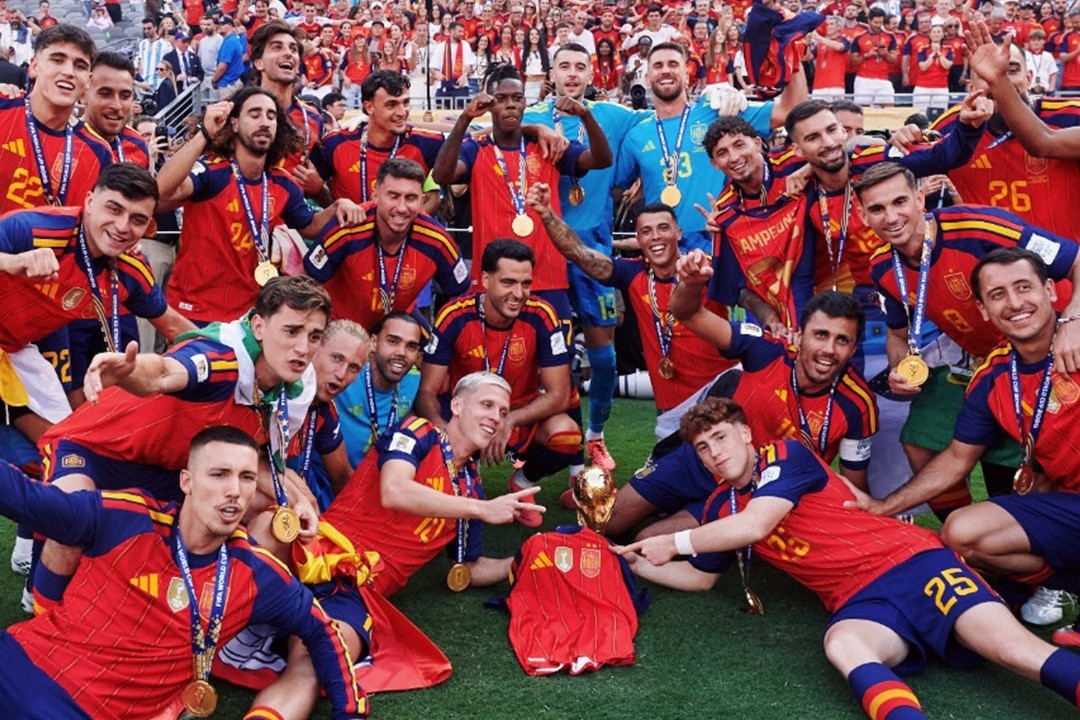
France against Spain. England against Argentina. Those are the two matches standing between four federations and the 2026 FIFA World Cup final, a bracket that locks in a tournament already defined less by territory than by movement: the players wearing national colours were, in many cases, born somewhere else.
The semifinal draw, confirmed on 13 July 2026, produced a classic European-South American pairing on one side of the draw and a heavyweight European tie on the other. It also sharpened the through-line of this World Cup: that the modern national team is, increasingly, a diaspora team. Coverage of the tournament from TeleSUR English flagged the trend of national squads drawing heavily on players born outside the countries they represent, a pattern that has moved from curiosity to convention over the past four cycles.
The bracket, as filed
The four surviving teams arrived at the semifinal stage carrying the residue of a tournament that has favoured clinical finishing and deep squads over romantic football. France and Spain represent the two most decorated recent traditions in European men's football; England and Argentina bring the South American reigning-champion pedigree and a young Argentine core in the early stages of its own generational turn. The pairing of England and Argentina in particular has the texture of a final, dropped into a semifinal by a draw that asked one of them to fall short of the trophy.
FIFA's broader planning context has not been quiet. On 13 July 2026, broadcaster and account Unusual Whales relayed a developing ESPN report that FIFA is considering expanding the men's World Cup to 64 teams after the 2026 tournament, on the explicit rationale that "every nation should have the chance to dream of playing at football's biggest event." The proposal, if pursued, would extend a trend visible across the past two World Cup cycles, where expansion has changed both the qualifying math and the competitive texture of the group stage.
Diasporas, on the pitch
The quieter story of the 2026 tournament is demographic. National federations have spent the cycle leaning harder than ever into the recruitment of dual-nationality players: French-eligible players raised in the Paris banlieue, Argentine-eligible players raised in Spain, English-eligible players raised in the academies of Bundesliga and La Liga. TeleSUR English's field coverage catalogued the pattern across the round-of-sixteen and quarterfinals, noting the growing tendency of national teams to feature players born outside the countries they represent.
The framing cuts two ways. Read one way, it is the purest expression of football's globalisation: a sport whose labour market has been international for decades, now formally catching up to its own labour flows. Read another, it sharpens a question about what a national team, in 2026, is actually for. The rosters of the four semifinalists will answer that question more loudly than any editorial.
The halftime show and the entertainment layer
The tournament's entertainment scaffolding has also begun to take shape. On 14 July 2026, prediction-market account Polymarket flagged a 74 percent implied probability that Sabrina Carpenter is projected to perform at the FIFA World Cup halftime show. The market signal, whatever its eventual resolution, points to a broader pattern: the men's World Cup, once austere in its halftime arrangements, is now treated by federations and broadcasters as a global entertainment property on par with the Super Bowl, with the halftime slot itself a prize asset.
That shift has commercial implications that travel beyond music rights. Broadcasters bidding for 2026 and subsequent tournament packages have grown accustomed to selling advertisers a slate that includes pre-match concerts, fan-zone programming, and influencer-driven second-screen content. The Polymarket signal is best read as a confirmation of the entertainment-tier treatment the tournament has already received.
What the semifinals will and won't answer
The two matches ahead of the final will resolve questions of form, of in-game management, and of which federations have the deepest reserve of starting-eleven quality. They will not resolve the structural questions the tournament has raised.
If FIFA proceeds with the reported 64-team expansion for 2030, the qualifying arithmetic for confederations in Africa, Asia, and Concacaf will shift, the number of small-federation debuts will rise, and the financial distribution model will have to absorb a wider pool of broadcast partners. The political economy of that decision, more than the bracket, will shape the next cycle. The on-pitch answer this weekend will be the teams. The off-pitch answer, signalled by FIFA's leaked appetite for further expansion, is that the World Cup's growth runway is not yet treated by its governors as finished.
This piece traces tournament reporting from TeleSUR English's live coverage, expansion reporting relayed via Unusual Whales citing ESPN, and entertainment-market signals from Polymarket. Where wire confirmation of the semifinal pairings or the 64-team proposal is later filed, this desk will update the record.