US naval blockade of Iranian ports goes live as Army warns of retaliation
A US naval blockade of all Iranian ports entered force on 14 July 2026, with Tehran's army pledging a response and prediction markets pricing fresh leadership turnover in Tehran at 23% by year-end.
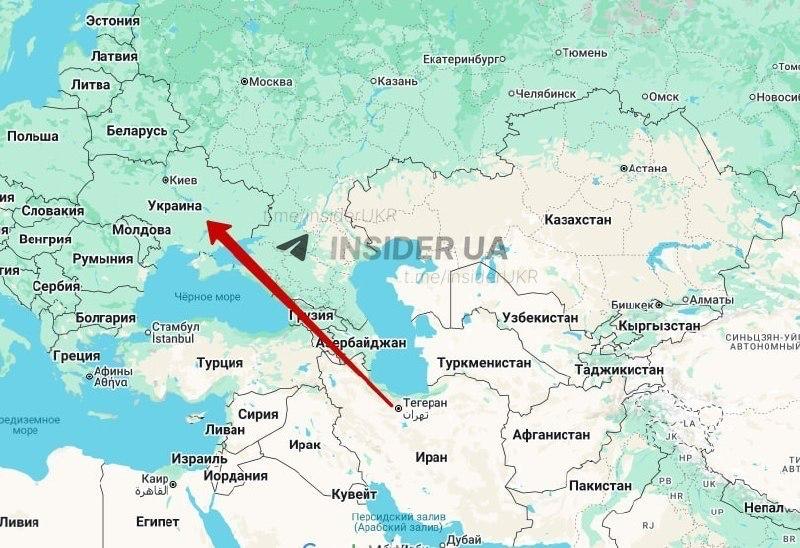
A US naval blockade of every Iranian port went into effect on 14 July 2026, according to a Telegram channel citing operational reporting, hours before Iran's army publicly warned of retaliation against any action in the country's land, waters or airspace. The blockade announcement, posted at 20:08 UTC by the @rnintel channel, marks the most direct kinetic posture Washington has adopted toward the Islamic Republic since the latest escalation cycle began, and lands the same day Tehran's general staff put its forces on a heightened rhetorical footing.
The blockading force, its rules of engagement, and the legal authority under which it is operating were not described in the initial reports reviewed by this publication. What is on the record is the scale of the action (every Iranian port) and the counter-posture from Tehran, which framed the move as an attack on Iranian sovereignty and promised a response.
What was announced, and by whom
The @rnintel channel, which tracks naval deployments and shipping movements in the Gulf, reported at 20:08 UTC on 14 July 2026 that "U.S. naval blockade of all Iranian ports has now gone into effect." No specific Central Command (CENTCOM) release, Department of Defense statement, or White House proclamation was attached to the post, and the channel's reporting on prior episodes has tracked closely with open-source intelligence on vessel movements rather than with formal US government communiqués. The claim therefore sits in the same evidentiary tier as a wire dispatch citing an unnamed defence official: directional, not yet primary-sourced.
Roughly ninety minutes earlier, at 21:43 UTC the same day, Al-Alam Arabic's Telegram feed carried an "Urgent" bulletin from the Iranian Army: "Our soldiers will teach the enemy a eloquent lesson, and any action against the land, waters and skies of this historic country will not pass without a response." The phrasing is classic Iranian deterrence language: maximalist on retaliation, vague on timing and method. It is also the language of a force that wants to keep escalation optional rather than automatic.
The gap between the two posts is the story. A blockade is, in maritime law, an act of war short of firing. It is meant to compel without shooting first. Tehran's response is calibrated to leave open every option below full-scale war: harassment of shipping, drone strikes on tankers, missile tests, cyber operations on Gulf state infrastructure, and the asymmetric toolkit Iran has spent two decades refining.
What a blockade actually does
A naval blockade of every Iranian port is not a sanctions regime, which is enforced through financial plumbing and inspection of declared cargoes. It is a physical interdiction of any vessel, of any flag, attempting to enter or leave Iranian waters. The legal predicate under customary international law requires a formal declaration, effective enforcement, and impartial application. None of those criteria were visible in the @rnintel post, and a unilateral US blockade absent Security Council authorisation would, on the established view of most international lawyers, be treated as an unlawful use of force.
For Iran's economy the practical effect would be immediate. The country's exports run overwhelmingly through Bandar Abbas on the Strait of Hormuz, with secondary flows out of Bandar-e Mahshahr and the Caspian ports. Cutting those arteries means cutting oil receipts, which means cutting the foreign currency that props up the rial and funds the budget. The leverage is enormous. The political risk inside Iran is larger: a regime under fiscal pressure with its ports sealed has historically chosen to escalate rather than compress.
The prediction market is pricing turbulence
A Polymarket contract tracked on X at 15:28 UTC on 14 July 2026 gives a 23% probability that Iranian leadership changes again before the end of 2026. That is a striking number. It implies that traders, who have no incentive to flatter any faction, see roughly a one-in-four chance that the current configuration of power in Tehran is replaced inside five months. For context, the same market family has historically priced leadership turnover in stable petro-states in the low single digits.
Read tightly, the 23% is a read on elite cohesion. A blockade compresses the regime's revenue, hardens the public's hardship, and gives every faction inside the security establishment a fresh reason to argue that the current leadership miscalculated. Read loosely, it is also a hedge against the obvious tail risk: that a kinetic exchange produces a succession crisis regardless of who fires first. Either way, the market is treating Iranian political stability as a real-time variable, not a constant.
Counter-frames worth weighing
The headline frame is American: a great power imposing order on a regional disruptor through the oldest tool in the maritime playbook. The counter-frame from Tehran and from much of the Global South is older and simpler: a superpower strangling a sovereign state without UN authorisation, in defiance of the same rules of non-intervention Washington invokes elsewhere.
Both frames are coherent, and both are partial. A blockade of Iranian ports would indeed be a serious escalation with humanitarian consequences for a population that did not choose this fight. It would also, if the underlying dispute concerns Iran's nuclear programme, its proxy networks, or its treatment of its own citizens, be the predictable endpoint of a sanctions architecture that has run out of incremental pressure to apply. The honest read is that this is not a frame contest with a winner. It is a contest between two accounts of legitimacy in a system with no arbiter.
What is still unclear
Three things the sources do not specify, and which this publication cannot fill in: the exact force posture of the US Navy on 14 July 2026, including carrier and submarine positions in the Gulf and the North Arabian Sea; the legal instrument the US administration is relying on, whether a presidential determination, an existing Authorization for Use of Military Force, or a new executive order; and the response timeline from Iran, which has historically preferred to retaliate through partners (Houthi strikes in the Red Sea, Hezbollah actions against Israeli assets, Iraqi militia harassment of US bases) rather than direct naval confrontation.
What can be said with confidence is that a naval blockade is the kind of decision that, once taken, is hard to walk back without looking like retreat. Iran's army has now placed itself on record promising a response. The next forty-eight hours will show whether that response is symbolic, graduated, or escalatory. Prediction markets put the odds of Iranian leadership change this calendar year at roughly one in four. They do not, however, put odds on the question that matters more: whether the blockade is the end of a pressure campaign or the beginning of one.
Desk note: Monexus framed this story around the gap between the blockade announcement and Tehran's response, not around either side's talking points. The 23% Polymarket figure is the single most concrete datum in the source set and is treated accordingly; the legal questions raised by a unilateral blockade are flagged as unresolved rather than resolved.
Wire provenance
This editorial synthesis draws on the following public wire/social posts:
- https://t.me/alalamarabic
- https://t.me/rnintel
- https://x.com/polymarket/status/2077052508342493184