Trump's Iran ultimatum: strikes, a Congress letter, and the shape of a widening war
A presidential warning that US forces will strike Pickaxe Mountain in Iran, paired with a formal notice to Congress, recasts a paused conflict as an active air campaign and puts lawmakers on the back foot.
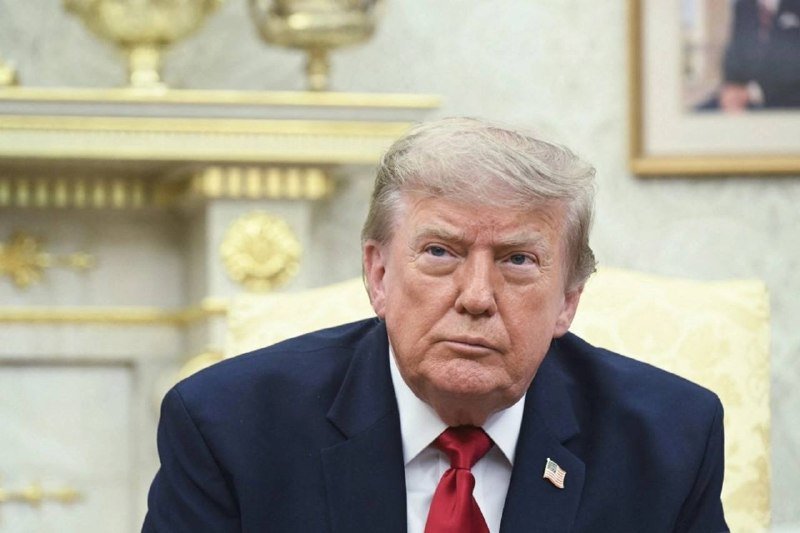
At 21:10 UTC on 13 July 2026, President Donald Trump said the United States "will take out Pickaxe Mountain in Iran," according to a Reuters post on X, escalating rhetoric that, two hours earlier, had already framed US action as imminent. The remarks followed a written notice to Congress asserting that American forces had carried out "defensive strikes against targets in Iran," reported the New York Times and aggregated by Euronews on Telegram at 19:27 UTC. Together, the two statements describe a policy shift from pause to active air campaign, delivered through parallel channels: a presidential message to the public and a constitutional formality to the legislature.
The pattern is the story. A commander-in-chief asserting an open-ended authority to strike, paired with a notification designed to satisfy the War Powers Resolution's reporting requirement, is the legal choreography of a war that does not need a fresh authorisation. Congress is informed, not consulted. The framing in the letter, "defensive strikes," is the same language Washington reached for when it hit Iranian-linked assets in Iraq and Syria; its reappearance here signals that Tehran, not its proxies, is now the named target. That distinction is what separates the current episode from the episodic exchanges of the past three years.
What the public record actually says
The Reuters X post at 21:10 UTC carries Trump's statement verbatim: the US will "take out Pickaxe Mountain in Iran." Two hours earlier, at 19:27 UTC, Euronews on Telegram reported the substance of a notice Trump sent to Congress, citing the New York Times, in which the President wrote that the United States had carried out "defensive strikes against targets in Iran." The dates and the substance of those two messages are the load-bearing facts. They are consistent with each other: a public warning that names a specific feature, and a written notification that asserts completed action under a defensive framing.
A separate Telegram channel, GeoP Watch, summarised the letter at 19:40 UTC as a notification of "the resumption of military operations against Iran," crediting the Washington-based Cicero Institute Group for surfacing the document. A Sprinter Press post at 20:20 UTC captured a Trump statement that the US "will strike Iran tonight and tomorrow." The timeline across those four items, taken together, is a steady tightening: notification first, then warning, then operational language, then a named target.
The sources do not specify the location of Pickaxe Mountain, nor do they disclose the size of the initial strike package, the weapons used, or any Iranian response. They do not name the specific members of Congress who received the letter. Until a wire service confirms a strike on the ground, the public record describes an intent and a paper trail, not a verified kinetic event.
A War Powers routine, stretched
The War Powers Resolution of 1973 requires the executive to notify Congress within 48 hours of introducing armed forces "into hostilities or into situations where imminent involvement in hostilities is clearly indicated by the circumstances." The mechanism was designed for short, sharp episodes, the kind that defined the 1980s tanker wars in the Gulf. It has been stretched, over five decades, to cover operations that look less like discrete events and more like rolling campaigns. The current notice fits that pattern. By labelling the strikes "defensive" and asserting that they were already underway, the administration converts a new offensive decision into a continuation of pre-existing operations, and sidesteps the question of whether a fresh authorisation is required.
Congress has two formal responses: a joint resolution to compel withdrawal, which is functionally a veto-proof political test, or a defunding measure that runs into the same constitutional snag. Neither path has historically reversed an active air campaign. The letter therefore does what such letters tend to do: it transfers political risk from the executive to the legislature, forcing members of Congress to choose between voting against a President conducting live operations and voting to abandon a sitting commander. Most choose procedural objection rather than confrontation.
What Tehran reads in this
From Iran's vantage point, the sequence is a familiar one. The US names a target on Iranian soil; that target becomes a de facto declaration; an air package follows. Tehran's response options are constrained. Ballistic retaliation would invite escalation that the country's air defences cannot absorb for long. The more likely register is calibrated: an IRGC statement framing the strikes as an act of war, a diplomatic push to convene an emergency session of the UN Security Council, and pressure on Iraqi and Syrian territory where Iranian-linked assets remain within US reach. The asymmetric logic that has governed the past three years holds: Tehran escalates through partners rather than directly.
The risk is miscalculation at the seam between intention and reaction. A US strike package aimed at a single named feature is, by design, a finite act. A regional retaliation, whether through the Houthis in the Red Sea, Hezbollah in Lebanon, or Iraqi militias, is not. The 1988 Vincennes precedent, when a US warship shot down a civilian Iranian airliner in a confused engagement, is a reminder that finite acts can produce disproportionate outcomes.
The stakes if the trajectory continues
If the campaign extends beyond Pickaxe Mountain and the named feature becomes the first of several, the political geometry inside Washington changes. Defence hawks will defend the operation as restoring deterrence; a cross-party coalition will demand a formal authorisation; the President's party will absorb the cost of votes it does not want to take. Oil markets, already pricing a risk premium through the Strait of Hormuz, will price in a longer disruption; insurance rates through the Bab el-Mandeb will follow. Iran's nuclear file, dormant in public since the 2024 exchanges, returns to the front page. The EU and the UK will be pressed to clarify whether their sanctions architecture, calibrated for non-proliferation, extends to a kinetic campaign of indefinite length.
The opposite reading is also coherent: that Pickaxe Mountain is a one-shot, that the letter is the political cover for a single operation, and that the next 72 hours will produce de-escalation gestures on both sides. The sources do not let this publication adjudicate between the two. The statement is what it says. The action, when it comes, will be the test.
What remains genuinely uncertain is whether other named features follow Pickaxe Mountain, whether Iran's response is direct or channelled through partners, and whether Congress treats this letter as a routine notification or as the constitutional moment it has long argued it should be. On those three questions the public record is, for now, silent.
This article draws on a four-source thread: a Reuters X post, a Euronews Telegram relay of New York Times reporting, a GeoP Watch Telegram summary of the Congress notification, and a Sprinter Press post capturing the President's operational language. The frame here separates the paper trail, which is documented, from the kinetic outcome, which is not. Where the wire consensus treats the letter as a procedural formality, Monexus reads it as the legal vehicle for a campaign the executive has chosen not to seek authorisation for.
Wire provenance
This editorial synthesis draws on the following public wire/social posts:
- http://reut.rs/4pi9CGL
- https://t.me/euronews
- https://t.me/GeoPWatch