Trump Floats Strikes on Iranian Power Plants and Bridges as Negotiations Stall
A 22:15 UTC Telegram post attributed to Israeli reporter Amit Segal puts President Trump on the record threatening infrastructure strikes if Tehran does not return to the table by next week.
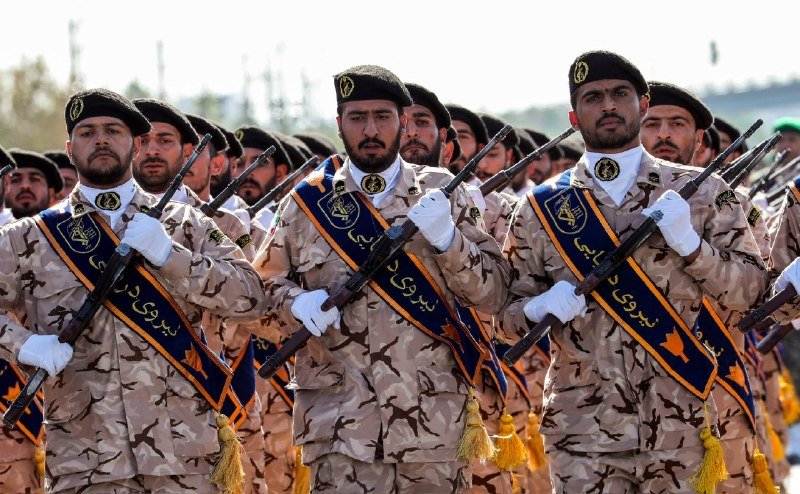
At 22:15 UTC on 14 July 2026, a Telegram channel associated with Israeli journalist Amit Segal published a statement attributed to President Donald Trump: "Next week we will attack the power plants and bridges if the Iranians do not come to the negotiating table." The post, relayed by Segal to his audience, lands four days after the most recent round of indirect US–Iran talks ended without a deal, and hours after a separate environmental lawsuit pulled the Trump administration into US federal court over its regulatory rollback. Read together, the two moves sketch a White House that is pressing Tehran with escalation while peeling back domestic guardrails at home.
The threat is not a leak. It is, on the available record, a deliberate message aimed at the Iranian negotiating channel, in the same coercive register the administration has used on Iran's petroleum and nuclear infrastructure for the past eighteen months. It comes bundled, however, with a structural caveat that any Iran-watcher will recognise: the gap between American public signalling and Israeli operational planning has widened again. Segal's framing, an Israeli reporter broadcasting a US presidential threat to be received in Tehran via Tel Aviv, is itself the story.
The threat, and the messenger
Trump's statement, as published by Segal at 22:15 UTC, names two classes of target, energy infrastructure (power plants) and connective infrastructure (bridges), and gives a deadline ("next week"). Neither category is novel as a planning concept. Both are familiar beats in Israeli and US strike doctrine against Iranian sites, from the 2020 damage assessments at Natanz to the cyber operations that preceded the joint US–Israeli campaign of June 2025. What is new is the explicit public conditional: negotiate, or be struck.
Two qualifications matter. First, the quote is filtered through Segal, a Channel 13 reporter with a long track record of relaying Israeli-government framings. The text is presented as Trump's own words, not as a paraphrase; readers should still treat it as one node in a chain, Telegram to English coverage, rather than a White House transcript. Second, the deadline ("next week") does not match any reported negotiating window in the public US–Iran track. State Department readouts, where they exist, have used looser language ("meaningful progress," "weeks, not months"). The shorter clock is the threat's load-bearing element: it tells Tehran that diplomacy is now bounded by imminent kinetic action, not by sanctions pressure or by enrichment-monitoring timelines.
Why the energy grid, why the bridges
The targeting logic is closer to Israeli war-game assumptions than to American ones. Power plants feed desalination, pumping and refinery operations; bridges over the Karun, the Karkheh and the upper tributaries constrain Iran's ability to move materiel toward the western and southern fronts. A strike package aimed at both classes would not disable the regime. It would, by the read of most open-source Iran analysts, force Tehran to spend hard currency on reconstruction in a sanctions-compressed economy and to choose between retaliatory escalation and a return to the table.
There is a counter-read that the Iranian negotiating team already arrived at after the June 2025 exchanges: that threats of this kind are bargaining posture, not war plans, and that accommodating them in the lead-up to a poll or a budget is exactly what the Trump administration wants. Tehran's official reaction, as carried in the past by IRNA and Tasnim, has been to dismiss such warnings as psychological warfare. The structural problem, however, is that Iran cannot tell the difference between a posture and a plan until the first bomb falls. That uncertainty is the operating environment the threat creates.
The court file on "harm"
The same 24 hours brought a reminder that the administration's coercive toolkit abroad is paired with a deregulatory posture at home. At 20:50 UTC on 14 July, Reuters's @Reuters account posted a wire item reporting that environmental groups had sued the administration over its rescission of the regulatory definition of "harm" (reut.rs/4aNMIkA). The suit is technical and consequential. The Clean Water Act and the Clean Air Act both hinge on what counts as a "harm" to a waterway or a population; redrawing the definition narrows the set of projects the Environmental Protection Agency can block or modify. The groups argue, per the wire summary, that the rescission strips federal regulators of authority they have held since the 1970s.
The pairing of the two stories matters because the Iran threat and the domestic deregulation are coordinated on the same calendar. Energy infrastructure abroad is one set of pipes and grids; domestic permitting is another. A reading sympathetic to the administration is that both are intended to lower the cost of capital projects. A reading more skeptical, and the more warranted one given the available facts, is that the White House is widening its discretionary reach in two domains at once: it can bomb a foreign grid, and it can licence a domestic one, with fewer statutory trip-wires in either direction.
The geometry of the next ten days
Markets are already pricing one side of this. Polymarket's "Trump on a bill" contract, posted at 01:44 UTC on 14 July at poly.market/nZmnIJm, sits at 3% for the year, useful only as a mood barometer and to flag that the prediction-market audience is not assigning material weight to commemorative gestures at a moment of imminent strike threats. The fixed-income and crude order books, where they have reacted in real time to past US–Iran escalations, are the cleaner read.
Three dates to watch: a possible Iranian reply through the Omani channel, where Muscat has hosted the indirect track since 2024; any Pentagon read-out of additional CENTCOM tasking in the Gulf; and a court scheduling order on the environmental suit, because the hearing window will bracket the same ten-day strike window the threat implies. None of these is certain to fire.
The remaining uncertainty is whether the threat is a negotiating lever or a planning cover. The available evidence, the public statement, the open channel via Segal, the deregulatory court fight on the same day, points to both at once. That is the operating ambiguity Tehran now has to price in, and the one that gives the next ten days their weight.
How this publication framed it: Monexus leads on the Amir Segal-relayed statement as the day's signal event, paired with the domestic regulatory suit to underscore that the administration's coercive toolkit is moving in two directions at once. Where wire copy is likely to flatten the Iran threat into a single line, this desk treats the messenger channel, the targeting logic, and the deregulatory backdrop as three separate beats worth their own paragraphs.
Wire provenance
This editorial synthesis draws on the following public wire/social posts:
- http://reut.rs/4aNMIkA