Trump steps back from Hormuz tolls, floats Gulf investment deals instead
Hours after signalling a US naval blockade on Iran-linked shipping, President Trump retreats from a 20% transit levy and pitches Gulf states on investment packages instead.
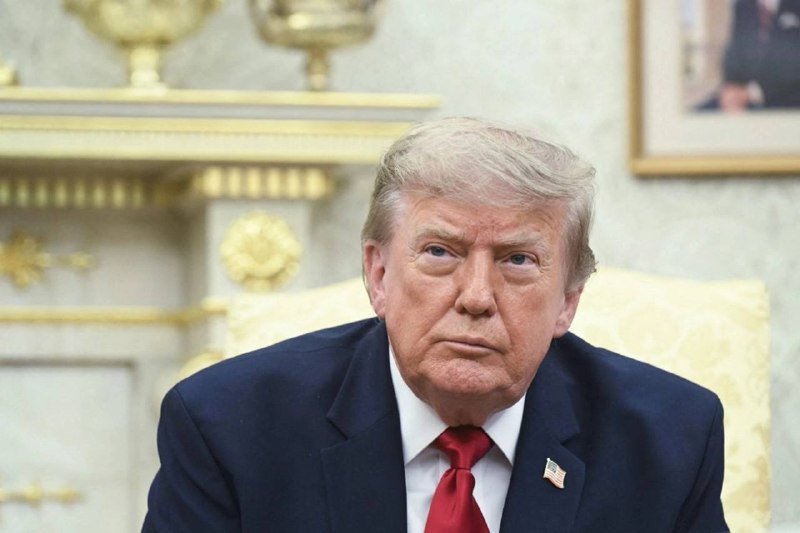
At 15:16 UTC on 14 July 2026, President Donald Trump posted on Truth Social that the Strait of Hormuz is "open to all commercial shipping except vessels travelling to or from Iran," reaffirming that a US naval blockade would continue against Iranian shipping while leaving every other flag's traffic alone. An hour later, the same account walked the policy back further: no 20% transit fee, no toll regime at all, and instead a pitch for what Trump called "investments" from Gulf states, framed in his post as a substitute for the tolls he had floated the day before. The whiplash, captured across two Telegram wire channels and the AP wire inside ninety minutes, is the clearest signal yet that the administration's Iran policy is being improvised in real time on a platform with no editorial layer between the president and the world.
The shift matters because the Strait of Hormuz is not a symbolic waterway. Roughly a fifth of global oil passes through it on a normal day, and the past week has seen Iranian strikes on at least two UAE-flagged oil tankers, according to Deutsche Welle's running coverage, with the UAE publicly threatening retaliation. Any US move that even hints at taxing, blocking, or rerouting that traffic moves the price of crude and the political temperature of the entire Gulf by roughly the same amount. Replacing "toll" with "investment" does not unwind the blockade; it does, however, signal to Riyadh, Abu Dhabi and Doha that the cost of passage is now an item on the negotiating table rather than a unilateral American levy.
What actually changed in the past 24 hours
The Middle East Spectator channel reported at 15:10 UTC on 14 July that Trump said he "won't charge 20% fees from ships transiting the Strait of Hormuz, and that he will seek 'investments' from Gulf states instead." The earlier WarMonitors wire, citing AP, captured the same pivot from a different angle: Trump backing away from "Strait of Hormuz tolls" and toward "trade deals with Gulf countries." Read together with the wfwitness wire, which carries the operative Truth Social language about the strait being open "to all commercial shipping except vessels travelling to or from Iran", the picture is of three linked decisions compressed into a single afternoon: the blockade stays, the toll dies, the Gulf monarchies are invited to underwrite the arrangement.
What the sources do not specify is what "investment" actually means in this context. The word has covered everything in Trump-era deal-making from sovereign-wealth commitments to port concessions to arms purchases, and the Gulf states have been here before: in May 2017 alone, Saudi Arabia and the UAE together committed roughly $350 billion in US-directed deals across the first Trump administration, a figure that has since become the reference point for any new ask. Without a written framework, a Treasury readout, or a Gulf-side statement, "investment" is closer to an opening bid than a policy.
The tanker war underneath the headline
The policy reversal is happening against a kinetic backdrop that has not paused for the diplomacy. Deutsche Welle reported earlier on 14 July that Iranian strikes on two UAE oil tankers had pushed Abu Dhabi to threaten retaliation, part of a broader Iranian pattern of strikes on US allies following overnight US attacks. The wfwitness post explicitly anchors the blockade to that tit-for-tat cycle: ships tied to Iran are the target, everyone else is told to keep moving.
The sequencing is familiar from the 2015–2017 Iran-deal era, when harassment of Gulf shipping was used to raise the political cost of any accommodation with Tehran. What is new is that the American response is no longer coalition-led; it is a presidential Truth Social account and a single-source naval order. That makes the threat credible in the short term and fragile in the medium term. Iran can adapt by re-flagging, by routing via Omani waters, or by leaning on Chinese and Indian refiners to absorb its crude outside the formal sanctions perimeter. The UAE's threatened retaliation is the more volatile variable: if it materialises, the strait stops being a blockade story and becomes a convoy-war story, which neither the oil market nor the insurance market has priced.
Why the toll had to die
There was never a serious legal architecture for a US-imposed toll on a waterway that is, on any honest reading, jointly used under customary international law and patrolled by the Iranian Revolutionary Guard on its northern shore. The threat worked as leverage for roughly the lifespan of a news cycle, which is the unit of time US foreign policy has been operating in for the past several months. Once the price of tanker insurance began to reflect the possibility of a levy rather than just a blockade, the political return on the threat collapsed faster than the leverage it was meant to extract. Trump is, in effect, recycling the same playbook used against Panama and Greenland earlier in the term: float a maximalist claim, then retreat to a deal in which somebody else writes the cheque.
The Gulf states understand this. Their interest in the current moment is to keep traffic flowing without being seen to fund either side of the blockade. Saudi Arabia and the UAE will want any "investment" framed as commercial, ports, logistics, perhaps a stake in US LNG infrastructure, rather than as a transit fee by another name. Doha and Muscat, which sit closer to the strait and have historically mediated between Tehran and Washington, will want a seat at the table precisely because the toll's death creates one.
What remains genuinely uncertain
Three things have not been corroborated by the source material in front of us. First, the operative scope of the blockade: the wfwitness wire says vessels "travelling to or from Iran" are blocked, but does not specify how that is enforced, boarding, escort, secondary sanctions, or simply a published list. Second, the retaliation question: Deutsche Welle reports a UAE threat but not a date or a target set, and Iranian state media has not, in the materials available, publicly committed to a pause. Third, the "investment" number: there is no figure attached to the ask, no Gulf counter-offer, and no third-party verification that any Gulf capital is currently in talks. A reader relying only on these wires should treat the afternoon's announcements as positions rather than outcomes.
The stakes from here are concrete. If the toll returns in a different form, an escrow account, a port concession, an arms package, the political cost inside the Gulf is absorbed and the blockade becomes the new normal. If the blockade holds without Gulf funding, Iran recalibrates its export routes within weeks and the American pressure campaign loses its sharpest edge. If the UAE carries out its threatened retaliation, the strait becomes a live military theatre, and roughly a fifth of the world's oil supply waits on the outcome. None of these paths requires the 20% toll to be on the table. The toll's death, in other words, is a styling change. The blockade is still the policy.
How Monexus framed this vs the wire: the major wires led on the policy U-turn as a tactical retreat; Monexus is leading on the contradiction that survives the U-turn, which is that the blockade, not the toll, has always been the operative instrument.
Wire provenance
This editorial synthesis draws on the following public wire/social posts:
- https://t.me/wfwitness
- https://t.me/Middle_East_Spectator
- https://t.me/WarMonitors