Trump tells Gulf monarchies to foot the bill for the war on Iran
On 14 July 2026 the US president publicly billed Riyadh, Abu Dhabi and Doha for protecting what he called a very rich portion of the world, recasting the American security guarantee as a billable service.
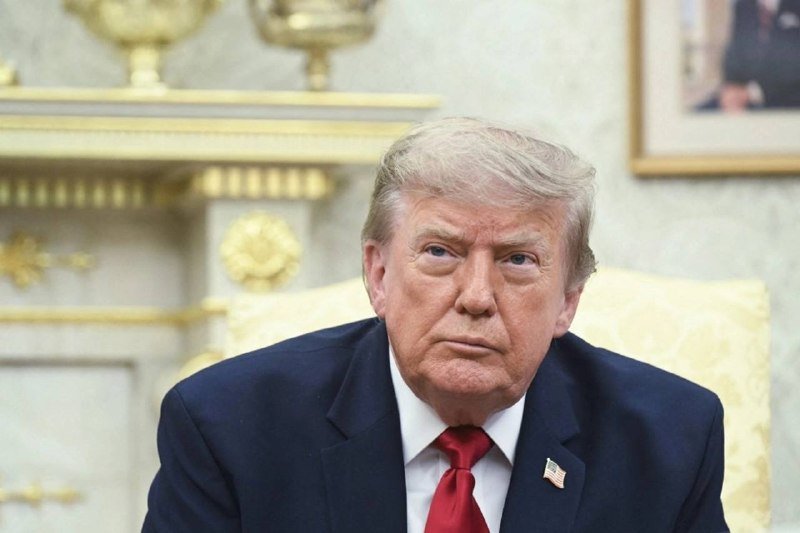
At 0500 UTC on 14 July 2026, Reuters reported that President Donald Trump had publicly demanded that the small monarchies of the Persian Gulf reimburse Washington for the cost of the war the United States is fighting against Iran. The line, delivered in remarks carried by the wire service, recasts seven decades of American security guarantees in the Gulf as a transactional service rather than a strategic commitment: protect, then invoice.
The demand lands at a moment when the underlying war is still unfolding and its bill is still being tabulated. It also lands on states that have, for the better part of a generation, paid for that protection in a different currency: host-nation basing agreements, sovereign-wealth placements in US Treasuries, and arms purchases denominated in tens of billions per year. Trump is now arguing that even that arrangement under-prices the American contribution. The subtext, harder to miss, is that the security umbrella over the Gulf is becoming a contract the umbrella-holder can revoke at will.
What Trump actually said
In the remarks reported by Reuters at 0540 UTC, Trump framed the United States as the active defender of allied Gulf countries and said those countries should reimburse Washington for the security role it is performing. Two earlier wire posts, distributed at 0007 UTC and 0121 UTC on 14 July, captured the same formulation from a Trump appearance: that the US is protecting a region that is considered very rich, and that he wants to recover those expenses. The three reports, taken together, show the line is not a stray remark but a deliberate talking point, repeated in the same register across at least one full news cycle.
The framing matters because it does two things at once. It tells Gulf capitals that the United States expects a financial settlement for the war, and it tells a domestic American audience that someone else will pay. Both audiences are being invited to interpret the same sentence, and neither is being asked whether the underlying premise, that the Gulf is a client purchasing protection, actually describes the relationship Washington has built since 1945.
The bill the Gulf is already paying
The headline demand obscures an arrangement that is already heavy on the Gulf side of the ledger. US Central Command's forward headquarters sits in Qatar, at Al Udeid air base, the largest American military facility in the Middle East. The United States maintains major operating locations in Kuwait, Bahrain, the United Arab Emirates and Saudi Arabia, with host-nation funding covering substantial portions of the construction, logistics and force-protection costs. Arms sales to the Gulf Cooperation Council states have routinely cleared the statutory review threshold and run into the tens of billions over multi-year packages; the 2023 normalisation-era architecture with Saudi Arabia alone was sized at roughly $110 billion in proposed defence and civilian-nuclear cooperation. Gulf sovereign-wealth funds hold significant allocations in US dollar-denominated assets, a position that recycles petrodollar surpluses into the American financial system at scale.
Set against that, Trump's demand is not a request for new money. It is a renegotiation of the price of an existing arrangement, with the war against Iran functioning as the trigger event. The implicit message to Riyadh, Abu Dhabi and Doha is that the marginal cost of fighting Iran, whether in ordnance, basing tempo, or the political exposure of a US president publicly naming them as beneficiaries, will be settled in addition to what they already pay.
What the Gulf reads in return
The reply, when it comes, will not be made on cable news. Gulf ministries have spent two decades learning to manage American pressure through quiet channels, joint committees, and carefully timed sovereign-wealth commitments. A formal Saudi or Emirati pushback is unlikely; an unhelpful one would be out of character. The likeliest move is a partial accommodation, an upgraded host-nation deal, a fresh arms package announced jointly, a sovereign-wealth reallocation to a US infrastructure fund, designed to let the Trump administration declare victory without committing the monarchies to an open-ended reimbursement formula.
The harder question is whether the Gulf believes the guarantee is still worth the new price. For Saudi Arabia, the logic of US protection has always been conditional: it buys insurance against Iran, against an internal succession shock, and against the slow drift of American attention eastwards. Doubling the premium on that insurance does not, by itself, produce a competitor. But it does shorten the half-life of the Gulf's strategic patience with Washington, and it raises the quiet value of options Beijing and Moscow have been offering for years, including expanded energy purchases in yuan and rubles, and defence-industrial partnerships that do not arrive with a reimbursement clause attached.
The dollar is the bill, even when the bill is dollars
Read closely, the Trump demand is also a statement about the dollar system, not just about the war. The Gulf's central role in that system has been to recycle oil revenues into US Treasuries, anchoring demand for American debt and underwriting the cost of US global military posture. Asking the same states to now pay directly for a specific conflict, in addition to their existing recycling function, is a recognition, explicit or not, that the recycling flow alone no longer covers the cost of the security Washington chooses to provide.
This is the structural backdrop against which any other reading has to be set. The Trump position can be read as transactional, as coercive, as mercantilist, or as a routine re-pricing of a longstanding alliance. All four are partly right. The more durable read is that the United States, for the first time since the 1970s, is asking the Gulf monarchies to convert their role from passive recyclers of petrodollar surpluses into active co-funders of a named war, and is willing to say so on the record. That is a different architecture than the one Riyadh signed up to in 1945, or in 1974, or in the post-1991 basing agreements. Whether the Gulf accepts the new terms, and at what price, is the question the next quarter's sovereign-wealth allocations will answer more honestly than any joint communiqué.
The reports circulating on 14 July do not specify a dollar figure, a payment vehicle, or a timeline for any reimbursement. That absence is itself a reading: the demand is being floated as posture before it is floated as policy. The remaining uncertainty is whether it stays posture, or whether the next round of US force movements in the Gulf carries a price tag attached.
This publication framed the demand as a renegotiation of an existing security arrangement, rather than as a novel US request, because the Gulf has been paying for the US presence in kind for decades. The wire services led with Trump's phrasing; the structural story is the billable-service framing of the American umbrella itself.
Wire provenance
This editorial synthesis draws on the following public wire/social posts:
- https://x.com/sprinterpress/status/2076820803832754176
- https://x.com/boweschay/status/2076839288134668288