The Strait of Hormuz Is Not for Sale: Trump's Piracy Pitch and the World That Won't Buy It
A Fox News claim that the US will charge tolls on the world's busiest oil corridor has already drawn fire from shipowners, the UN's maritime agency, and Tehran. The proposal is less a policy than an admission of strain.
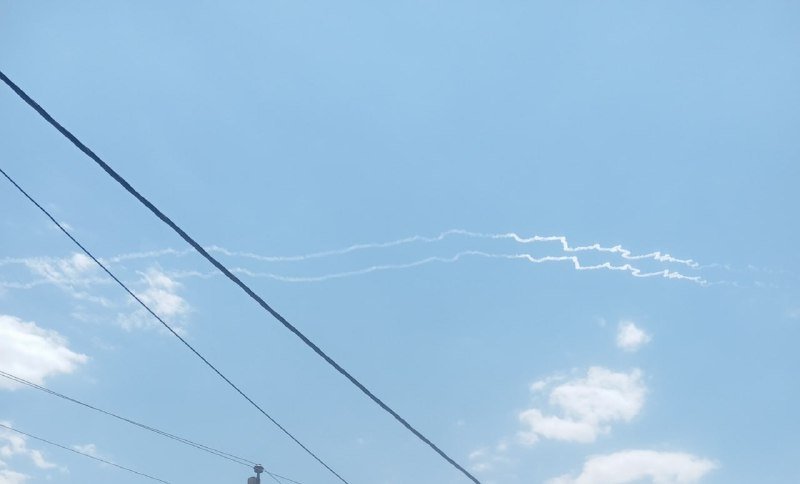
At 19:21 UTC on 13 July 2026, Iranian outlets reported that several "violating" vessels had been targeted again in the Strait of Hormuz. The strike notice, carried via Telegram by BRICS News, landed roughly an hour after the UN's International Maritime Organization publicly opposed any unilateral fee on passage through the world's most consequential oil choke point, a direct response to President Donald Trump's claim that the United States would begin charging ships for the privilege of transit. Tehran's forces and the Trump administration were, by the early evening, exchanging attacks around a 21-mile-wide corridor through which roughly a fifth of the world's petroleum passes each day.
The pitch is audacious on its face. Trump told Fox News, in remarks highlighted by Iranian state outlet Fars, that the United States now controls the Strait of Hormuz and intends to be reimbursed for the service. A prediction market quoted by Polymarket put a concrete figure on the scheme: a 20 percent fee on cargo passing through the strait, amounting to roughly $30 million per fully loaded oil supertanker. That arithmetic scales to a multi-billion-dollar extraction on global energy flows, imposed by a country that does not, under the UN Convention on the Law of the Sea, possess the authority to levy transit fees on a strait used for international navigation between two coastal states and the wider ocean.
The shipping industry's quiet revolt
The blowback arrived within hours, and it came from the institutions that actually move the oil. The International Maritime Organization, the London-based UN agency that writes the rules for global shipping, publicly opposed fees on any strait after Trump's announcement, according to a Reuters dispatch at 20:45 UTC on 13 July. That is the language of a regulator signalling that member states will not recognise the levy as lawful. Major underwriters, classification societies, and flag-state registries read the same map. A "transit fee" imposed by a third country is, in maritime practice, indistinguishable from a blockade toll. Insurers price it as a war risk. Charterers route around it. The market is already voting, and the vote is no.
The economics are equally unforgiving. A $30 million surcharge on a Very Large Crude Carrier is not a tax; it is a reason to load Persian Gulf crude at higher prices, divert cargoes around the Cape of Good Hope, or accelerate the build-out of overland pipelines that bypass the strait entirely. Saudi Arabia's East-West pipeline, the UAE's Habshan-Fujairah line, and Iraqi infrastructure to Ceyhan already exist at partial capacity. A US-imposed fee would do more for the business case of those pipelines than a decade of feasibility studies.
The framing the West is reaching for
Coverage in Western wires has tended to frame the proposal as either a Trumpian negotiating tactic aimed at Iran, or as a quasi-protection racket dressed in sovereignty language. The Iranian side, by contrast, treats the claim as a confession. Tehran's foreign ministry and state-aligned outlets have read the announcement as confirmation that the United States intends to substitute unilateral coercion for the multilateral maritime order it built. Both readings point at the same underlying fact: there is no legal scaffolding for what Trump described. The UN Convention on the Law of the Sea treats transit passage through straits used for international navigation as a right, not a service.
The deeper story is about the seam between dollar politics and physical chokepoints. The United States has, for decades, underwritten freedom of navigation through Hormuz as a public good, a benefit that accrued to allies, importers, and adversaries alike. Charging for it openly turns a public good into a toll road, and toll roads invite alternative routes, alternative currencies, and alternative security arrangements. Saudi Arabia and the UAE are already settling more oil in yuan and dirham-pegged contracts. China is the largest single buyer of Iranian crude under sanctions, a fact that gives Tehran a buyer whose tankers will not, and cannot, route through a US-controlled payment rail.
The Iran file, on its own terms
What Tehran actually did on 13 July matters more than the rhetoric in Washington. Iranian forces have, for months, seized or struck commercial vessels they accuse of sanctions violations, with mixed international support and rising Gulf Arab alarm. A policy of selective interception is, at least, legible: it operates under a domestic legal frame and accepts the reputational cost of being named the enforcer. A US-administered toll on neutral shipping in international waters is something else. It would establish a precedent under which any coastal state with the navy to enforce it could charge any other country's commerce for the privilege of passing through its neighbourhood. India could charge the Malacca Strait. Turkey could charge the Bosphorus. The principle is contagious, and contagious principles are how the postwar maritime order ends.
What to watch by Thursday
Trump has signalled a "speech to the nation" on Thursday, according to a 23:10 UTC France 24 dispatch, hours after announcing the reimposition of broader measures against Iran. The address will land into a market that has already priced partial blockade risk and an IMO that has already drawn a line in international convention. The next 72 hours will test whether the proposal is a bargaining chip to be traded away or a posture to be enforced. The honest reading is that it is the former dressed up as the latter. The structural reading is harsher: a hegemon that begins to monetise the public goods it once supplied is a hegemon that has begun to retrench.
The sources do not yet specify how Iran will respond to a fee it considers an act of war, or whether Gulf Arab states will publicly back, oppose, or quietly circumvent the US demand. What is already clear is that the legal, commercial, and security architecture around Hormuz was not built to support a toll booth, and the actors who depend on the strait are not in a mood to fund one.
This publication framed the proposal as a structural break with postwar maritime governance rather than as a transactional Trumpian tactic. The dominant wire line treats it as the latter; the maritime industry's reaction, and the IMO statement, suggest the former.
Wire provenance
This editorial synthesis draws on the following public wire/social posts:
- https://t.me/bricsnews
- http://reut.rs/3RzlkAf
- https://x.com/reuters/status/3RzlkAf