Trump's Strait of Hormuz toll: a blockade by another name
Washington has declared open-ended interdiction of shipping through one of the world's busiest energy corridors, raising the question of whether a 20% transit charge amounts to anything other than a blockade by another name.
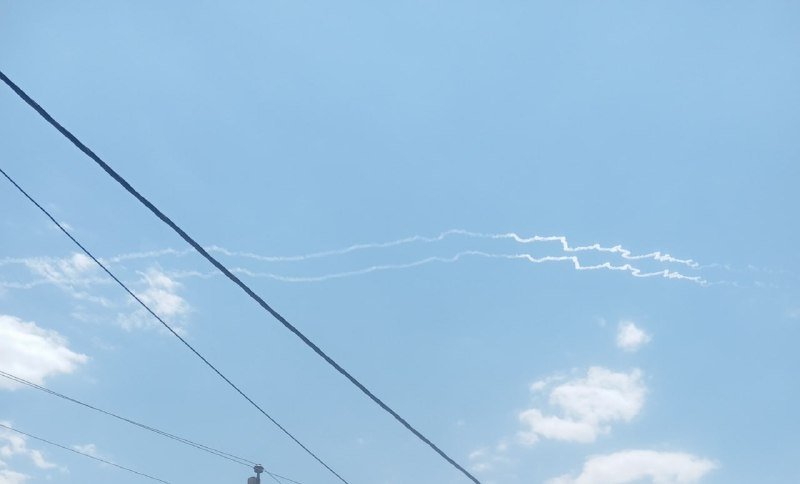
At 17:44 UTC on 13 July 2026, the Iranian military channel @IRIran_Military reported that Donald Trump was attempting to open the Strait of Hormuz. Forty minutes later, @BRICSNews flagged a US Navy declaration that a blockade in the strait applies to every ship regardless of the flag it flies. By 19:16 UTC, @GeoPWatch was carrying reports of IRGC missiles targeting vessels in the same stretch of water. A corridor that moves a sizable share of the world's seaborne oil is now the centre of a declared interdiction, a fee, and a counter-fire, all inside the space of ninety minutes.
What is unfolding is not a negotiation. It is the slow conversion of a transit waterway into a toll booth with a navy behind it, paired with warnings from Tehran that any vessel attempting to force passage will meet force in kind. The question for the next seventy-two hours is not whether the strait stays open, but who is allowed through it, at what price, and under whose flag.
The 20% charge and the language of guarding
Trump has framed the new posture as a paid guarding operation, with a 20% charge applied to all cargo moving through the Strait of Hormuz and the United States collecting the proceeds. The pitch is transactional: the US Navy keeps the lane open, importers pay for the service. The mechanism is closer to a transit tax than a toll, because the fee is set unilaterally by the supposed guarantor of safe passage, with no consent from the states on either shore and no international legal authority cited.
The frame is also openly extractive. "We're going to get paid for guarding the Strait," Trump has told reporters, presenting US maritime supremacy in the Gulf as a service rendered to the world at a price. The political logic is familiar: a foreign-policy action that delivers a domestic revenue line, in a region where the United States has not previously extracted a direct fee for the privilege of keeping oil flowing.
The Navy's parallel statement, reported by @BRICSNews at 18:20 UTC, makes the scope plain: the blockade applies to all ships regardless of the flag they fly. A flag-blind interdiction is, in legal terms, a blockade of the corridor rather than a sanction against named states. That is a heavier instrument, and a more provocative one.
The Iranian counter-frame
From Tehran's side, the response has been framed as a defensive posture inside Iran's own coastline. Iranian military messaging has treated Trump's "opening" of the strait as the actual closure of a corridor Iran regards as its maritime front door. The IRGC missile reports carried by @GeoPWatch at 19:16 UTC, if confirmed, are the operational expression of that frame: any ship approaching the lane risks meeting a missile, regardless of what it has paid Washington in advance.
The structural argument Iran has used for years applies cleanly here. The Strait of Hormuz is a chokepoint rather than an open ocean. Traffic funnels between Oman's Musandam exclave and Iran's southern coast, which means Iranian forces can impose cost on shipping without matching the US Navy fleet for fleet. As long as that geography holds, the United States can announce a toll and a blockade; it cannot unilaterally guarantee passage against an onshore adversary willing to fire.
That is the asymmetry the new policy collides with. The 20% charge assumes that the US Navy's offshore presence translates into on-the-water control. Iran's posture assumes that on-the-water control requires Iran's permission.
From corridor to toll road
The policy is best read not as a blockade or a sanction but as a toll road, dressed up in naval uniforms. A blockade, in international law, is an instrument of war between named belligerents and is governed by long-standing rules on neutrality, notice, and effect. A transit fee levied by a third party on cargo moving through international waters is closer to extraterritorial taxation, of the kind the US has periodically attempted against Chinese shipping, Russian oil, and European steel.
Either reading lands the United States in awkward legal terrain. If the action is a blockade, it must be applied to a belligerent, not to the commerce of all flags. If it is a fee, it requires either Iranian consent or a willingness to enforce collection against Iranian opposition. Neither outcome is stable.
There is also the problem of selective enforcement. A 20% charge that applies to all cargo will be honoured by some shipowners, evaded by others, and contested by flag states whose vessels are stopped in international waters for the purpose of collecting a levy imposed by no treaty. The few major oil importers in Asia that depend on Gulf crude will need to either pay, reroute, or pause purchases, and the markets will begin to guess which they choose well before any official notice.
What the next seventy-two hours decide
Three dates will tell the story. First, whether the IRGC missile reports are corroborated by independent maritime tracking, or remain a single-channel claim. Second, whether major Asian importers publicly accept the 20% fee, contest it through diplomatic channels, or quietly reroute cargo around Africa. Third, whether the US Navy issues an operational order that names the blockade as such and assigns a geographic box, or stays in the looser language of "applies to all ships."
The senior Republicans who warned, in the hours after Trump's announcement, that the strait will remain closed for as long as the war continues and fuel prices will rise with the approach of an election are describing a specific political economy. The administration is selling an action that may not be deliverable, in a window in which the cost of failure lands directly on gasoline prices. Whether the fee is collected, the missiles are fired, or the blockade is named in court, the political bill arrives in Washington before it does anywhere else.
For Iran's negotiating position, the episode is closer to a win than a loss. A corridor that is tolled and contested is a corridor that other powers will route around, and a Gulf order that requires US taxpayers, US shipowners, and US voters to keep paying for access is a Gulf order with a shorter half-life than it looks. The first firm reading of who blinked first will come in the next seventy-two hours.
Desk note: this desk treats the Strait of Hormuz development as a US-Iran flash point rather than a story about Israel or the wider war. Where Iranian military channels are the only carries of operational claims, those claims are flagged as Iranian-aligned and set against the open US Navy statement carried by BRICS News; nothing in this piece relies on a single-channel assertion.
Wire provenance
This editorial synthesis draws on the following public wire/social posts:
- https://t.me/IRIran_Military
- https://t.me/BRICSNews
- https://t.me/GeoPWatch