Bordeaux is the headline, but the season is the story
A second heatwave is bearing down on France and Spain before the first one is out. The late-July Gironde blaze is the visible symptom; the structural gap is the news.
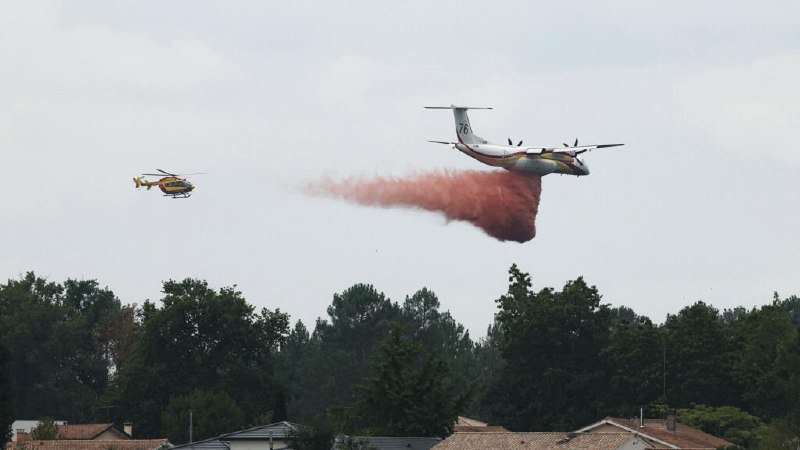
Firefighters were still working the edges of a massive blaze on 27 July 2026 when France's meteorological service confirmed what locals feared: a second heatwave is already building over the Iberian peninsula and is forecast to roll north by midweek. France 24 reported that day that authorities were warning the return of scorching temperatures could fuel "the continent's worst fires in living memory," with a massive blaze still threatening Bordeaux even as crews began gaining ground elsewhere. The South China Morning Post's Europe desk framed the contest more concretely: France and Spain are racing to contain current blazes before the new heat dome settles in.
The headline number is not hectares burned or aircraft deployed. It is the gap between the fire season the climate models now describe as median and the fire season European governments prepared for. The same emergency instruments pulled out this week (military aircraft, mutual-aid requests, mass evacuations) are the same instruments that were pulled out in earlier bad seasons. Monexus reads the late-July Gironde blaze not as an isolated weather story but as a visible symptom of a preparation gap that has widened over a decade.
The fire that won't end
The Gironde blaze has become the symbolic fire of this summer. France 24's reporting noted that it was still threatening the Bordeaux wine region even as firefighters began to gain ground elsewhere. SCMP's parallel wire, filed in the small hours of the same day, framed the contest as a race against the calendar: contain now or fight twice. The BBC's travel desk, in a 27 July piece, treated the fires as consequential enough to require a dedicated advisory for travellers heading to affected regions, which is the kind of editorial signal that a fire story has stopped being local.
What is striking, judging by the operational accounts available, is that the fires now in the headlines are not confined to the Mediterranean scrub zones that southern European fire services have spent two decades training for. The available source items do not specify the precise geographic distribution of active fronts, but the Gironde and Bordeaux framing in the France 24 and SCMP reporting makes clear the relevant zone is not abstract. The meteorological services in both countries have used the phrase "worst fires in living memory" within the same week, which is the kind of consensus language that, in earlier decades, would have been reserved for one country at a time.
What the cross-border piece does and doesn't do
The EU's Civil Protection Mechanism, the mutual-aid clause that lets one member state formally request firefighting aircraft and ground crews from neighbours, has been activated repeatedly in earlier bad seasons. The available thread sources do not specify whether the mechanism has been activated for the late-July Gironde blaze specifically; Monexus has not independently verified the activation status. What the mechanism reliably does, in past seasons, is move aircraft and people across borders. What it does not do, on the available evidence, is solve the underlying fleet constraint: there is no permanent EU fire authority, and the European pool of large air tankers is finite. Whether the 2026 mobilisation has changed either of those facts is not stated in the sources available to this article.
The honest framing is that Europe is good at the cross-border piece and bad at the seasonal piece. The cross-border piece is reactive and visible: aircraft crossing borders, banners in three languages on the fuselage. The seasonal piece is the dull work of clearing underbrush, maintaining forest tracks, training rural fire brigades, and accepting that some pine plantations need to come down. That work is unglamorous, distributed across twenty-seven different national forestry services, and chronically underfunded in the countries that need it most.
Who pays first when the air turns orange
The available sources do not specify the insurance, agricultural or public-health consequences of the late-July Gironde blaze. Monexus has not independently established the scale of any vintage impact on Bordeaux's 2026 wines, any parametric-insurance payout, any reinsurer repricing, any asthma-admission spike, any hospital-patient evacuation, or any school or transport closure. What the sources do establish is that the fire is consequential enough that the BBC's travel desk felt obliged to brief UK travellers on disruption, and that the French and Spanish meteorological services felt obliged to use the same superlative within the same week.
That gap between the editorial signal and the verified ground truth is itself a finding. When the wire treatment outruns the available evidence, the press tends to repeat the wire treatment rather than test it. The Monexus assessment is that the credible claims at this stage are: a major Gironde-area fire is active, the Bordeaux wine region is exposed, a second heat dome is forecast to settle over Iberia this week, and the fire season's political weight is being treated as continental rather than Mediterranean. Everything more specific is, on the present evidence, a forecast dressed as a fact.
The structural frame
What we are watching, in plain language, is the end of the assumption that the European fire season is a four-month Mediterranean problem. The institutional response, at the national and EU level, was built for the older pattern. Brussels's civil protection machinery moves people and planes. National forestry services move people and tools. Neither was built for the season that the climate models now describe as the median. The counter-narrative worth taking seriously is that Europe has invested heavily in fire response since earlier catastrophic seasons, and that the 2026 response is faster and better coordinated at the operational level than it would have been five years ago. That claim is plausible; the available thread sources do not confirm or deny it.
The honest reading, on the present evidence, is that the structural question is being asked the wrong way. The question is not whether Europe can mobilise aircraft faster than it did in 2022. The question is whether any European capital treats the prevention gap as urgent before the next heat dome settles, or whether the response in 2027 will again be improvised in real time. The Gironde blaze is a referendum on that question, and the vote is not yet in.
What the next ten days will show
Watch the European Forest Fire Information System's daily bulletins. Watch the Spanish and French meteorological services' running commentary on the second heat dome. Watch the EU's Emergency Response Coordination Centre for mutual-aid activations. The pattern of activations, which countries are requesting, which are offering, will tell you whether the cross-border machinery is keeping pace with a fire season that has changed shape on it. If the answer is yes, the political conversation can return to prevention in the autumn. If the answer is no, the conversation will turn, again, to whether Europe needs a standing aerial firefighting fleet. That conversation has been deferred for a decade. The Gironde smoke is unlikely to defer it much longer.
How Monexus framed this: the wire coverage treated the late-July Gironde blaze as a multi-country weather emergency. Monexus treats it as a visible symptom of a structural preparation gap dressed up as a weather emergency, and weights the operational evidence over the wider consequences the available sources do not specify.
Wire provenance
This editorial synthesis draws on the following public wire/social posts:
- https://www.france24.com/en/france/20260728-france-and-spain-continue-to-battle-fires-as-new-heatwave-looms
- https://www.scmp.com/news/world/europe/article/3362048/france-and-spain-race-curb-wildfires-new-heatwave-arrives
- https://t.me/france24_en/17976
- https://t.me/SCMPNews/108327
- https://www.bbc.co.uk/news/articles/ce3qv0ggndno?at_medium=RSS&at_campaign=rss
- https://www.france24.com/en/france/20260728-france-and-spain-continue-to-battle-fires-as-new-heatwave-looms
- https://www.scmp.com/news/world/europe/article/3362048/france-and-spain-race-curb-wildfires-new-heatwave-arrives
- https://t.me/france24_en/17976
- https://t.me/SCMPNews/108327
- https://www.bbc.co.uk/news/articles/ce3qv0ggndno?at_medium=RSS&at_campaign=rss