ICE pulls back on traffic stops after second fatal shooting in a week
A fatal ICE shooting in Maine has triggered a directive from the Trump administration to suspend routine traffic stops as a detention tool, prompting questions about how the agency reconciles mass enforcement with risk of escalation.
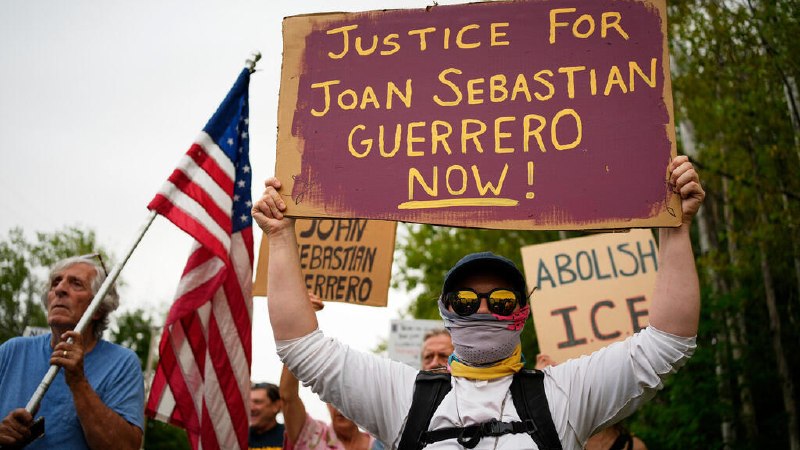
At 19:54 UTC on 14 July 2026, U.S. Immigration and Customs Enforcement confirmed it was suspending most non-urgent vehicle stops for immigration enforcement, hours after an ICE agent fatally shot a Colombian national in Maine. The pause, disclosed to NPR by the office of Maine Senator Angus King, follows a second fatal shooting involving the agency in under a week.
The directive, reported across U.S. and international outlets on Tuesday, amounts to a tactical retreat by the Trump administration from one of the most visible instruments of its interior-enforcement drive: pulling drivers over for traffic infractions, then arresting the undocumented. It is also a tacit admission that the practice is producing outcomes the political leadership no longer wants to own.
A pause ordered from the top
According to the France 24 report at 19:57 UTC, ICE moved at the direction of the Trump administration to halt the use of traffic stops as a detention tool, a day after the Maine killing. The order is narrow in scope: non-urgent vehicle stops are suspended for immigration and customs enforcement purposes, while other ICE functions continue. That distinction matters for what comes next, because it tells you the White House sees the tactical problem (officers shooting people) as separable from the strategic one (deporting millions of people).
Senator King's office confirmed the operational change to NPR shortly before the public reporting cycle, making the independent Senate office the proximate point of disclosure rather than the Department of Homeland Security press operation. That channel of confirmation is itself worth noting: the story broke through a Maine senator's office, not through a DHS statement. The agency has not put out a clean explanation of the boundary between "urgent" and "non-urgent" stops, which is where the operational risk now lives.
Two shootings, six days, no public ledger
The current pause is the second tactical adjustment the agency has made in roughly a week. The first came after a separate fatal shooting involving ICE personnel, details of which the thread sources do not name in full. What is on the public record, per NPR and France 24, is the timing: two ICE-linked fatalities in under seven days, the second a Colombian national killed in Maine by an ICE agent.
The pattern, not the individual cases, is what generates the pressure that produces a policy reversal. When law enforcement agencies kill members of immigrant communities at this cadence, the political cost of every additional stop begins to overtake the enforcement benefit. Maine's law enforcement community knows this from its own history with federal-local task forces; the King office's willingness to break the news suggests the political calculation in Washington has shifted similarly.
The street-level instrument the administration built
Traffic stops became central to the administration's interior-enforcement strategy because they convert ordinary driving into a probable-cause pipeline. A cracked taillight, an improper lane change, an expired registration: each gives an officer legal cover to approach, identify, and arrest. The volume of stops multiplied accordingly. So did the probability of an armed encounter.
The administration's instinct when its tools get people hurt is not to retire them, it is to certify them more carefully and keep them in the field. The current pause is consistent with that pattern. DHS has issued updated use-of-force and de-escalation guidance before; it issued similar reminders after earlier ICE-involved shootings. What is unusual here is the instrument being temporarily laid down across an entire category of stops rather than just re-emphasised. That difference reflects how visible the Maine shooting was, and how quickly it travelled through Spanish-language and Colombian diaspora networks.
What the pause does not resolve
The suspension leaves unresolved questions that the sources do not yet answer. Where does the boundary sit between an "urgent" traffic stop, which remains authorised, and a "non-urgent" one, which is not? Who draws it on a dark rural road at 2 a.m.: the officer in the cruiser, or a supervisor reachable by radio? How long does the pause hold: days, weeks, until the next incident? Do field offices retain discretion to ramp back up if deportation quotas are deemed at risk?
Neither NPR nor France 24, the two sources reporting on Tuesday, provides the operational text. That is the next thing to watch for. Federal law enforcement agencies have a documented habit of repackaging tactical retreats as policy refinements and reabsorbing the contested practice once the news cycle moves. The structure of the present directive is consistent with that pattern, and the sources do not contradict it.
A separate counterpoint is worth registering. Some ICE defenders will argue that any pause at all hands a public-relations win to critics who oppose enforcement on principle; they will warn that quotas slip, detainer workflows clog, and offenders the agency had been poised to pick up now walk free. That argument is plausible on its face and substantively undermined by the body count of the past week. A policy whose execution kills people the political leadership did not intend to kill is not a stable equilibrium; it is a routine that has run ahead of its authorisation.
The Colombian national in Maine and the diaspora politics that followed
The victim in Monday's shooting was a Colombian national, according to the France 24 report citing U.S. media. That detail matters. The Colombian diaspora in the United States is the fifth-largest immigrant community in the country; diplomatic attention in cases involving Colombian nationals is therefore likely to follow. The State Department has a well-defined interest in how its enforcement agencies treat citizens of countries whose cooperation is required for removals to function.
Diplomatic friction is not the only pressure channel. Colombian-American voters in Florida, New York, New Jersey, and Georgia are a meaningful slice of the Hispanic electorate that the administration has spent two election cycles courting. A fatal shooting in Maine, of a Colombian driver, by an ICE agent working under federal priorities, is the kind of story that bypasses local-news framing entirely and lands on diaspora radio and social media within hours.
This is the political geometry behind the directive, even if the public reporting focuses on operational safety. The pause is a way to draw down temperature while keeping the underlying enforcement architecture intact.
What this looks like next week
Expect DHS to publish, in the coming days, a clarifying memo defining "urgent" traffic stops to leave officers enough discretion to defend the program against charges of paralysis. Expect the inspector general or an internal-affairs office to acknowledge an investigation into the Maine shooting in the same window, because the agency is on a one-week clock before the next news cycle hardens the public narrative. Expect Senators in both parties, starting with King and the New England delegation but spreading as the facts go public, to demand answers under oath.
Beyond the next week, the larger question is whether the administration's deportation throughput can absorb the loss of one of its highest-volume intake tools. Quotas set at the start of the term assumed the kind of stop traffic that produced Monday's fatality. Whatever new intake replaces it, whether worksite raids, check-ins at ICE offices, or local-jail transfers under 287(g), will necessarily be slower, more visible, and easier for local law enforcement to refuse. The pause is temporary. The shift in means may not be.
The desk framed this as an operational reversal driven by political arithmetic rather than a substantive change in enforcement doctrine; the wire outlets covered the directive itself and did not, in the sources reviewed, address the deeper structural question of intake capacity.
Wire provenance
This editorial synthesis draws on the following public wire/social posts:
- https://t.me/s/france24_en