France meet Spain in Arlington with the bracket's last secrets already gone
France and Spain meet in Arlington on 14 July in a World Cup semifinal that has been two years in the making, since FIFA redrew the knockout bracket to keep the heavyweights apart until the last four.
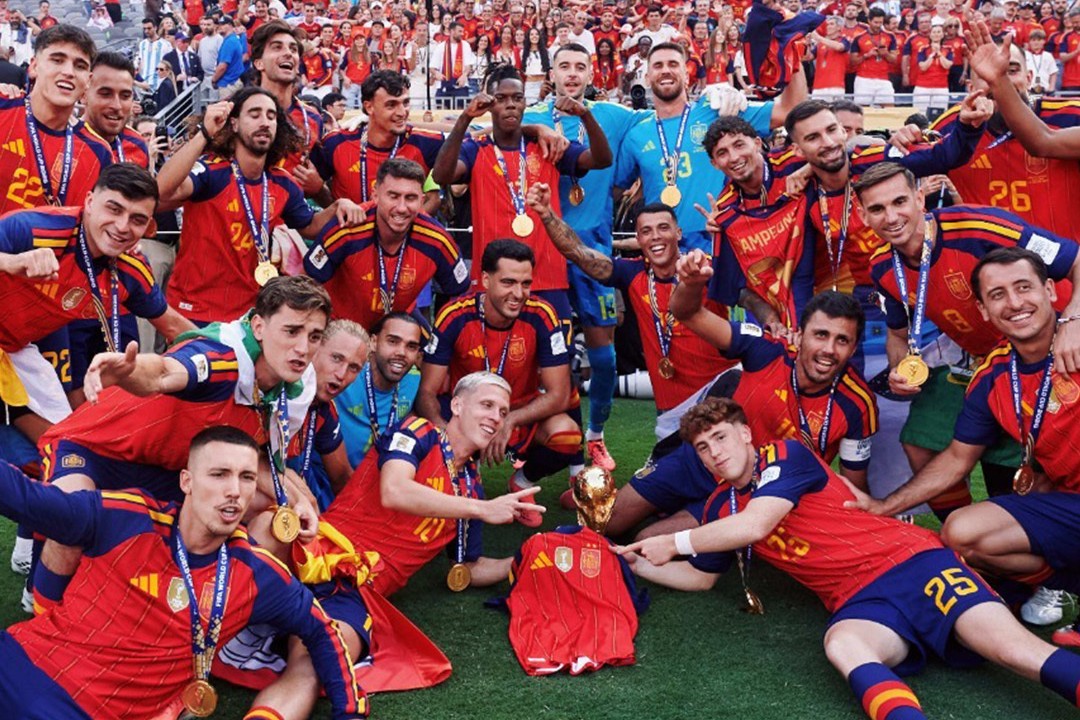
The bracket was built for this game, and on 14 July 2026 it finally arrives. France and Spain walk out at AT&T Stadium in Arlington, Texas, in the opening semifinal of a World Cup that has been quietly engineered, from the day the draw was made, to keep the two favourites on opposite sides of the knockout tree. With Argentina already gone and Portugal back in Lisbon, this is now the match the schedule has been pointing toward since the expansion to 48 teams reordered the whole logic of the competition.
For once the coaches were almost generous. Ahead of kickoff, both benches heaped praise on the other side, in the particular coded language European football uses when it wants to say "we are not stupid." France and Spain are not simply the two best attacks left in the tournament; they are, by distance, the two football cultures that have spent the past decade setting the tactical tempo for everyone else. Whoever wins in Arlington does not just reach the final in New Jersey on 19 July. They will arrive as the team that broke a tie that has hung over international football since 2012.
The bracket, doing what brackets do
FIFA's redesigned seeding placed the world's top-ranked sides in opposite corners of the knockout draw, so that the heaviest matches would not settle the tournament before its last weekend. The structure worked. Brazil exited against a stubborn Uruguay in the round of 16; England fell to the Netherlands in the quarters after a penalty shootout that will run on loop for a decade. By the time the final four lined up, the bracket had delivered exactly the collision the format was designed to postpone.
That is not an accident, and it is not purely a sporting decision either. FIFA banked on the marketing logic of putting France-Spain and the second semifinal on consecutive nights, with the marketing rights and ticketing premium scaled accordingly. The sporting case and the commercial case pointed at the same four teams.
A Spanish possession problem France has already solved
Spain arrive as the ball's rightful owners. Their midfield three, operating in the half-spaces between a false nine and a double pivot, completed more passes than any other team in the quarterfinals and pressed in coordinated waves rather than in the frantic, full-pitch press France prefers. Their coach, in his pre-match remarks, was careful. He praised France's midfield for "reading transitions earlier than most teams in world football," which is the polite way of saying they have already found the line where Spain's possession can be put into dispute.
France's path through the knockouts has been built on exactly that reading. Against Argentina in the round of 16 they absorbed pressure for 25 minutes, then struck in transition the moment the Argentine back line pushed too high. Against the Netherlands in the quarterfinals they conceded the possession stat by a wide margin and won the xG column by a wider one. The match-up against Spain is the match-up France would have asked for from this draw: a side that wants the ball, against a side that is at its most dangerous when the other side has it.
The crowd that has not decided yet
In Dallas on the eve of the match, supporters from both nations walked up and down the strip near the stadium in roughly equal numbers, with an American crowd in between that had quietly decided not to choose. France 24, reporting from outside the venue on 14 July, captured the unusual confidence on the French side: fans expecting not merely to compete but to win, in a tournament where their team has dropped the occasional nervous performance but rarely the result. Spain's travelling support was smaller and tighter, and notably more nervous about the width of France's front line, which they expected to be the difference on the night.
The wider atmosphere, on the evidence of the pre-match reporting, suggested a city treating the fixture more as occasion than as crisis. Tickets on the resale market had settled close to face value for the first time in the tournament, a small sign that the speculative mania around the semis had burned itself out by Monday afternoon.
What 19 July already looks like
The winner of this semifinal meets the winner of the second semifinal, scheduled for Wednesday at the same venue, for the trophy on 19 July 2026 at MetLife Stadium in East Rutherford, New Jersey. The final has been sold, for months, as a coronation of the expansion-era World Cup: 48 teams, 104 matches, and a closing ceremony designed to look like the closing ceremony of a generation.
The uncertainty that remains inside that frame is real, and it does not resolve before kickoff. Spain have not beaten a top-tier European side in a knockout game since the last European Championship. France have not been convincingly dominant for 90 minutes since the group stage. Neither manager has shown their hand on the basic question of whether this is a match to be controlled or a match to be survived. That is, in the end, what makes France-Spain in Arlington a semifinal worth watching at full price. Everything else around it has already been decided for them.
This desk notes a divergence from the wire copy: NPR's framing of the seeding change as a "new" system is accurate but slightly underplayed. Bracket design has been the quietest commercial lever FIFA has pulled all tournament, and the piece above treats the seeding as a deliberate marketing structure rather than a tidy sporting innovation.
Wire provenance
This editorial synthesis draws on the following public wire/social posts:
- https://x.com/cgtnofficial/status/191486903762186240
- https://en.wikipedia.org/wiki/2026_FIFA_World_Cup_knockout_stage