Drone strike detonates ammunition depot in occupied Donetsk
Three Telegram channels reported a drone-triggered detonation at a Russian ammunition warehouse in occupied Donetsk late on 13 July 2026, underscoring how Ukraine's deep-strike campaign is reshaping the war's logistics tail.
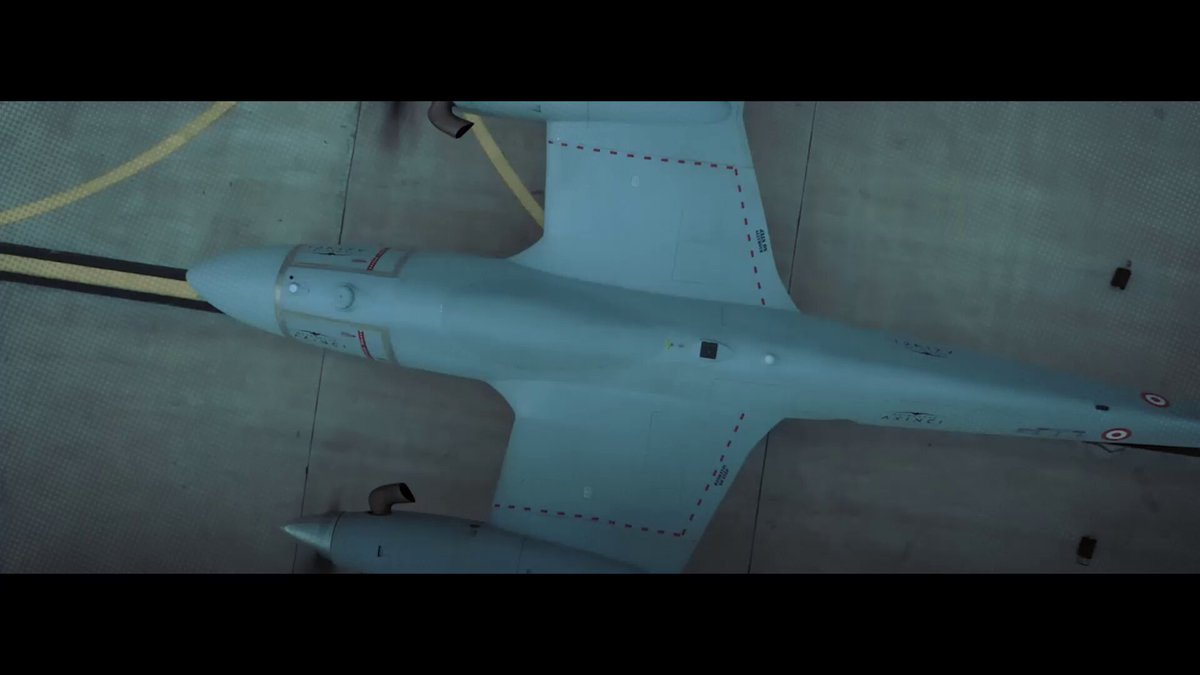
At 19:21 UTC on 13 July 2026, the Telegram channel NEXTA Live posted a short alert: an ammunition warehouse in Donetsk had detonated after a drone attack. The blast was independently corroborated within the hour by the Ukrainian journalists Andriy Tsaplienko and Mykhailo Podolyak-adjacent reporter Noel Reports, whose own channel logged the strike at 19:28 UTC and 20:03 UTC respectively. None of the three channels claims responsibility on behalf of a specific Ukrainian unit, and the Russian side has not yet produced an on-record denial or casualty figure. What is on the record is the geometry: a logistics node in occupied territory, hit by an aerial system, producing a secondary detonation visible from the city.
The incident sits inside an established pattern. Ukraine's long-range strike programme, accelerated through 2024 and 2025 with domestically produced drones and adapted cruise missiles, has increasingly gone after the unglamorous infrastructure of war: fuel depots, rail marshalling yards, ammunition storage, command posts. A warehouse that goes up in a fireball does not generate a headline the way a warship does, but it does something the operational commanders care about more: it removes rounds from the supply chain at a moment when Russian artillery consumption on the Pokrovsk and Kurakhove axes remains heavy.
What three independent feeds saw
The Telegram triangulation is unusually clean. NEXTA Live, a Belarusian opposition channel with a substantial following on the platform, reported the warehouse detonation first, at 19:21 UTC, with the framing "BC warehouse", a colloquial abbreviation for a боекомплект, or ammunition storage site. Tsaplienko, a Ukrainian frontline correspondent with a long track record on Telegram, repeated the report seven minutes later, describing the event simply as "an ammunition warehouse detonates in Donetsk." Noel Reports added a third timestamp at 20:03 UTC, characterising it as "an ammunition stockpile has been hit in occupied Donetsk" and using the qualifier "occupied," which matters: it places the site on the Russian-controlled side of the line of contact, not in Ukrainian-held territory.
The three accounts agree on the essentials. They diverge on detail, as Telegram reporting routinely does. No feed names the specific district of Donetsk where the warehouse sits, the calibre or type of munitions stored, the airframe used to deliver the strike, or the resulting crater size. None of the three messages cite the General Staff of the Armed Forces of Ukraine, the Security Service of Ukraine, or the Main Intelligence Directorate. The attribution trail therefore stops at the platforms themselves, and the prudent reading is that this was a drone strike on a Russian logistics target in a city Russia has held since 2014.
The case for scepticism
Three Telegram posts from channels with overlapping but not identical audiences do not constitute a confirmed strike. Telegram, by design, is a low-friction publishing medium: anyone can post, footage is rarely geolocated in real time, and the platform's recommendation algorithm surfaces breaking claims without a verification layer. The Donetsk strike narrative is plausible because the pattern of secondary detonations from drone hits on ammunition has been well documented across 2024 and 2025, and because the city's industrial hinterland has long hosted Russian supply depots. Plausibility, however, is not confirmation.
The main counter-reading is straightforward: in a dense urban environment, a fire at an industrial site can read, on a phone camera and a short Telegram caption, as a "warehouse detonation" whether or not it involved ordnance at all. Russian authorities have, on past occasions, allowed ambiguous incidents to circulate without comment for hours before issuing a clarification. That clarification has not appeared in the sources available as of the time of writing, which is itself a data point: Russian information control in the occupied territories tends to suppress bad news when it can, and the absence of an early Russian denial is consistent with the strike having happened, but it is not proof.
Why a warehouse matters more than a headline
Deep strikes against Russian logistics are not new, but their composition has shifted. In the first half of 2024, the highest-profile targets were oil refineries and the Kerch Bridge. By late 2025, the targeting menu had visibly broadened to include ammunition storage, repair facilities, and the railway nodes that connect Russian rail gauge to the temporary rail conversions inside occupied Ukraine. Each individual strike removes a finite quantity of supply from a finite system. The cumulative effect, measured over weeks and months, is what erodes the rate at which Russian artillery can fire, and how far forward Russian units can move before they have to halt and resupply.
A detonating ammunition warehouse is the cleanest possible version of this kind of attrition. There is no requirement for a pilot to risk a manned approach; a small drone carrying an incendiary or shaped-charge payload can ignite propellant, which ignites projectiles, which ignite the next row, in a chain that runs until the inventory is exhausted or the fire finds a wall it cannot cross. From the Ukrainian operational perspective, the math is favourable. From the Russian logistical perspective, replacing several hundred tonnes of assorted munitions is a procurement problem, not a tactical one, and procurement timelines do not bend to battlefield urgency.
What to watch next
Three indicators will tell us whether this particular strike lands in the historical record as a confirmed deep strike or as an unresolved incident. The first is satellite imagery from commercial providers such as Maxar and Planet Labs, which usually publishes before/after frames of detonation sites within 24 to 72 hours. The second is the daily deep-strike digest compiled by the Ukrainian Air Force and circulated through the General Staff's evening briefing; if the strike is acknowledged there, the attribution question closes. The third is the Russian response channel: Telegram posts from Russian milbloggers including Rybar, Two Majors, and the Readovka outlet, which often surface within hours when a strike produces a visible signature and is acknowledged internally on the Russian side.
The structural read is straightforward. Ukraine is running a war of cumulative subtraction against a logistics tail that is long, exposed, and increasingly within range of low-cost airframes. Each individual incident is small. The cumulative trajectory is not. If the July pattern holds, the second half of 2026 will see more of these warehouse-tier strikes, and the Russian side will face a choice between dispersal, hardening, or acceptance of a slower rate of advance at the front. None of those options is cheap. None of them arrives quickly.
Monexus framed this incident as a logistics-tier deep strike rather than a headline event, drawing on three independent Telegram feeds rather than on unattributed imagery alone, and noting the absence of an early Russian denial as consistent with, but not proof of, the reported strike.
Wire provenance
This editorial synthesis draws on the following public wire/social posts:
- https://t.me/nexta_live
- https://t.me/Tsaplienko
- https://t.me/noel_reports