Yemeni ballistic missiles hit Abha airport in southern Saudi Arabia
Multiple Yemeni ballistic missiles struck Abha International Airport in southern Saudi Arabia on 13 July 2026, with Houthi-aligned channels framing it as retaliation for Saudi airstrikes.
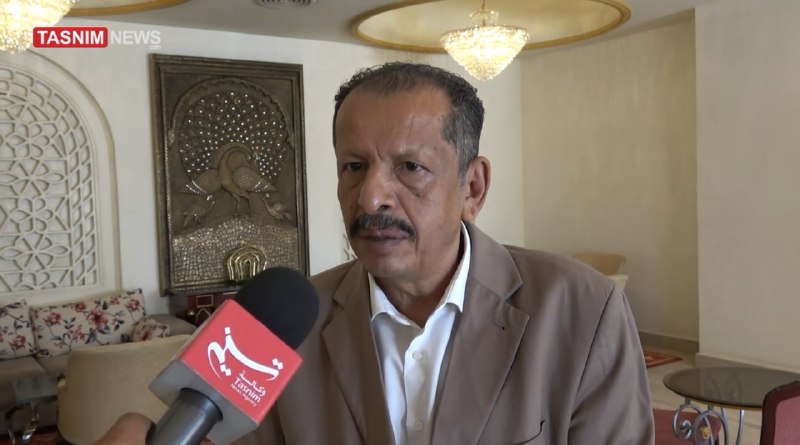
Multiple Yemeni ballistic missiles struck Saudi Arabia's Abha International Airport on the afternoon of 13 July 2026, according to Telegram channels aligned with the Houthi movement and reporting relayed through Iranian state media. The attack, reported at roughly 16:50–16:51 UTC, marked the latest in a multi-year pattern of cross-border strikes into the kingdom's southern provinces and targeted a civilian aviation hub used by both commercial passengers and the Royal Saudi Air Force (RSAF).
The exchange underlines how the Yemen war, formally frozen for more than three years in a Saudi-Houthi ceasefire mediated by Oman, keeps erupting through tit-for-tat strikes that the formal diplomatic track has failed to suppress. Each cycle raises a related question: whether the kingdom's southern air corridor can remain a working civilian artery while it doubles, in practice, as a forward operating theatre.
What was reported, and by whom
Three Telegram channels carried the initial reporting within roughly a minute of one another. The channel GeoPWatch wrote that "Yemeni Ballistic Missiles" were "targeting Saudi Arabia's 'Abha' International Airport, presumably as a response to RSAF targ[ets]", language that explicitly frames the strike as retaliation. The channel intelslava added a shorter line: "Abha Airport in Saudi Arabia has been struck." Tasnim News, an English-language outlet tied to Iran's Islamic Revolutionary Guard Corps, ran a third item: "Reports of the attack on Abha International Airport in Saudi Arabia," noting that "some news sources report an attack on the 'Abha' international airport in southern Saudi Arabia."
The sources concur on the target and the approximate timing, but they diverge on the rest. The Houthi-aligned channel foregrounds retaliation for RSAF operations; the Iranian outlet uses the more cautious verb "reports of" and adds no motive. None of the three Telegram items reports Saudi casualty figures, damage assessments, or whether the kingdom's air defences intercepted any of the projectiles. The sources do not specify how many missiles were fired, which type, or whether the airport suspended flights.
A familiar pattern, a different runway
Abha airport sits in the Asir highlands, a region that has absorbed a disproportionate share of Yemeni cross-border strikes since 2019. Saudi air-defence intercepts have become routine enough that the kingdom's civil aviation authority has, on past occasions, briefly suspended overflights and rerouted commercial traffic. The pattern matters because Abha is not a peripheral target: it is a logistics node for both civilian travel into the kingdom's southwest and RSAF sorties into northern Yemen.
That dual role is the through-line of the Saudi air war. Strikes on the airport carry an implicit military signalling function that strikes on Riyadh do not, because Abha is also where the Yemen campaign is flown from. The Houthi framing, that the airport is a legitimate military target because of that RSAF use, is structurally consistent with a doctrine the movement has applied since at least the Aramco facility attacks of September 2019, when it argued that Saudi oil infrastructure doubled as war-fighting infrastructure.
What remains unverified
The Telegram sources do not establish three things a reader would need before treating the strike as fully corroborated. There is no independent confirmation from Saudi civil aviation authorities, no Saudi defence ministry briefing, and no footage or imagery of impact damage in the thread. The Houthi-aligned channel's claim that the strike was a "response to RSAF targets" is asserted rather than demonstrated, no prior Saudi operation is named, dated, or linked. Western wire services had not, in the items available at publication, run their own confirmation.
This matters because, in past rounds, Houthi claims of strikes on Saudi territory have sometimes outrun what satellites and Saudi statements later corroborated, and sometimes lagged behind them. The cautious read is that an attack occurred and was at least partially effective; the assertive read, that airport operations were disrupted, that casualties resulted, that specific RSAF assets were destroyed, is not yet supported by the evidence available.
The structural read
Read across years rather than days, the strikes sit inside a wider pattern of asymmetric escalation along the Saudi-Yemeni border. The kingdom has, since the 2022 ceasefire, kept up a low-grade air campaign against Houthi positions while nominally honouring the truce; the movement has, in turn, kept missiles and drones in the pipeline, launching when it judges the political cost on Riyadh to be high. The exchange is calibrated rather than unlimited: neither side appears to want a full return to 2019–2021 intensity, but neither is willing to treat the border as quiet.
The Iranian outlet's role is also worth naming plainly. Tasnim's English channel carrying the item is not a neutral wire; it is part of a regional information ecosystem that broadcasts Iranian-aligned framing of the war. That does not mean the underlying event did not happen, the Houthi-aligned channel, the Iranian channel, and the open-source intelligence channel agree on the target and the timing, which is a basic triangulation, but it does mean the framing of motive and context is a political artefact, not a description.
Stakes and what to watch next
The immediate stakes are practical. If Abha airport sustained runway or terminal damage, commercial flights into Asir would be suspended and Saudi civil aviation would, as in past rounds, reroute through other southern airports. If RSAF assets were hit, the air tasking order over northern Yemen would, at least temporarily, be forced to reposition. Either outcome raises the political temperature in Riyadh at a moment when the kingdom has invested heavily in signalling regional normalisation, including with Iran, via the 2023 Beijing-brokered rapprochement.
The forward watch list is short: a Saudi civil aviation statement on flight status; a Saudi defence ministry read-out; footage from Abha or its surrounds; and any Houthi military spokesman statement naming the missile type and operational specifics. Until at least one of those arrives, the strike is reported, plausible, and partly corroborated, but not yet fully verified.
This article relied on three Telegram channels, GeoPWatch, intelslava, and Tasnim News, that carried the initial reporting on the strike. Where the sources diverged on motive or scale, the article flagged the gap rather than filling it. Western wire confirmation and a Saudi official statement were not available at the time of publication.
Wire provenance
This editorial synthesis draws on the following public wire/social posts:
- https://t.me/s/GeoPWatch
- https://t.me/s/intelslava
- https://t.me/s/Tasnimnews_en
- https://en.wikipedia.org/wiki/Abha_International_Airport
- https://en.wikipedia.org/wiki/Yemeni%E2%80%93Saudi_Arabian_border_conflict