Tehran's three-channel counter-narrative: grief, missiles, and the line Washington can't see past
On 13 July 2026, Iran's state-aligned feeds ran a coordinated three-act rebuttal of Washington: a diplomat's dismissal, footage of mourners at a martyred leader's grave, and launch preparations framed as retaliation.
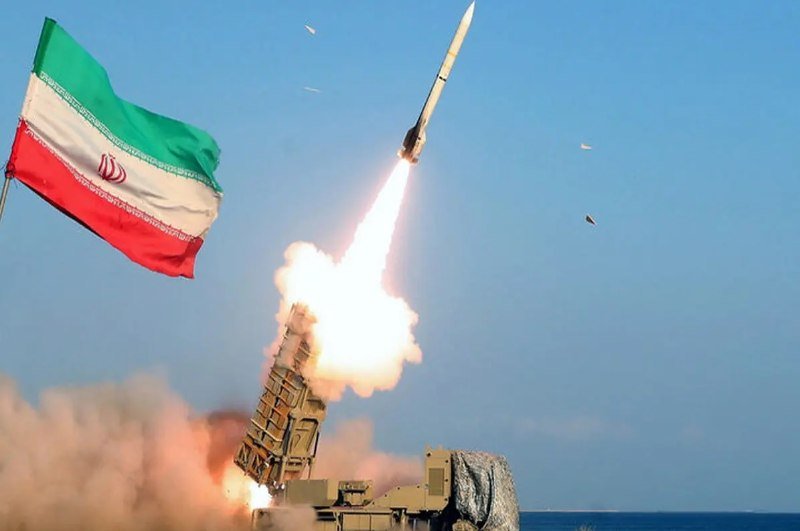
At 10:39 UTC on 13 July 2026, PressTV aired footage of Iranian missiles being prepared for launch, billed as a retaliatory response to U.S. strikes on Iranian soil. Two hours earlier, an account tied to the Iranian military had posted clips of long queues paying respects at the grave of a martyred leader, pushing back against a U.S. claim that Iranians despised him. And before that, at 08:29 UTC, Iranian foreign-policy official Beqaei had already framed the whole exercise for the cameras: Washington, he said, had never cared about the Iranian people, and the Iranian people were not fooled by American "mental games."
Read together, the three items form a textbook information operation: denial of the enemy's moral premise, photographic refutation of the enemy's empirical claim, and a kinetic warning delivered in the same news cycle. That Tehran's English-language feeds ran them within a two-hour window is not coincidence. It is rehearsal.
The diplomat's frame: deny the premise
Beqaei's line, carried by Tasnim's English channel at 08:29 UTC on 13 July, is the rhetorical move that holds the other two together. The argument is not that Iran's response is proportionate or lawful; it is that the United States has no standing to raise the question. "Since when did the Americans worry about the situation of the Iranian people?" the post reads. The framing concedes nothing about Iranian casualties or command decisions, and refuses the moral vocabulary Washington has been using to describe its own strikes.
That posture is the through-line of the day. Every subsequent Iranian claim, the queues at the grave and the missiles on the launcher, is built on the foundation that the United States is a bad-faith actor whose assertions about Iranian sentiment, Iranian suffering, or regional order are not credible evidence. Strip that premise away and the day's three pieces stop adding up to a story.
The picture: crowds at the grave
At 08:32 UTC, an account identifying itself with the Iranian military posted video purporting to show long lines of Iranians paying respects at the grave of a "martyred leader" of Iran, with a caption explicitly contradicting U.S. claims that the Iranian public hated the dead man. The clip is short, the claim is sweeping, and the camera is doing what the diplomat's words could not: it is presenting the mourners as the empirical answer to a Washington talking point.
Two structural cautions apply. First, the footage flows through an account tied to the Iranian military, and the crowds it shows are not independently verified by any non-state outlet in the day's reporting. Second, even where large crowds gather at a senior official's grave in Iran, the gap between public performance and private sentiment under sanctions, surveillance, and one of the region's more effective security states is not something a Telegram video can close. The clip is best read as the message Tehran wants its adversaries to receive, not as a poll.
The launch tubes: kinetic signalling in real time
The PressTV footage at 10:39 UTC, showing what it described as Iranian missiles being prepared for launch as a reported retaliatory strike against U.S. bases in the region, is the most consequential of the three items because it raises the price of misreading the other two. Once missiles are on the pads and a state broadcaster is broadcasting that fact, the signalling function is no longer rhetorical. It is operational.
Two things are worth holding in the same hand. Iranian state media has a documented record of broadcasting launch footage that does not always correspond to launches that occur on the timeline the broadcaster implies. Equally, the United States has struck Iranian positions in this cycle, and Iran has not, in public, claimed a corresponding strike on a U.S. base. The footage is therefore best understood not as a confirmed retaliation but as a posture: the regime wants Washington and the Gulf to spend the next 24 hours pricing in the possibility that one is coming. That is itself a decision, with costs on both sides.
What the three channels are not telling you
Read against one another, the three pieces have a clean geometry and a real silence. The geometry is the denial of Washington's moral standing, the photographic counter-claim, and the launch-warning. The silence is everything the day's messaging does not address: no count of Iranian dead from the U.S. strikes, no description of the specific bases or units targeted, no acknowledgement of civilian harm, no opening for a de-escalatory channel. A coordinated information operation that refuses to name its own costs is signalling to a domestic audience as much as to an adversary, and the operator on the receiving end should price that in.
The most plausible alternative read is that the three items are not a single operation but three separate beats running in parallel, each managed by a different part of the Iranian state, and that the coherence is partly in the eye of the wire watcher. That is a fair reading. Even under it, the diplomatic premise, the crowd footage, and the launch tubes landed in a two-hour window on a single day, in English, on channels curated for foreign audiences, and the cumulative effect on Gulf and White House planners is the same.
The structural pattern this sits inside is older than Telegram and runs wider than the Iran file. States under kinetic pressure reach for a three-step messaging routine: delegitimise the attacker's motives, manufacture a domestic image that contradicts the attacker's narrative, and put force on the pads while the cameras are still watching. It is a routine because it works on the operators downstream of it, not because any of the three steps is true on its own. The job of the reader is to price in the routine without pricing out the missiles.
This publication frames Iran's state-aligned English-language channels as primary sources for Iranian regime messaging, not as independent verification of facts on the ground. The three Telegram items above are presented as Iranian claims about the day, not as adjudicated reality.
Wire provenance
This editorial synthesis draws on the following public wire/social posts:
- https://t.me/tasnimnews_en
- https://t.me/IRIran_Military
- https://t.me/presstv